| Compound ID | 2856 |
| Compound Structure | N/A |
| Plant Source | Lippia origanoides Common Name:Wild Marjoram |
| Source Family | Verbenaceae |
| Origin | Colombia |
| Plant Part Used | Leaf, stem |
| Extract | Leaf and stem (3.1 %) |
| Target Bacteria | Mycobacterium tuberculosis H37Rv |
| Assay / Test Done | MTT assay |
| Positive Control Used (conc.) | Isoniazid (0.19 ± 0.07 µg/ml), Rifampin (0.3 ± 0.21 µg/ml) |
| Inhibition [%] | NR |
| Activity [MIC] µg/ml | 125 ± 0.01 µg/ml |
| Activity (In terms of dilution) | NR |
| Activity (Zone of inhibition in mm) | NR |
| Active Compound Identified | Mixture of Essential oils (Mixture) |
| PubChem ID | NR |
| Ethnomedicinal Information | NR |
| PubMed ID [Source Literature] | 19753839 |
| Extract Preparation | Microwave - Assisted Hydrodistillation (30 min, 250 ml water), using a Clevenger - type distillation apparatus and a Dean - Stark distillation trap in a domestic microwave oven (Kendo, MO-124, 2.5 GHz, 800 W) (9). Sodium sulfate was added as a drying agent to the decanted essential oil |
| Chemical Classification [Active Compound] | Mixture |
| Media / Broth Used [Antimicrobial Assay/Test] | Lowenstein Jensen (L-J) medium and Middlebrook 7H9 broth |
| Cytotoxicity Assay [AID] | NR |
| Reference(s) | 1) Bueno-Sánchez JG, Martínez-Morales JR, Stashenko EE, Ribón W.Anti-tubercular activity of eleven aromatic and medicinal plants occurring in Colombia.Biomedica. 2009 Mar;29(1):51-60
|
| Curator | Keya Mukherjee, reshmi |
| Compound ID | 2857 |
| Compound Structure | N/A |
| Plant Source | Lippia origanoides Common Name:Wild Marjoram |
| Source Family | Verbenaceae |
| Origin | Colombia |
| Plant Part Used | Leaf, stem |
| Extract | Leaf and stem (3.1 %) |
| Target Bacteria | Mycobacterium tuberculosis H37Rv |
| Assay / Test Done | MTT assay |
| Positive Control Used (conc.) | Isoniazid (0.19 ± 0.07 µg/ml), Rifampin (0.3 ± 0.21 µg/ml) |
| Inhibition [%] | NR |
| Activity [MIC] µg/ml | 125 ± 0.01 µg/ml |
| Activity (In terms of dilution) | NR |
| Activity (Zone of inhibition in mm) | NR |
| Active Compound Identified | Mixture of Essential oils (Mixture) |
| PubChem ID | NR |
| Ethnomedicinal Information | NR |
| PubMed ID [Source Literature] | 19753839 |
| Extract Preparation | Microwave - Assisted Hydrodistillation (30 min, 250 ml water), using a Clevenger - type distillation apparatus and a Dean - Stark distillation trap in a domestic microwave oven (Kendo, MO-124, 2.5 GHz, 800 W) (9). Sodium sulfate was added as a drying agent to the decanted essential oil |
| Chemical Classification [Active Compound] | Mixture |
| Media / Broth Used [Antimicrobial Assay/Test] | Lowenstein Jensen (L-J) medium and Middlebrook 7H9 broth |
| Cytotoxicity Assay [AID] | NR |
| Reference(s) | 1) Bueno-Sánchez JG, Martínez-Morales JR, Stashenko EE, Ribón W.Anti-tubercular activity of eleven aromatic and medicinal plants occurring in Colombia.Biomedica. 2009 Mar;29(1):51-60
|
| Curator | Keya Mukherjee, reshmi |
| Compound ID | 3563 |
| Compound Structure | 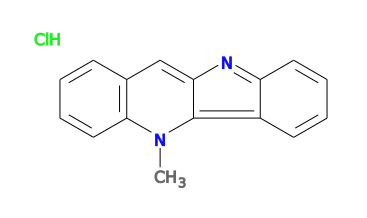 |
| Plant Source | Cryptolepis sanguinolenta Common Name:Nibima |
| Source Family | Apocynaceae |
| Origin | West Africa |
| Plant Part Used | Root |
| Extract | Ammonia moistened chloroform |
| Target Bacteria | Mycobacterium fortuitum |
| Assay / Test Done | MTT Assay |
| Positive Control Used (conc.) | Ethambutol (8 µg/ml), Isoniazid (0.5 µg/ml) |
| Inhibition [%] | NR |
| Activity [MIC] µg/ml | 16 µg/ml |
| Activity (In terms of dilution) | NR |
| Activity (Zone of inhibition in mm) | NR |
| Active Compound Identified | Cryptolepine hydrochloride |
| PubChem ID | 156093 |
| Ethnomedicinal Information | Antimycobacterial, antimalarial |
| PubMed ID [Source Literature] | 12722159 |
| Extract Preparation | Cryptolepine was isolated from Cryptolepis sanguinolenta roots and crystallized as the hydrochloride salt |
| Chemical Classification [Active Compound] | Aromatic, Quinoline, Alkaloid, Indole
|
| Media / Broth Used [Antimicrobial Assay/Test] | Mueller - Hinton broth, Colombia blood agar, 7H9 Middle Brook medium |
| Cytotoxicity Assay [AID] | NR |
| Molecular Weight | 232.100 |
| Molecular Formula | C16H13ClN2 |
| SMILES | Cl.n1(c2c(nc3c2cccc3)cc2c1cccc2)C |
| XLogP | 4.596 |
| PSA | 15.600 |
| H-bond Donor | 0 |
| H-bond Acceptor | 1 |
| No. of Rotatable Bond Count | 0 |
| No. of Rings | 4 |
| No. of N | 2 |
| No. of O | 0 |
| No. of S | 0 |
| Reference(s) | 1) Gibbons S, Fallah F, Wright CW.Cryptolepine hydrochloride: a potent antimycobacterial alkaloid derived from Cryptolepis sanguinolenta.Phytother Res. 2003 Apr;17(4):434-6
|
| Curator | Wvarsha, rachanake |
| Compound ID | 3564 |
| Compound Structure | |
| Plant Source | Cryptolepis sanguinolenta Common Name:Nibima |
| Source Family | Apocynaceae |
| Origin | West Africa |
| Plant Part Used | Root |
| Extract | Ammonia moistened chloroform |
| Target Bacteria | Mycobacterium smegmatis (ATCC 14468) |
| Assay / Test Done | MTT Assay |
| Positive Control Used (conc.) | Ethambutol (0.25 µg/ml), Isoniazid (2 µg/ml) |
| Inhibition [%] | NR |
| Activity [MIC] µg/ml | 8 µg/ml |
| Activity (In terms of dilution) | NR |
| Activity (Zone of inhibition in mm) | NR |
| Active Compound Identified | Cryptolepine hydrochloride |
| PubChem ID | 156093 |
| Ethnomedicinal Information | Antimycobacterial, antimalarial |
| PubMed ID [Source Literature] | 12722159 |
| Extract Preparation | Cryptolepine was isolated from Cryptolepis sanguinolenta roots and crystallized as the hydrochloride salt |
| Chemical Classification [Active Compound] | Aromatic, Quinoline, Alkaloid, Indole
|
| Media / Broth Used [Antimicrobial Assay/Test] | Mueller - Hinton broth, Colombia blood agar, 7H9 Middle Brook medium |
| Cytotoxicity Assay [AID] | NR |
| Molecular Weight | 232.100 |
| Molecular Formula | C16H13ClN2 |
| SMILES | Cl.n1(c2c(nc3c2cccc3)cc2c1cccc2)C |
| XLogP | 4.596 |
| PSA | 15.600 |
| H-bond Donor | 0 |
| H-bond Acceptor | 1 |
| No. of Rotatable Bond Count | 0 |
| No. of Rings | 4 |
| No. of N | 2 |
| No. of O | 0 |
| No. of S | 0 |
| Reference(s) | 1) Gibbons S, Fallah F, Wright CW.Cryptolepine hydrochloride: a potent antimycobacterial alkaloid derived from Cryptolepis sanguinolenta.Phytother Res. 2003 Apr;17(4):434-6
|
| Curator | Wvarsha, rachanake |
| Compound ID | 3565 |
| Compound Structure | |
| Plant Source | Cryptolepis sanguinolenta Common Name:Nibima |
| Source Family | Apocynaceae |
| Origin | West Africa |
| Plant Part Used | Root |
| Extract | Ammonia moistened chloroform |
| Target Bacteria | Mycobacterium phlei |
| Assay / Test Done | MTT Assay |
| Positive Control Used (conc.) | Ethambutol (1 µg/ml), Isoniazid (2 µg/ml) |
| Inhibition [%] | NR |
| Activity [MIC] µg/ml | 4 µg/ml |
| Activity (In terms of dilution) | NR |
| Activity (Zone of inhibition in mm) | NR |
| Active Compound Identified | Cryptolepine hydrochloride |
| PubChem ID | 156093 |
| Ethnomedicinal Information | Antimycobacterial, antimalarial |
| PubMed ID [Source Literature] | 12722159 |
| Extract Preparation | Cryptolepine was isolated from Cryptolepis sanguinolenta roots and crystallized as the hydrochloride salt |
| Chemical Classification [Active Compound] | Aromatic, Quinoline, Alkaloid, Indole
|
| Media / Broth Used [Antimicrobial Assay/Test] | Mueller - Hinton broth, Colombia blood agar, 7H9 Middle Brook medium |
| Cytotoxicity Assay [AID] | NR |
| Molecular Weight | 232.100 |
| Molecular Formula | C16H13ClN2 |
| SMILES | Cl.n1(c2c(nc3c2cccc3)cc2c1cccc2)C |
| XLogP | 4.596 |
| PSA | 15.600 |
| H-bond Donor | 0 |
| H-bond Acceptor | 1 |
| No. of Rotatable Bond Count | 0 |
| No. of Rings | 4 |
| No. of N | 2 |
| No. of O | 0 |
| No. of S | 0 |
| Reference(s) | 1) Gibbons S, Fallah F, Wright CW.Cryptolepine hydrochloride: a potent antimycobacterial alkaloid derived from Cryptolepis sanguinolenta.Phytother Res. 2003 Apr;17(4):434-6
|
| Curator | Wvarsha, rachanake |
| Compound ID | 3566 |
| Compound Structure | |
| Plant Source | Cryptolepis sanguinolenta Common Name:Nibima |
| Source Family | Apocynaceae |
| Origin | West Africa |
| Plant Part Used | Root |
| Extract | Ammonia moistened chloroform |
| Target Bacteria | Mycobacterium abscessus |
| Assay / Test Done | MTT Assay |
| Positive Control Used (conc.) | Ethambutol (128 µg/ml), Isoniazid (32 µg/ml) |
| Inhibition [%] | NR |
| Activity [MIC] µg/ml | 32 µg/ml |
| Activity (In terms of dilution) | NR |
| Activity (Zone of inhibition in mm) | NR |
| Active Compound Identified | Cryptolepine hydrochloride |
| PubChem ID | 156093 |
| Ethnomedicinal Information | Antimycobacterial, antimalarial |
| PubMed ID [Source Literature] | 12722159 |
| Extract Preparation | Cryptolepine was isolated from Cryptolepis sanguinolenta roots and crystallized as the hydrochloride salt |
| Chemical Classification [Active Compound] | Aromatic, Quinoline, Alkaloid, Indole
|
| Media / Broth Used [Antimicrobial Assay/Test] | Mueller - Hinton broth, Colombia blood agar, 7H9 Middle Brook medium |
| Cytotoxicity Assay [AID] | NR |
| Molecular Weight | 232.100 |
| Molecular Formula | C16H13ClN2 |
| SMILES | Cl.n1(c2c(nc3c2cccc3)cc2c1cccc2)C |
| XLogP | 4.596 |
| PSA | 15.600 |
| H-bond Donor | 0 |
| H-bond Acceptor | 1 |
| No. of Rotatable Bond Count | 0 |
| No. of Rings | 4 |
| No. of N | 2 |
| No. of O | 0 |
| No. of S | 0 |
| Reference(s) | 1) Gibbons S, Fallah F, Wright CW.Cryptolepine hydrochloride: a potent antimycobacterial alkaloid derived from Cryptolepis sanguinolenta.Phytother Res. 2003 Apr;17(4):434-6
|
| Curator | Wvarsha, rachanake |
| Compound ID | 3567 |
| Compound Structure | |
| Plant Source | Cryptolepis sanguinolenta Common Name:Nibima |
| Source Family | Apocynaceae |
| Origin | West Africa |
| Plant Part Used | Root |
| Extract | Ammonia moistened chloroform |
| Target Bacteria | Mycobacterium aurum |
| Assay / Test Done | MTT Assay |
| Positive Control Used (conc.) | Ethambutol (1 µg/ml), Isoniazid (2 µg/ml) |
| Inhibition [%] | NR |
| Activity [MIC] µg/ml | 2 µg/ml |
| Activity (In terms of dilution) | NR |
| Activity (Zone of inhibition in mm) | NR |
| Active Compound Identified | Cryptolepine hydrochloride |
| PubChem ID | 156093 |
| Ethnomedicinal Information | Antimycobacterial,AntimalAerial |
| PubMed ID [Source Literature] | 12722159 |
| Extract Preparation | Cryptolepine was isolated from Cryptolepis sanguinolenta roots and crystallized as the hydrochloride salt |
| Chemical Classification [Active Compound] | Aromatic, Quinoline, Alkaloid, Indole
|
| Media / Broth Used [Antimicrobial Assay/Test] | Mueller - Hinton broth, Colombia blood agar, 7H9 Middle Brook medium |
| Cytotoxicity Assay [AID] | NR |
| Molecular Weight | 232.100 |
| Molecular Formula | C16H13ClN2 |
| SMILES | Cl.n1(c2c(nc3c2cccc3)cc2c1cccc2)C |
| XLogP | 4.596 |
| PSA | 15.600 |
| H-bond Donor | 0 |
| H-bond Acceptor | 1 |
| No. of Rotatable Bond Count | 0 |
| No. of Rings | 4 |
| No. of N | 2 |
| No. of O | 0 |
| No. of S | 0 |
| Reference(s) | 1) Gibbons S, Fallah F, Wright CW.Cryptolepine hydrochloride: a potent antimycobacterial alkaloid derived from Cryptolepis sanguinolenta.Phytother Res. 2003 Apr;17(4):434-6
|
| Curator | Wvarsha, rachanake |
| Compound ID | 3568 |
| Compound Structure | |
| Plant Source | Cryptolepis sanguinolenta Common Name:Nibima |
| Source Family | Apocynaceae |
| Origin | West Africa |
| Plant Part Used | Root |
| Extract | Ammonia moistened chloroform |
| Target Bacteria | Mycobacterium bovis (BCG - Bacillus Calmette Guerin) |
| Assay / Test Done | MTT Assay |
| Positive Control Used (conc.) | Streptomycin sulphate (6.25 µg/ml) |
| Inhibition [%] | NR |
| Activity [MIC] µg/ml | 12.5 µg/ml |
| Activity (In terms of dilution) | NR |
| Activity (Zone of inhibition in mm) | NR |
| Active Compound Identified | Cryptolepine hydrochloride |
| PubChem ID | 156093 |
| Ethnomedicinal Information | Antimycobacterial,AntimalAerial |
| PubMed ID [Source Literature] | 12722159 |
| Extract Preparation | Cryptolepine was isolated from Cryptolepis sanguinolenta roots and crystallized as the hydrochloride salt |
| Chemical Classification [Active Compound] | Aromatic, Quinoline, Alkaloid, Indole
|
| Media / Broth Used [Antimicrobial Assay/Test] | Mueller - Hinton broth, Colombia blood agar, 7H9 Middle Brook medium |
| Cytotoxicity Assay [AID] | NR |
| Molecular Weight | 232.100 |
| Molecular Formula | C16H13ClN2 |
| SMILES | Cl.n1(c2c(nc3c2cccc3)cc2c1cccc2)C |
| XLogP | 4.596 |
| PSA | 15.600 |
| H-bond Donor | 0 |
| H-bond Acceptor | 1 |
| No. of Rotatable Bond Count | 0 |
| No. of Rings | 4 |
| No. of N | 2 |
| No. of O | 0 |
| No. of S | 0 |
| Reference(s) | 1) Gibbons S, Fallah F, Wright CW.Cryptolepine hydrochloride: a potent antimycobacterial alkaloid derived from Cryptolepis sanguinolenta.Phytother Res. 2003 Apr;17(4):434-6
|
| Curator | Wvarsha, rachanake |
| Compound ID | 3778 |
| Compound Structure | NR |
| Plant Source | Evodia elleryana (Melicope elleryana) Common Name:Sehit |
| Source Family | Rutaceae |
| Origin | Kurti region of Manus Island, Papua New Guinea |
| Plant Part Used | Bark |
| Extract | Hexane |
| Target Bacteria | Mycobacterium tuberculosis H37Ra (ATCC 25177) |
| Assay / Test Done | MTT assay |
| Positive Control Used (conc.) | Rifampin (5 µg/ml), Isoniazid (50 µg/ml) |
| Inhibition [%] | >= 70 % (50 µg/ml) |
| Activity [MIC] µg/ml | |
| Activity (In terms of dilution) | NR |
| Activity (Zone of inhibition in mm) | NR |
| Active Compound Identified | NR |
| PubChem ID | NR |
| Ethnomedicinal Information | Cough, fever, whooping cough, occasionally used to control fertility in women |
| PubMed ID [Source Literature] | 17350179 |
| Extract Preparation | Soxhlet extracts (hexane, ethyl acetate and methanol in sequence) of bark, stem and leaves |
| Chemical Classification [Active Compound] | |
| Media / Broth Used [Antimicrobial Assay/Test] | |
| Cytotoxicity Assay [AID] | Against Human T cells |
| Reference(s) | 1) Barrows LR, Powan E, Pond CD, Matainaho T.Anti-TB activity of Evodia elleryana bark extract.Fitoterapia. 2007 Apr;78(3):250-2. Epub 2007 Feb 3
|
| Curator | Vikramjitmandal, rachanake |
| Compound ID | 3780 |
| Compound Structure | NR |
| Plant Source | Evodia elleryana (Melicope elleryana) Common Name:Sehit |
| Source Family | Rutaceae |
| Origin | Kurti region of Manus Island, Papua New Guinea |
| Plant Part Used | Bark |
| Extract | Methanol |
| Target Bacteria | Mycobacterium tuberculosis H37Ra (ATCC 25177) |
| Assay / Test Done | MTT assay |
| Positive Control Used (conc.) | Rifampin (5 µg/ml), Isoniazid (50 µg/ml) |
| Inhibition [%] | < 30 % (50 µg/ml) |
| Activity [MIC] µg/ml | |
| Activity (In terms of dilution) | NR |
| Activity (Zone of inhibition in mm) | NR |
| Active Compound Identified | NR |
| PubChem ID | NR |
| Ethnomedicinal Information | Cough, fever, whooping cough, occasionally used to control fertility in women |
| PubMed ID [Source Literature] | 17350179 |
| Extract Preparation | Soxhlet extracts (hexane, ethyl acetate and methanol in sequence) of bark, stem and leaves |
| Chemical Classification [Active Compound] | |
| Media / Broth Used [Antimicrobial Assay/Test] | |
| Cytotoxicity Assay [AID] | Against Human T cells |
| Reference(s) | 1) Barrows LR, Powan E, Pond CD, Matainaho T.Anti-TB activity of Evodia elleryana bark extract.Fitoterapia. 2007 Apr;78(3):250-2. Epub 2007 Feb 3
|
| Curator | Vikramjitmandal, rachanake |
| Compound ID | 3782 |
| Compound Structure | NR |
| Plant Source | Evodia elleryana (Melicope elleryana) Common Name:Sehit |
| Source Family | Rutaceae |
| Origin | Kurti region of Manus Island, Papua New Guinea |
| Plant Part Used | Bark |
| Extract | Ethyl acetate |
| Target Bacteria | Mycobacterium tuberculosis H37Ra (ATCC 25177) |
| Assay / Test Done | MTT assay |
| Positive Control Used (conc.) | Rifampin (5 µg/ml), Isoniazid (50 µg/ml) |
| Inhibition [%] | >= 70 % (50 µg/ml) |
| Activity [MIC] µg/ml | |
| Activity (In terms of dilution) | NR |
| Activity (Zone of inhibition in mm) | NR |
| Active Compound Identified | NR |
| PubChem ID | NR |
| Ethnomedicinal Information | Cough, fever, whooping cough, occasionally used to control fertility in women |
| PubMed ID [Source Literature] | 17350179 |
| Extract Preparation | Soxhlet extracts (hexane, ethyl acetate and methanol in sequence) of bark, stem and leaves |
| Chemical Classification [Active Compound] | |
| Media / Broth Used [Antimicrobial Assay/Test] | |
| Cytotoxicity Assay [AID] | Against Human T cells |
| Reference(s) | 1) Barrows LR, Powan E, Pond CD, Matainaho T.Anti-TB activity of Evodia elleryana bark extract.Fitoterapia. 2007 Apr;78(3):250-2. Epub 2007 Feb 3
|
| Curator | Vikramjitmandal, rachanake |
| Compound ID | 3784 |
| Compound Structure | NR |
| Plant Source | Evodia elleryana (Melicope elleryana) Common Name:Sehit |
| Source Family | Rutaceae |
| Origin | Kurti region of Manus Island, Papua New Guinea |
| Plant Part Used | Stem |
| Extract | Hexane |
| Target Bacteria | Mycobacterium tuberculosis H37Ra (ATCC 25177) |
| Assay / Test Done | MTT assay |
| Positive Control Used (conc.) | Rifampin (5 µg/ml), Isoniazid (50 µg/ml) |
| Inhibition [%] | < 70 % and >= 30 % (50 µg/ml) |
| Activity [MIC] µg/ml | |
| Activity (In terms of dilution) | NR |
| Activity (Zone of inhibition in mm) | NR |
| Active Compound Identified | NR |
| PubChem ID | NR |
| Ethnomedicinal Information | Cough, fever, whooping cough, occasionally used to control fertility in women |
| PubMed ID [Source Literature] | 17350179 |
| Extract Preparation | Soxhlet extracts (hexane, ethyl acetate and methanol in sequence) of bark, stem and leaves |
| Chemical Classification [Active Compound] | |
| Media / Broth Used [Antimicrobial Assay/Test] | |
| Cytotoxicity Assay [AID] | Against Human T cells |
| Reference(s) | 1) Barrows LR, Powan E, Pond CD, Matainaho T.Anti-TB activity of Evodia elleryana bark extract.Fitoterapia. 2007 Apr;78(3):250-2. Epub 2007 Feb 3
|
| Curator | Vikramjitmandal, rachanake |
| Compound ID | 3786 |
| Compound Structure | NR |
| Plant Source | Evodia elleryana (Melicope elleryana) Common Name:Sehit |
| Source Family | Rutaceae |
| Origin | Kurti region of Manus Island, Papua New Guinea |
| Plant Part Used | Stem |
| Extract | Ethyl acetate |
| Target Bacteria | Mycobacterium tuberculosis H37Ra (ATCC 25177) |
| Assay / Test Done | MTT assay |
| Positive Control Used (conc.) | Rifampin (5 µg/ml), Isoniazid (50 µg/ml) |
| Inhibition [%] | < 30 % (50 µg/ml) |
| Activity [MIC] µg/ml | |
| Activity (In terms of dilution) | NR |
| Activity (Zone of inhibition in mm) | NR |
| Active Compound Identified | NR |
| PubChem ID | NR |
| Ethnomedicinal Information | Cough, fever, whooping cough, occasionally used to control fertility in women |
| PubMed ID [Source Literature] | 17350179 |
| Extract Preparation | Soxhlet extracts (hexane, ethyl acetate and methanol in sequence) of bark, stem and leaves |
| Chemical Classification [Active Compound] | |
| Media / Broth Used [Antimicrobial Assay/Test] | |
| Cytotoxicity Assay [AID] | Against Human T cells |
| Reference(s) | 1) Barrows LR, Powan E, Pond CD, Matainaho T.Anti-TB activity of Evodia elleryana bark extract.Fitoterapia. 2007 Apr;78(3):250-2. Epub 2007 Feb 3
|
| Curator | Vikramjitmandal, rachanake |
| Compound ID | 3788 |
| Compound Structure | NR |
| Plant Source | Evodia elleryana (Melicope elleryana) Common Name:Sehit |
| Source Family | Rutaceae |
| Origin | Kurti region of Manus Island, Papua New Guinea |
| Plant Part Used | Stem |
| Extract | Methanol |
| Target Bacteria | Mycobacterium tuberculosis H37Ra (ATCC 25177) |
| Assay / Test Done | MTT assay |
| Positive Control Used (conc.) | Rifampin (5 µg/ml), Isoniazid (50 µg/ml) |
| Inhibition [%] | < 30 % (50 µg/ml) |
| Activity [MIC] µg/ml | |
| Activity (In terms of dilution) | NR |
| Activity (Zone of inhibition in mm) | NR |
| Active Compound Identified | NR |
| PubChem ID | NR |
| Ethnomedicinal Information | Cough, fever, whooping cough, occasionally used to control fertility in women |
| PubMed ID [Source Literature] | 17350179 |
| Extract Preparation | Soxhlet extracts (hexane, ethyl acetate and methanol in sequence) of bark, stem and leaves |
| Chemical Classification [Active Compound] | |
| Media / Broth Used [Antimicrobial Assay/Test] | |
| Cytotoxicity Assay [AID] | Against Human T cells |
| Reference(s) | 1) Barrows LR, Powan E, Pond CD, Matainaho T.Anti-TB activity of Evodia elleryana bark extract.Fitoterapia. 2007 Apr;78(3):250-2. Epub 2007 Feb 3
|
| Curator | Vikramjitmandal, rachanake |
| Compound ID | 3790 |
| Compound Structure | NR |
| Plant Source | Evodia elleryana (Melicope elleryana) Common Name:Sehit |
| Source Family | Rutaceae |
| Origin | Kurti region of Manus Island, Papua New Guinea |
| Plant Part Used | Leaf |
| Extract | Hexane |
| Target Bacteria | Mycobacterium tuberculosis H37Ra (ATCC 25177) |
| Assay / Test Done | MTT assay |
| Positive Control Used (conc.) | Rifampin (5 µg/ml), Isoniazid (50 µg/ml) |
| Inhibition [%] | < 70 % and >= 30 % (50 µg/ml) |
| Activity [MIC] µg/ml | |
| Activity (In terms of dilution) | NR |
| Activity (Zone of inhibition in mm) | NR |
| Active Compound Identified | NR |
| PubChem ID | NR |
| Ethnomedicinal Information | Cough, fever, whooping cough, occasionally used to control fertility in women |
| PubMed ID [Source Literature] | 17350179 |
| Extract Preparation | Soxhlet extracts (hexane, ethyl acetate and methanol in sequence) of bark, stem and leaves |
| Chemical Classification [Active Compound] | |
| Media / Broth Used [Antimicrobial Assay/Test] | |
| Cytotoxicity Assay [AID] | Against Human T cells |
| Reference(s) | 1) Barrows LR, Powan E, Pond CD, Matainaho T.Anti-TB activity of Evodia elleryana bark extract.Fitoterapia. 2007 Apr;78(3):250-2. Epub 2007 Feb 3
|
| Curator | Vikramjitmandal, rachanake |
| Compound ID | 3792 |
| Compound Structure | NR |
| Plant Source | Evodia elleryana (Melicope elleryana) Common Name:Sehit |
| Source Family | Rutaceae |
| Origin | Kurti region of Manus Island, Papua New Guinea |
| Plant Part Used | Leaf |
| Extract | Ethyl acetate |
| Target Bacteria | Mycobacterium tuberculosis H37Ra (ATCC 25177) |
| Assay / Test Done | MTT assay |
| Positive Control Used (conc.) | Rifampin (5 µg/ml), Isoniazid (50 µg/ml) |
| Inhibition [%] | < 30 % (50 µg/ml) |
| Activity [MIC] µg/ml | |
| Activity (In terms of dilution) | NR |
| Activity (Zone of inhibition in mm) | NR |
| Active Compound Identified | NR |
| PubChem ID | NR |
| Ethnomedicinal Information | Cough, fever, whooping cough, occasionally used to control fertility in women |
| PubMed ID [Source Literature] | 17350179 |
| Extract Preparation | Soxhlet extracts (hexane, ethyl acetate and methanol in sequence) of bark, stem and leaves |
| Chemical Classification [Active Compound] | |
| Media / Broth Used [Antimicrobial Assay/Test] | |
| Cytotoxicity Assay [AID] | Against Human T cells |
| Reference(s) | 1) Barrows LR, Powan E, Pond CD, Matainaho T.Anti-TB activity of Evodia elleryana bark extract.Fitoterapia. 2007 Apr;78(3):250-2. Epub 2007 Feb 3
|
| Curator | Vikramjitmandal, rachanake |
| Compound ID | 3794 |
| Compound Structure | NR |
| Plant Source | Evodia elleryana (Melicope elleryana) Common Name:Sehit |
| Source Family | Rutaceae |
| Origin | Kurti region of Manus Island, Papua New Guinea |
| Plant Part Used | Leaf |
| Extract | Methanol |
| Target Bacteria | Mycobacterium tuberculosis H37Ra (ATCC 25177) |
| Assay / Test Done | MTT assay |
| Positive Control Used (conc.) | Rifampin (5 µg/ml), Isoniazid (50 µg/ml) |
| Inhibition [%] | < 30 % (50 µg/ml) |
| Activity [MIC] µg/ml | |
| Activity (In terms of dilution) | NR |
| Activity (Zone of inhibition in mm) | NR |
| Active Compound Identified | NR |
| PubChem ID | NR |
| Ethnomedicinal Information | Cough, fever, whooping cough, occasionally used to control fertility in women |
| PubMed ID [Source Literature] | 17350179 |
| Extract Preparation | Soxhlet extracts (hexane, ethyl acetate and methanol in sequence) of bark, stem and leaves |
| Chemical Classification [Active Compound] | |
| Media / Broth Used [Antimicrobial Assay/Test] | |
| Cytotoxicity Assay [AID] | Against Human T cells |
| Reference(s) | 1) Barrows LR, Powan E, Pond CD, Matainaho T.Anti-TB activity of Evodia elleryana bark extract.Fitoterapia. 2007 Apr;78(3):250-2. Epub 2007 Feb 3
|
| Curator | Vikramjitmandal, rachanake |
| Compound ID | 3861 |
| Compound Structure | 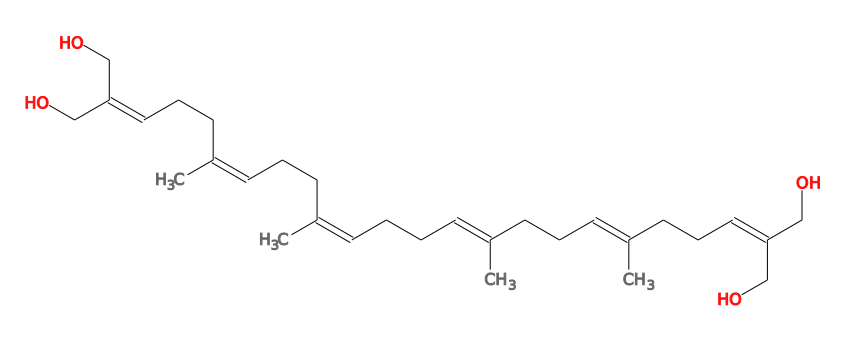 |
| Plant Source | Rhus taitensis Guill. Common Name:Pumac |
| Source Family | Anacardiaceae |
| Origin | Papua New Guinea |
| Plant Part Used | Leaf, twig |
| Extract | Methanol |
| Target Bacteria | Mycobacterium tuberculosis H37Ra (ATCC 25177) |
| Assay / Test Done | MTT Assay |
| Positive Control Used (conc.) | Rifampin (0.0025 - 0.0079 µg/ml) |
| Inhibition [%] | NR |
| Activity [MIC] µg/ml | 10 µg/ml |
| Activity (In terms of dilution) | NR |
| Activity (Zone of inhibition in mm) | NR |
| Active Compound Identified | Tetrahydroxysqualene |
| PubChem ID | 25058109 |
| Ethnomedicinal Information | NR |
| PubMed ID [Source Literature] | 18710283 |
| Extract Preparation | Air - dried leaves and twigs (108.6 g) of Rhus taitensis were ground and extracted with 250 ml MeOH (3 × 24 hours) at room temperature. The crude extract (1.7 g) was filtered and concentrated in vacuo. 5 grams of the crude extract were dissolved in MeOH and mixed with 5 g of HP20SS and dried. The mixture was then poured into a column and fractionated using 100 % water, 75 % H2O / 25 % 2 - propanol, 50 % H2O / 50 % 2 - propanol, 25 % H2O / 75 % 2 - propanol, and 100 % MeOH to yield five fractions designated FW, F1, F2, F3, F4, respectively. The fractions were collected and the solvents evaporated using a centrifugal evaporator |
| Chemical Classification [Active Compound] | Aliphatic, Alkene, Terpene, Triterpene, Alcohol |
| Media / Broth Used [Antimicrobial Assay/Test] | ADC (Remel) supplemented 7H9 medium |
| Cytotoxicity Assay [AID] | Against Human T cells |
| Molecular Weight | 474.371 |
| Molecular Formula | C30H50O4 |
| SMILES | OCC(=CCC/C(=C/CC/C(=C/CC/C=C(/CC/C=C(/CCC=C(CO)CO)C)C)/C)/C)CO |
| XLogP | 5.646 |
| PSA | 80.920 |
| H-bond Donor | 4 |
| H-bond Acceptor | 4 |
| No. of Rotatable Bond Count | 19 |
| No. of Rings | 0 |
| No. of N | 0 |
| No. of O | 4 |
| No. of S | 0 |
| Reference(s) | 1) Noro JC, Barrows LR, Gideon OG, Ireland CM, Koch M, Matainaho T, Piskaut P, Pond CD, Bugni TS.Tetrahdroxysqualene from Rhus taitensis shows antimycobacterial activity against Mycobacterium tuberculosis.J Nat Prod. 2008 Sep;71(9):1623-4. Epub 2008 Aug 19
|
| Curator | KeyaMukherjee, Farzana Shamsudeen, gppreetha |
