| Compound ID | 1069 |
| Compound Structure |  |
| Plant Source | Agelica sinensis Common Name:Female Ginseng |
| Source Family | Apiaceae (Umbelliferae) |
| Origin | China |
| Plant Part Used | Root |
| Extract | Petroleum ether, chloroform |
| Target Bacteria | Mycobacterium tuberculosis (Erdman) |
| Assay / Test Done | Microplate Alamar Blue Assay (MABA) |
| Positive Control Used (conc.) | Rifampin (0.05 µg/ml) |
| Inhibition [%] | >= 90 % |
| Activity [MIC] µg/ml | 49.5 µg/ml |
| Activity (In terms of dilution) | |
| Activity (Zone of inhibition in mm) | |
| Active Compound Identified | Oplopandiol |
| PubChem ID | 6474833 |
| Ethnomedicinal Information | To treat gynecological ailments, fatigue, mild anemia and high blood pressure |
| PubMed ID [Source Literature] | 18567055, 12696940 |
| Extract Preparation | N/A |
| Chemical Classification [Active Compound] | Aliphatic, Alkene, Alkyne, Alcohol |
| Media / Broth Used [Antimicrobial Assay/Test] | N/A |
| Cytotoxicity Assay [AID] | N/A |
| Molecular Weight | 262.193 |
| Molecular Formula | C17H26O2
|
| SMILES | O[C@@H](/C=CCCCCCCC)C#CC#C[C@@H](O)CC |
| XLogP | 4.977 |
| PSA | 40.460 |
| H-bond Donor | 2 |
| H-bond Acceptor | 2 |
| No. of Rotatable Bond Count | 8 |
| No. of Rings | 0 |
| No. of N | 0 |
| No. of O | 2 |
| No. of S | 0 |
| Reference(s) | 1) Deng S, Wang Y, Inui T, Chen SN, Farnsworth NR, Cho S, Franzblau SG, Pauli GF.Anti-TB polyynes from the roots of Angelica sinensis.Phytother Res. 2008 Jul;22(7):878-82
2) Zhao KJ, Dong TT, Tu PF, Song ZH, Lo CK, Tsim KW (April 2003).Molecular genetic and chemical assessment of radix Angelica (Danggui) in China. J. Agric. Food Chem. 51 (9): 2576.83
|
| Curator | |
| Compound ID | 2274 |
| Compound Structure | 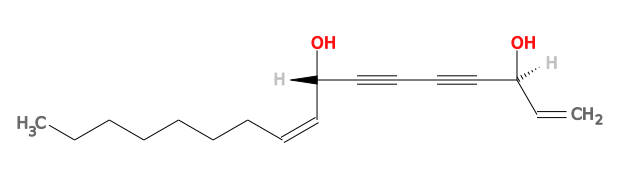 |
| Plant Source | Oplopanax horridus Smith Miq. Common Name:Devil's Club |
| Source Family | Araliaceae |
| Origin | USA |
| Plant Part Used | Inner bark |
| Extract | Methanol, dichloromethane |
| Target Bacteria | Mycobacterium tuberculosis, Mycobacterium avium |
| Assay / Test Done | Disk Diffusion Assay |
| Positive Control Used (conc.) | Isoniazid (100 µg/disk) |
| Inhibition [%] | 100 % |
| Activity [MIC] µg/ml | 100 µg/disk |
| Activity (In terms of dilution) | |
| Activity (Zone of inhibition in mm) | |
| Active Compound Identified | Falcarindiol |
| PubChem ID | 6436239 |
| Ethnomedicinal Information | Diabetes, rheumatism, tuberculosis, colds, headaches and lung ailments |
| PubMed ID [Source Literature] | 9392889 |
| Extract Preparation | N/A |
| Chemical Classification [Active Compound] | Aliphatic, Alkene, Alkyne, Alcohol |
| Media / Broth Used [Antimicrobial Assay/Test] | N/A |
| Cytotoxicity Assay [AID] | N/A |
| Molecular Weight | 260.178 |
| Molecular Formula | C17H24O2 |
| SMILES | O[C@@H](/C=CCCCCCCC)C#CC#C[C@@H](O)C=C |
| XLogP | 4.573 |
| PSA | 40.460 |
| H-bond Donor | 2 |
| H-bond Acceptor | 2 |
| No. of Rotatable Bond Count | 8 |
| No. of Rings | 0 |
| No. of N | 0 |
| No. of O | 2 |
| No. of S | 0 |
| Reference(s) | 1) Kobaisy M, Abramowski Z, Lermer L, Saxena G, Hancock RE, Towers GH, Doxsee D, Stokes RW.Antimycobacterial polyynes of Devils Club (Oplopanax horridus), a North American native medicinal plant.J Nat Prod. 1997 Nov;60(11):1210-3
2) Turner, N. J., L. C. Thompson, M. T. Thompson and A. Z. York. 1990. Thompson Ethnobotany: Knowledge and usage of plants by the Thompson Indians of British Columbia. Victoria: Royal British Columbia Museum, Memoir No. 3
|
| Curator | |
| Compound ID | 2275 |
| Compound Structure | 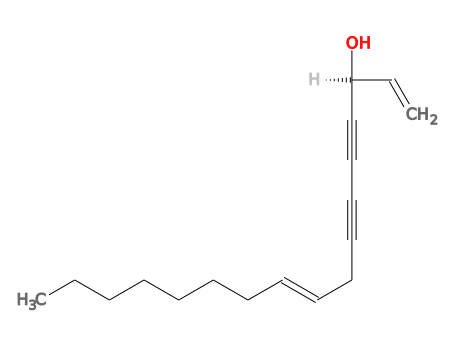 |
| Plant Source | Oplopanax horridus Smith Miq. Common Name:Devil's Club |
| Source Family | Araliaceae |
| Origin | USA |
| Plant Part Used | Inner bark |
| Extract | Methanol, dichloromethane |
| Target Bacteria | Mycobacterium tuberculosis, Mycobacterium avium |
| Assay / Test Done | Disk Diffusion Assay |
| Positive Control Used (conc.) | |
| Inhibition [%] | 100 % |
| Activity [MIC] µg/ml | 20 µg/disk |
| Activity (In terms of dilution) | |
| Activity (Zone of inhibition in mm) | |
| Active Compound Identified | Falcarinol |
| PubChem ID | 5469789 |
| Ethnomedicinal Information | Diabetes, rheumatism, tuberculosis, colds, headaches and lung ailments |
| PubMed ID [Source Literature] | 9392889 |
| Extract Preparation | N/A |
| Chemical Classification [Active Compound] | Aliphatic, Alkene, Alkyne, Alcohol |
| Media / Broth Used [Antimicrobial Assay/Test] | N/A |
| Cytotoxicity Assay [AID] | N/A |
| Molecular Weight | 244.183 |
| Molecular Formula | C17H24O |
| SMILES | O[C@H](C#CC#CC/C=CCCCCCCC)C=C |
| XLogP | 6.197 |
| PSA | 20.230 |
| H-bond Donor | 1 |
| H-bond Acceptor | 1 |
| No. of Rotatable Bond Count | 8 |
| No. of Rings | 0 |
| No. of N | 0 |
| No. of O | 1 |
| No. of S | 0 |
| Reference(s) | 1) Kobaisy M, Abramowski Z, Lermer L, Saxena G, Hancock RE, Towers GH, Doxsee D, Stokes RW.Antimycobacterial polyynes of Devils Club (Oplopanax horridus), a North American native medicinal plant.J Nat Prod. 1997 Nov;60(11):1210-3
2) Turner, N. J., L. C. Thompson, M. T. Thompson and A. Z. York. 1990. Thompson Ethnobotany: Knowledge and Usage of Plants by the Thompson Indians of British Columbia. Victoria, British Columbia, Royal British Columbia Museum
|
| Curator | |
| Compound ID | 2276 |
| Compound Structure | |
| Plant Source | Oplopanax horridus Smith Miq. Common Name:Devil's Club |
| Source Family | Araliaceae |
| Origin | USA |
| Plant Part Used | Inner bark |
| Extract | Methanol, dichloromethane |
| Target Bacteria | Mycobacterium tuberculosis, Mycobacterium avium |
| Assay / Test Done | Disk Diffusion Assay |
| Positive Control Used (conc.) | Isoniazid |
| Inhibition [%] | |
| Activity [MIC] µg/ml | 10 µg/disk |
| Activity (In terms of dilution) | |
| Activity (Zone of inhibition in mm) | |
| Active Compound Identified | Oplopandiol |
| PubChem ID | 6474833 |
| Ethnomedicinal Information | Diabetes, rheumatism, tuberculosis, colds, headaches and lung ailments |
| PubMed ID [Source Literature] | 9392889 |
| Extract Preparation | N/A |
| Chemical Classification [Active Compound] | Aliphatic, Alkene, Alkyne, Alcohol |
| Media / Broth Used [Antimicrobial Assay/Test] | N/A |
| Cytotoxicity Assay [AID] | N/A |
| Molecular Weight | 262.193 |
| Molecular Formula | C17H26O2 |
| SMILES | O[C@@H](/C=CCCCCCCC)C#CC#C[C@@H](O)CC |
| XLogP | 4.977 |
| PSA | 40.460 |
| H-bond Donor | 2 |
| H-bond Acceptor | 2 |
| No. of Rotatable Bond Count | 8 |
| No. of Rings | 0 |
| No. of N | 0 |
| No. of O | 2 |
| No. of S | 0 |
| Reference(s) | 1) Kobaisy M, Abramowski Z, Lermer L, Saxena G, Hancock RE, Towers GH, Doxsee D, Stokes RW.Antimycobacterial polyynes of Devils Club (Oplopanax horridus), a North American native medicinal plant.J Nat Prod. 1997 Nov;60(11):1210-3
2) Turner, N. J., L. C. Thompson, M. T. Thompson and A. Z. York. 1990. Thompson Ethnobotany: Knowledge and Usage of Plants by the Thompson Indians of British Columbia. Victoria, British Columbia, Royal British Columbia Museum
|
| Curator | |
| Compound ID | 2415 |
| Compound Structure | 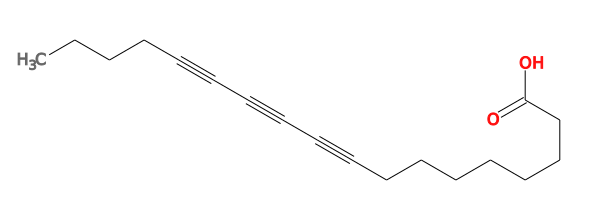 |
| Plant Source | Polyalthia cerasoides (Roxb.) Benth. ex Bedd Common Name: |
| Source Family | Annonaceae |
| Origin | Thailand |
| Plant Part Used | Root |
| Extract | |
| Target Bacteria | Mycobacterium tuberculosis H37Ra |
| Assay / Test Done | Microplate Alamar Blue assay (MABA) |
| Positive Control Used (conc.) | Isoniazid (0.05 µg/ml), Kanamycin (2.5 µg/ml) |
| Inhibition [%] | |
| Activity [MIC] µg/ml | 6.25 µg/ml |
| Activity (In terms of dilution) | |
| Activity (Zone of inhibition in mm) | |
| Active Compound Identified | Octadeca - 9, 11, 13 - Triynoic Acid |
| PubChem ID | 11778027 |
| Ethnomedicinal Information | Tuberculosis |
| PubMed ID [Source Literature] | 17845001 |
| Extract Preparation | N/A |
| Chemical Classification [Active Compound] | Aliphatic, Alkyne, Fatty acid |
| Media / Broth Used [Antimicrobial Assay/Test] | N/A |
| Cytotoxicity Assay [AID] | N/A |
| Molecular Weight | 272.178 |
| Molecular Formula | C18H24O2 |
| SMILES | OC(=O)CCCCCCCC#CC#CC#CCCCC |
| XLogP | 6.542 |
| PSA | 37.300 |
| H-bond Donor | 1 |
| H-bond Acceptor | 2 |
| No. of Rotatable Bond Count | 9 |
| No. of Rings | 0 |
| No. of N | 0 |
| No. of O | 2 |
| No. of S | 0 |
| Reference(s) | 1) Kanokmedhakul S, Kanokmedhakul K, Lekphrom R.Bioactive constituents of the roots of Polyalthia cerasoides.J Nat Prod. 2007 Sep;70(9):1536-8
|
| Curator | |
| Compound ID | 2578 |
| Compound Structure |  |
| Plant Source | Scleropyrum pentandrum Common Name: |
| Source Family | Santalaceae |
| Origin | India, Malaysia, Philippines, Singapore, Sri Lanka |
| Plant Part Used | Twig |
| Extract | Hexane |
| Target Bacteria | Mycobacterium tuberculosis H37Ra |
| Assay / Test Done | Microplate Alamar Blue Assay (MABA) |
| Positive Control Used (conc.) | Rifampin (0.004 µg/ml), Isoniazid (0.06 µg/ml), Kanamycin sulphate (2.5 µg/ml) |
| Inhibition [%] | |
| Activity [MIC] µg/ml | 25 µg/ml |
| Activity (In terms of dilution) | |
| Activity (Zone of inhibition in mm) | |
| Active Compound Identified | Scleropyric acid |
| PubChem ID | 11594149 |
| Ethnomedicinal Information | Malaria, tuberculosis |
| PubMed ID [Source Literature] | 16204994 |
| Extract Preparation | The pulverized, dry twigs (1.06 kg) were extracted successively with n - Hexane, CHCl3 and MeOH in a soxhlet extraction apparatus to yield the hexane (7.12 g), CHCl3 (3.50 g), and MeOH (12.42 g) extracts, respectively |
| Chemical Classification [Active Compound] | Aliphatic, Alkene, Alkyne, Fatty acid |
| Media / Broth Used [Antimicrobial Assay/Test] | N/A |
| Cytotoxicity Assay [AID] | N/A |
| Molecular Weight | 264.209 |
| Molecular Formula | C17H28O2 |
| SMILES | OC(=O)CCCCCCCCCCC#CCCC=C |
| XLogP | 6.563 |
| PSA | 37.300 |
| H-bond Donor | 1 |
| H-bond Acceptor | 2 |
| No. of Rotatable Bond Count | 12 |
| No. of Rings | 0 |
| No. of N | 0 |
| No. of O | 2 |
| No. of S | 0 |
| Reference(s) | 1) Suksamrarn A, Buaprom M, Udtip S, Nuntawong N, Haritakun R, Kanokmedhakul S.Antimycobacterial and antiplasmodial unsaturated carboxylic acid from the twigs of Scleropyrum wallichianum.Chem Pharm Bull (Tokyo). 2005 Oct;53(10):1327-9
|
| Curator | |
| Compound ID | 2614 |
| Compound Structure |  |
| Plant Source | Solidago canadensis L. Common Name:Goldenrod, Woundwort |
| Source Family | Asteraceae (Compositae) |
| Origin | North America |
| Plant Part Used | |
| Extract | |
| Target Bacteria | Mycobacterium tuberculosis H37Rv |
| Assay / Test Done | Radiorespirometric Bioassay |
| Positive Control Used (conc.) | Rifampin (0.25 - 0.125 µg/ml) |
| Inhibition [%] | |
| Activity [MIC] µg/ml | 25 µg/ml |
| Activity (In terms of dilution) | |
| Activity (Zone of inhibition in mm) | |
| Active Compound Identified | (2Z)-8-dehydromatricaria ester |
| PubChem ID | NR |
| Ethnomedicinal Information | Urinary and kidney infections and stones, catarrh. The plant has a cleansing action on the kidneys, and a reputation for clearing upper respiratory mucus |
| PubMed ID [Source Literature] | 9810277 |
| Extract Preparation | N/A |
| Chemical Classification [Active Compound] | Aliphatic, Alkene, Alkyne, Ester |
| Media / Broth Used [Antimicrobial Assay/Test] | N/A |
| Cytotoxicity Assay [AID] | N/A |
| Molecular Weight | 174.068 |
| Molecular Formula | C11H10O2
|
| SMILES | C(=O)(OC)/C=C/C#CC#C/C=C/C |
| XLogP | 3.071 |
| PSA | 26.300 |
| H-bond Donor | 0 |
| H-bond Acceptor | 2 |
| No. of Rotatable Bond Count | 2 |
| No. of Rings | 0 |
| No. of N | 0 |
| No. of O | 2 |
| No. of S | 0 |
| Reference(s) | 1) Lu T, Cantrell CL, Robbs SL, Franzblau SG, Fischer NH.Antimycobacterial matricaria esters and lactones from Astereae species.Planta Med. 1998 Oct;64(7):665-7
2) http://www.anniesremedy.com/herb_detail365.php
|
| Curator | |
| Compound ID | 2862 |
| Compound Structure |  |
| Plant Source | Helichrysum aureonitens Common Name:Golden Everlasting |
| Source Family | Asteraceae (Compositae) |
| Origin | Africa |
| Plant Part Used | Callus tissue from young leaf |
| Extract | Ethanol (95 %) |
| Target Bacteria | Mycobacterium tuberculosis H37Rv (ATCC 27264) |
| Assay / Test Done | Radiorespirometric BACTEC Assay |
| Positive Control Used (conc.) | Isoniazid (0.2 µg/ml) |
| Inhibition [%] | NR |
| Activity [MIC] µg/ml | 1000 µg/ml |
| Activity (In terms of dilution) | NR |
| Activity (Zone of inhibition in mm) | NR |
| Active Compound Identified | 4 - Chloro - 2 - (Hepta - 1, 3, 5 - Triyn - 1 - yl) - Phenol |
| PubChem ID | NR |
| Ethnomedicinal Information | Anticancer activity, inhibition on DNA topoisomerase I |
| PubMed ID [Source Literature] | 19881282 |
| Extract Preparation | Cell suspension culture |
| Chemical Classification [Active Compound] | Aromatic, Alkyl, Alkyne, Phenol, Haloginated |
| Media / Broth Used [Antimicrobial Assay/Test] | NR |
| Cytotoxicity Assay [AID] | Against Vero and Human prostate epithelial carcinoma DU 145 cell lines |
| Molecular Weight | 214.019 |
| Molecular Formula | C13H7ClO |
| SMILES | C1(cc(c(cc1)O)C#CC#CC#CC)Cl |
| XLogP | 3.971 |
| PSA | 20.230 |
| H-bond Donor | 1 |
| H-bond Acceptor | 2 |
| No. of Rotatable Bond Count | 0 |
| No. of Rings | 1 |
| No. of N | 0 |
| No. of O | 1 |
| No. of S | 0 |
| Reference(s) | 1) Ziaratnia SM, Ohyama K, Hussein AA, Muranaka T, Lall N, Kunert KJ, Meyer JJ.Isolation and identification of a novel chlorophenol from a cell suspension culture of Helichrysum aureonitens.Chem Pharm Bull (Tokyo). 2009 Nov;57(11):1282-3
|
| Curator | Gppreetha, keyamukherjee, reshmi |
| Compound ID | 3388 |
| Compound Structure | 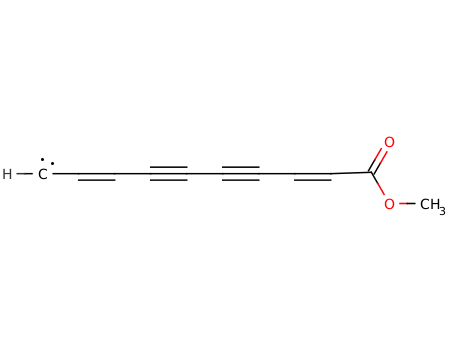 |
| Plant Source | Chrysoma pauciflosculosa (Michx.) Greene Common Name:NR |
| Source Family | Asteraceae (Compositae) |
| Origin | NR |
| Plant Part Used | Root |
| Extract | NR |
| Target Bacteria | Mycobacterium tuberculosis H37Rv |
| Assay / Test Done | Radiorespirometric Bioassay |
| Positive Control Used (conc.) | NR |
| Inhibition [%] | NR |
| Activity [MIC] µg/ml | 50 µg/ml |
| Activity (In terms of dilution) | NR |
| Activity (Zone of inhibition in mm) | NR |
| Active Compound Identified | (2E, 8Z) Matricaria ester |
| PubChem ID | NR |
| Ethnomedicinal Information | NR |
| PubMed ID [Source Literature] | 9810277 |
| Extract Preparation | NR |
| Chemical Classification [Active Compound] | Aliphatic, Alkene, Alkyne, Ester |
| Media / Broth Used [Antimicrobial Assay/Test] | NR |
| Cytotoxicity Assay [AID] | NR |
| Molecular Weight | 174.068 |
| Molecular Formula | C11H8O2 |
| SMILES | C(#CC#C/C=C/[CH])/C=C/C(=O)OC |
| XLogP | 3.071 |
| PSA | 26.300 |
| H-bond Donor | 0 |
| H-bond Acceptor | 2 |
| No. of Rotatable Bond Count | 2 |
| No. of Rings | 0 |
| No. of N | 0 |
| No. of O | 2 |
| No. of S | 0 |
| Reference(s) | 1) Lu T, Cantrell CL, Robbs SL, Franzblau SG, Fischer NH.Antimycobacterial matricaria esters and lactones from Astereae species.Planta Med. 1998 Oct;64(7):665-7
|
| Curator | Farzana-shamsudeen, vikramjitmandal |
| Compound ID | 3389 |
| Compound Structure | 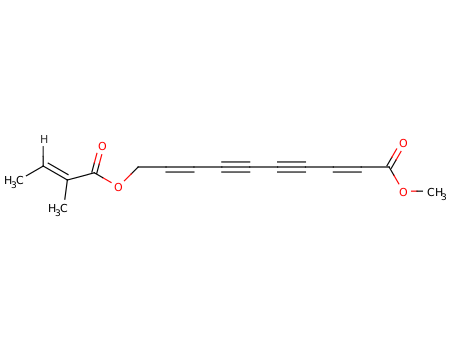 |
| Plant Source | Chrysoma pauciflosculosa (Michx.) Greene Common Name:NR |
| Source Family | Asteraceae (Compositae) |
| Origin | NR |
| Plant Part Used | Root |
| Extract | NR |
| Target Bacteria | Mycobacterium tuberculosis H37Rv |
| Assay / Test Done | Radiorespirometric Bioassay |
| Positive Control Used (conc.) | NR |
| Inhibition [%] | NR |
| Activity [MIC] µg/ml | 50 µg/ml |
| Activity (In terms of dilution) | NR |
| Activity (Zone of inhibition in mm) | NR |
| Active Compound Identified | (2Z, 8Z) Matricaria ester |
| PubChem ID | NR |
| Ethnomedicinal Information | NR |
| PubMed ID [Source Literature] | 9810277 |
| Extract Preparation | NR |
| Chemical Classification [Active Compound] | Aliphatic, Alkene, Alkyne, Ester, Acyl |
| Media / Broth Used [Antimicrobial Assay/Test] | NR |
| Cytotoxicity Assay [AID] | NR |
| Molecular Weight | 272.105 |
| Molecular Formula | C16H16O4 |
| SMILES | C(#CC#C/C=C/COC(=O)/C(=C/C)/C)/C=C/C(=O)OC |
| XLogP | 3.138 |
| PSA | 52.600 |
| H-bond Donor | 0 |
| H-bond Acceptor | 4 |
| No. of Rotatable Bond Count | 6 |
| No. of Rings | 0 |
| No. of N | 0 |
| No. of O | 4 |
| No. of S | 0 |
| Reference(s) | 1) Lu T, Cantrell CL, Robbs SL, Franzblau SG, Fischer NH.Antimycobacterial matricaria esters and lactones from Astereae species.Planta Med. 1998 Oct;64(7):665-7
|
| Curator | Farzana-shamsudeen, vikramjitmandal |
| Compound ID | 3984 |
| Compound Structure |  |
| Plant Source | Cinnamomum kotoense Common Name: |
| Source Family | Lauraceae |
| Origin | |
| Plant Part Used | |
| Extract | |
| Target Bacteria | Mycobacterium tuberculosis |
| Assay / Test Done | |
| Positive Control Used (conc.) | |
| Inhibition [%] | |
| Activity [MIC] µg/ml | 2.8 µg/ml |
| Activity (In terms of dilution) | |
| Activity (Zone of inhibition in mm) | |
| Active Compound Identified | Lincomolide B |
| PubChem ID | NR |
| Ethnomedicinal Information | |
| PubMed ID [Source Literature] | |
| Extract Preparation | |
| Chemical Classification [Active Compound] | Alicyclic, Butenolides, Fattyacid, Lactone, Ether, Alcohol, Alkene, Alkyne, |
| Media / Broth Used [Antimicrobial Assay/Test] | |
| Cytotoxicity Assay [AID] | |
| Molecular Weight | 278.188 |
| Molecular Formula | C17H26O3 |
| SMILES | C[C@@H]1OC(=O)/C(=C/CCCCCCCCCC#C)/[C@@H]1O |
| XLogP | 5.004 |
| PSA | 46.530 |
| H-bond Donor | 2 |
| H-bond Acceptor | 3 |
| No. of Rotatable Bond Count | 9 |
| No. of Rings | 1 |
| No. of N | 0 |
| No. of O | 3 |
| No. of S | 0 |
| Reference(s) | 1) In silico Comparison of Antimycobacterial Natural Products with Known Antituberculosis Drugs. Marlene Espinoza-Moraga, Nicholas M. Njuguna, Grace Mugumbate, Julio Caballero, and Kelly Chibale. Journal of Chemical Information and Modeling 2013 53 (3), 649-660
2) Rogoza, L. N.; Salakhutdinov, N. F.; Tolstikov, G. A. Anti-tubercular Activity of Natural Products: Recent Developments. In Opportunity, Challenge and Scope of Natural Products in Medicinal Chemistry; Tiwari, V. K. Ed.; Research Signpost: India, 2011; pp 103-120
|
| Curator | |
| Compound ID | 3972 |
| Compound Structure | |
| Plant Source | Solidago canadensis L. Common Name:Goldenrod, Woundwort |
| Source Family | Asteraceae (Compositae) |
| Origin | North America |
| Plant Part Used | |
| Extract | |
| Target Bacteria | Mycobacterium avium |
| Assay / Test Done | Radiorespirometric Bioassay |
| Positive Control Used (conc.) | Clarithroycin (1 - 2 µg/ml) |
| Inhibition [%] | |
| Activity [MIC] µg/ml | 25 µg/ml |
| Activity (In terms of dilution) | |
| Activity (Zone of inhibition in mm) | |
| Active Compound Identified | (2Z)-8-dehydromatricaria ester |
| PubChem ID | NR |
| Ethnomedicinal Information | Urinary and kidney infections and stones, catarrh. The plant has a cleansing action on the kidneys, and a reputation for clearing upper respiratory mucus |
| PubMed ID [Source Literature] | 9810277 |
| Extract Preparation | |
| Chemical Classification [Active Compound] | Aliphatic, Alkene, Alkyne, Ester |
| Media / Broth Used [Antimicrobial Assay/Test] | |
| Cytotoxicity Assay [AID] | |
| Molecular Weight | 174.068 |
| Molecular Formula | C11H10O2
|
| SMILES | C(=O)(OC)/C=C/C#CC#C/C=C/C |
| XLogP | 3.071 |
| PSA | 26.300 |
| H-bond Donor | 0 |
| H-bond Acceptor | 2 |
| No. of Rotatable Bond Count | 2 |
| No. of Rings | 0 |
| No. of N | 0 |
| No. of O | 2 |
| No. of S | 0 |
| Reference(s) | 1) Lu T, Cantrell CL, Robbs SL, Franzblau SG, Fischer NH.Antimycobacterial matricaria esters and lactones from Astereae species.Planta Med. 1998 Oct;64(7):665-7
2) http://www.anniesremedy.com/herb_detail365.php
|
| Curator | |
| Compound ID | 3711 |
| Compound Structure | |
| Plant Source | Anethum graveolens L. Common Name:NR |
| Source Family | Apiaceae (Umbelliferae) |
| Origin | NR |
| Plant Part Used | Whole plant |
| Extract | Hexane |
| Target Bacteria | Mycobacterium abscessus (ATCC 19977) |
| Assay / Test Done | Columbia Blood Agar |
| Positive Control Used (conc.) | Ethambutol (128 µg/ml) |
| Inhibition [%] | NR |
| Activity [MIC] µg/ml | 2 µg/ml |
| Activity (In terms of dilution) | NR |
| Activity (Zone of inhibition in mm) | NR |
| Active Compound Identified | Falcarindiol |
| PubChem ID | 6436239 |
| Ethnomedicinal Information | NR |
| PubMed ID [Source Literature] | 16317649 |
| Extract Preparation | NR |
| Chemical Classification [Active Compound] | Aliphatic, Alkene, Alkyne, Alcohol |
| Media / Broth Used [Antimicrobial Assay/Test] | NR |
| Cytotoxicity Assay [AID] | NR |
| Molecular Weight | 260.178 |
| Molecular Formula | C17H24O2 |
| SMILES | O[C@@H](/C=CCCCCCCC)C#CC#C[C@@H](O)C=C |
| XLogP | 4.573 |
| PSA | 40.460 |
| H-bond Donor | 2 |
| H-bond Acceptor | 2 |
| No. of Rotatable Bond Count | 8 |
| No. of Rings | 0 |
| No. of N | 0 |
| No. of O | 2 |
| No. of S | 0 |
| Reference(s) | 1) Stavri M, Gibbons S.The antimycobacterial constituents of dill (Anethum graveolens).Phytother Res. 2005 Nov;19(11):938-41
|
| Curator | Najiya-beegum, vikramjitmandal |
| Compound ID | 3712 |
| Compound Structure | |
| Plant Source | Anethum graveolens L. Common Name:NR |
| Source Family | Apiaceae (Umbelliferae) |
| Origin | NR |
| Plant Part Used | Whole plant |
| Extract | Hexane |
| Target Bacteria | Mycobacterium aurum (Pasteur Institute 104482) |
| Assay / Test Done | Columbia Blood Agar |
| Positive Control Used (conc.) | Ethambutol (0.5 µg/ml) |
| Inhibition [%] | NR |
| Activity [MIC] µg/ml | 4 µg/ml |
| Activity (In terms of dilution) | NR |
| Activity (Zone of inhibition in mm) | NR |
| Active Compound Identified | Falcarindiol |
| PubChem ID | 6436239 |
| Ethnomedicinal Information | NR |
| PubMed ID [Source Literature] | 16317649 |
| Extract Preparation | NR |
| Chemical Classification [Active Compound] | Aliphatic, Alkene, Alkyne, Alcohol |
| Media / Broth Used [Antimicrobial Assay/Test] | NR |
| Cytotoxicity Assay [AID] | NR |
| Molecular Weight | 260.178 |
| Molecular Formula | C17H24O2 |
| SMILES | O[C@@H](/C=CCCCCCCC)C#CC#C[C@@H](O)C=C |
| XLogP | 4.573 |
| PSA | 40.460 |
| H-bond Donor | 2 |
| H-bond Acceptor | 2 |
| No. of Rotatable Bond Count | 8 |
| No. of Rings | 0 |
| No. of N | 0 |
| No. of O | 2 |
| No. of S | 0 |
| Reference(s) | 1) Stavri M, Gibbons S.The antimycobacterial constituents of dill (Anethum graveolens).Phytother Res. 2005 Nov;19(11):938-41
|
| Curator | Najiya-beegum, vikramjitmandal |
| Compound ID | 3713 |
| Compound Structure | |
| Plant Source | Anethum graveolens L. Common Name:NR |
| Source Family | Apiaceae (Umbelliferae) |
| Origin | NR |
| Plant Part Used | Whole plant |
| Extract | Hexane |
| Target Bacteria | Mycobacterium phlei (ATCC 11758) |
| Assay / Test Done | Columbia Blood Agar |
| Positive Control Used (conc.) | Ethambutol (2 µg/ml) |
| Inhibition [%] | NR |
| Activity [MIC] µg/ml | 2 µg/ml |
| Activity (In terms of dilution) | NR |
| Activity (Zone of inhibition in mm) | NR |
| Active Compound Identified | Falcarindiol |
| PubChem ID | 6436239 |
| Ethnomedicinal Information | NR |
| PubMed ID [Source Literature] | 16317649 |
| Extract Preparation | NR |
| Chemical Classification [Active Compound] | Aliphatic, Alkene, Alkyne, Alcohol |
| Media / Broth Used [Antimicrobial Assay/Test] | NR |
| Cytotoxicity Assay [AID] | NR |
| Molecular Weight | 260.178 |
| Molecular Formula | C17H24O2 |
| SMILES | O[C@@H](/C=CCCCCCCC)C#CC#C[C@@H](O)C=C |
| XLogP | 4.573 |
| PSA | 40.460 |
| H-bond Donor | 2 |
| H-bond Acceptor | 2 |
| No. of Rotatable Bond Count | 8 |
| No. of Rings | 0 |
| No. of N | 0 |
| No. of O | 2 |
| No. of S | 0 |
| Reference(s) | 1) Stavri M, Gibbons S.The antimycobacterial constituents of dill (Anethum graveolens).Phytother Res. 2005 Nov;19(11):938-41
|
| Curator | Najiya-beegum, vikramjitmandal |
| Compound ID | 3714 |
| Compound Structure | |
| Plant Source | Anethum graveolens L. Common Name:NR |
| Source Family | Apiaceae (Umbelliferae) |
| Origin | NR |
| Plant Part Used | Whole plant |
| Extract | Hexane |
| Target Bacteria | Mycobacterium smegmatis (ATCC 14468) |
| Assay / Test Done | Columbia Blood Agar |
| Positive Control Used (conc.) | Ethambutol (0.5 µg/ml) |
| Inhibition [%] | NR |
| Activity [MIC] µg/ml | 4 µg/ml |
| Activity (In terms of dilution) | NR |
| Activity (Zone of inhibition in mm) | NR |
| Active Compound Identified | Falcarindiol |
| PubChem ID | 6436239 |
| Ethnomedicinal Information | NR |
| PubMed ID [Source Literature] | 16317649 |
| Extract Preparation | NR |
| Chemical Classification [Active Compound] | Aliphatic, Alkene, Alkyne, Alcohol |
| Media / Broth Used [Antimicrobial Assay/Test] | NR |
| Cytotoxicity Assay [AID] | NR |
| Molecular Weight | 260.178 |
| Molecular Formula | C17H24O2 |
| SMILES | O[C@@H](/C=CCCCCCCC)C#CC#C[C@@H](O)C=C |
| XLogP | 4.573 |
| PSA | 40.460 |
| H-bond Donor | 2 |
| H-bond Acceptor | 2 |
| No. of Rotatable Bond Count | 8 |
| No. of Rings | 0 |
| No. of N | 0 |
| No. of O | 2 |
| No. of S | 0 |
| Reference(s) | 1) Stavri M, Gibbons S.The antimycobacterial constituents of dill (Anethum graveolens).Phytother Res. 2005 Nov;19(11):938-41
|
| Curator | Najiya-beegum, vikramjitmandal |
| Compound ID | 3805 |
| Compound Structure | |
| Plant Source | Angelica sinensis Common Name:Dang Gui |
| Source Family | Apiaceae (Umbelliferae) |
| Origin | Northwest China |
| Plant Part Used | Root |
| Extract | NR |
| Target Bacteria | Mycobacterium tuberculosis H37Rv |
| Assay / Test Done | Microplate Alamar Blue Assay (MABA) |
| Positive Control Used (conc.) | Rifampin (0.06 µg/ml) |
| Inhibition [%] | NR |
| Activity [MIC] µg/ml | 26.7 µg/ml |
| Activity (In terms of dilution) | NR |
| Activity (Zone of inhibition in mm) | NR |
| Active Compound Identified | Falcarindiol |
| PubChem ID | 6436239 |
| Ethnomedicinal Information | NR |
| PubMed ID [Source Literature] | 18567055 |
| Extract Preparation | 8 kg of the pulverized roots of Angelica sinensis Diels were extracted with methanol and the extract sequentially partitioned with petroleum ether, CHCl3, and BuOH |
| Chemical Classification [Active Compound] | Aliphatic, Alkene, Alkyne, Alcohol |
| Media / Broth Used [Antimicrobial Assay/Test] | Middlebrook 7H12 medium |
| Cytotoxicity Assay [AID] | Against Vero cells |
| Molecular Weight | 260.178 |
| Molecular Formula | C17H24O2 |
| SMILES | O[C@@H](/C=CCCCCCCC)C#CC#C[C@@H](O)C=C |
| XLogP | 4.573 |
| PSA | 40.460 |
| H-bond Donor | 2 |
| H-bond Acceptor | 2 |
| No. of Rotatable Bond Count | 8 |
| No. of Rings | 0 |
| No. of N | 0 |
| No. of O | 2 |
| No. of S | 0 |
| Reference(s) | 1) Deng S, Wang Y, Inui T, Chen SN, Farnsworth NR, Cho S, Franzblau SG, Pauli GF.Anti-TB polyynes from the roots of Angelica sinensis.Phytother Res. 2008 Jul;22(7):878-82
|
| Curator | KeyaMukherjee, reshmi, Farzana Shamsudeen, Vikramjitmandal |
| Compound ID | 3806 |
| Compound Structure | 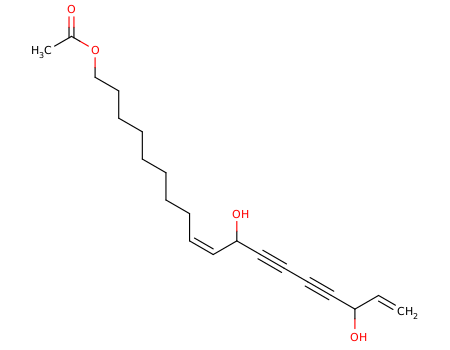 |
| Plant Source | Angelica sinensis Common Name:Dang Gui |
| Source Family | Apiaceae (Umbelliferae) |
| Origin | Northwest China |
| Plant Part Used | Root |
| Extract | NR |
| Target Bacteria | Mycobacterium tuberculosis H37Rv |
| Assay / Test Done | Microplate Alamar Blue Assay (MABA) |
| Positive Control Used (conc.) | Rifampin (0.06 µg/ml) |
| Inhibition [%] | NR |
| Activity [MIC] µg/ml | 25.3 µg/ml |
| Activity (In terms of dilution) | NR |
| Activity (Zone of inhibition in mm) | NR |
| Active Compound Identified | 9Z, 17 - Octadecadiene - 12, 14 - Diyne - 1, 11, 16 - Triol, 1 - Acetate |
| PubChem ID | NR |
| Ethnomedicinal Information | NR |
| PubMed ID [Source Literature] | 18567055 |
| Extract Preparation | 8 kg of the pulverized roots of Angelica sinensis Diels were extracted with methanol and the extract sequentially partitioned with petroleum ether, CHCl3, and BuOH |
| Chemical Classification [Active Compound] | Aliphatic, Alkene, Alkyne, Ester, Alcohol, O-Acetyl |
| Media / Broth Used [Antimicrobial Assay/Test] | Middlebrook 7H12 medium |
| Cytotoxicity Assay [AID] | Against Vero cells |
| Molecular Weight | 332.199 |
| Molecular Formula | C20H28O4 |
| SMILES | C(=O)(C)OCCCCCCCC/C=C\C(O)C#CC#CC(C=C)O |
| XLogP | 4.117 |
| PSA | 66.760 |
| H-bond Donor | 2 |
| H-bond Acceptor | 4 |
| No. of Rotatable Bond Count | 12 |
| No. of Rings | 0 |
| No. of N | 0 |
| No. of O | 4 |
| No. of S | 0 |
| Reference(s) | 1) Deng S, Wang Y, Inui T, Chen SN, Farnsworth NR, Cho S, Franzblau SG, Pauli GF.Anti-TB polyynes from the roots of Angelica sinensis.Phytother Res. 2008 Jul;22(7):878-82
|
| Curator | KeyaMukherjee, reshmi, Farzana Shamsudeen, Vikramjitmandal |
| Compound ID | 3808 |
| Compound Structure |  |
| Plant Source | Angelica sinensis Common Name:Dang Gui |
| Source Family | Apiaceae (Umbelliferae) |
| Origin | Northwest China |
| Plant Part Used | Root |
| Extract | NR |
| Target Bacteria | Mycobacterium tuberculosis H37Rv |
| Assay / Test Done | Microplate Alamar Blue Assay (MABA) |
| Positive Control Used (conc.) | Rifampin (0.06 µg/ml) |
| Inhibition [%] | NR |
| Activity [MIC] µg/ml | > 60 µg/ml |
| Activity (In terms of dilution) | NR |
| Activity (Zone of inhibition in mm) | NR |
| Active Compound Identified | Heptadeca - 1 - Ene - 9, 10 - Epoxy - 4, 6 - Diyne - 3, 8 - Diol |
| PubChem ID | NR |
| Ethnomedicinal Information | NR |
| PubMed ID [Source Literature] | 18567055 |
| Extract Preparation | 8 kg of the pulverized roots of Angelica sinensis Diels were extracted with methanol and the extract sequentially partitioned with petroleum ether, CHCl3, and BuOH |
| Chemical Classification [Active Compound] | Aliphatic, Alkene, Alkyne, Epoxy, Alcohol |
| Media / Broth Used [Antimicrobial Assay/Test] | Middlebrook 7H12 medium |
| Cytotoxicity Assay [AID] | Against Vero cells |
| Molecular Weight | 276.173 |
| Molecular Formula | C17H24O3 |
| SMILES | C(#CC(C=C)O)C#CC(O)C1C(CCCCCCC)O1 |
| XLogP | 3.663 |
| PSA | 52.990 |
| H-bond Donor | 2 |
| H-bond Acceptor | 3 |
| No. of Rotatable Bond Count | 8 |
| No. of Rings | 1 |
| No. of N | 0 |
| No. of O | 3 |
| No. of S | 0 |
| Reference(s) | 1) Deng S, Wang Y, Inui T, Chen SN, Farnsworth NR, Cho S, Franzblau SG, Pauli GF.Anti-TB polyynes from the roots of Angelica sinensis.Phytother Res. 2008 Jul;22(7):878-82
|
| Curator | KeyaMukherjee, reshmi, Farzana Shamsudeen, Vikramjitmandal |
| Compound ID | 3809 |
| Compound Structure | 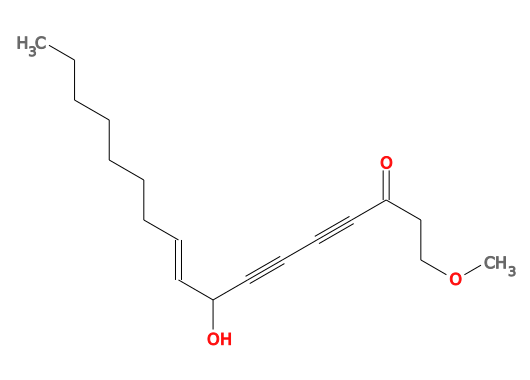 |
| Plant Source | Angelica sinensis Common Name:Dang Gui |
| Source Family | Apiaceae (Umbelliferae) |
| Origin | Northwest China |
| Plant Part Used | Root |
| Extract | NR |
| Target Bacteria | Mycobacterium tuberculosis H37Rv |
| Assay / Test Done | Microplate Alamar Blue Assay (MABA) |
| Positive Control Used (conc.) | Rifampin (0.06 µg/ml) |
| Inhibition [%] | NR |
| Activity [MIC] µg/ml | > 60 µg/ml |
| Activity (In terms of dilution) | NR |
| Activity (Zone of inhibition in mm) | NR |
| Active Compound Identified | 8 - Hydroxy - 1 - Methoxy - (Z) - 9 - Heptadecene 4, 6 - Diyn - 3 - One |
| PubChem ID | NR |
| Ethnomedicinal Information | NR |
| PubMed ID [Source Literature] | 18567055 |
| Extract Preparation | 8 kg of the pulverized roots of Angelica sinensis Diels were extracted with methanol and the extract sequentially partitioned with petroleum ether, CHCl3, and BuOH |
| Chemical Classification [Active Compound] | Aliphatic, Alkene, Alkyne, Ketone, Ether, Alcohol |
| Media / Broth Used [Antimicrobial Assay/Test] | Middlebrook 7H12 medium |
| Cytotoxicity Assay [AID] | Against Vero cells |
| Molecular Weight | 290.188 |
| Molecular Formula | C18H26O3 |
| SMILES | COCCC(=O)C#CC#CC(/C=CCCCCCCC)O |
| XLogP | 4.421 |
| PSA | 46.530 |
| H-bond Donor | 1 |
| H-bond Acceptor | 3 |
| No. of Rotatable Bond Count | 10 |
| No. of Rings | 0 |
| No. of N | 0 |
| No. of O | 3 |
| No. of S | 0 |
| Reference(s) | 1) Deng S, Wang Y, Inui T, Chen SN, Farnsworth NR, Cho S, Franzblau SG, Pauli GF.Anti-TB polyynes from the roots of Angelica sinensis.Phytother Res. 2008 Jul;22(7):878-82
|
| Curator | KeyaMukherjee, reshmi, Farzana Shamsudeen, Vikramjitmandal |
| Compound ID | 3810 |
| Compound Structure | |
| Plant Source | Angelica sinensis Common Name:Dang Gui |
| Source Family | Apiaceae (Umbelliferae) |
| Origin | Northwest China |
| Plant Part Used | Root |
| Extract | NR |
| Target Bacteria | Mycobacterium tuberculosis (Erdman) |
| Assay / Test Done | Microplate Alamar Blue Assay (MABA) |
| Positive Control Used (conc.) | Rifampin (0.05 µg/ml) |
| Inhibition [%] | NR |
| Activity [MIC] µg/ml | 6 µg/ml |
| Activity (In terms of dilution) | NR |
| Activity (Zone of inhibition in mm) | NR |
| Active Compound Identified | Falcarindiol |
| PubChem ID | 6436239 |
| Ethnomedicinal Information | NR |
| PubMed ID [Source Literature] | 18567055 |
| Extract Preparation | 8 kg of the pulverized roots of Angelica sinensis Diels were extracted with methanol and the extract sequentially partitioned with petroleum ether, CHCl3, and BuOH |
| Chemical Classification [Active Compound] | Aliphatic, Alkene, Alkyne, Alcohol |
| Media / Broth Used [Antimicrobial Assay/Test] | Middlebrook 7H12 medium |
| Cytotoxicity Assay [AID] | Against Vero cells |
| Molecular Weight | 260.178 |
| Molecular Formula | C17H24O2 |
| SMILES | O[C@@H](/C=CCCCCCCC)C#CC#C[C@@H](O)C=C |
| XLogP | 4.573 |
| PSA | 40.460 |
| H-bond Donor | 2 |
| H-bond Acceptor | 2 |
| No. of Rotatable Bond Count | 8 |
| No. of Rings | 0 |
| No. of N | 0 |
| No. of O | 2 |
| No. of S | 0 |
| Reference(s) | 1) Deng S, Wang Y, Inui T, Chen SN, Farnsworth NR, Cho S, Franzblau SG, Pauli GF.Anti-TB polyynes from the roots of Angelica sinensis.Phytother Res. 2008 Jul;22(7):878-82
|
| Curator | KeyaMukherjee, reshmi, Farzana Shamsudeen, Vikramjitmandal |
| Compound ID | 3811 |
| Compound Structure | |
| Plant Source | Angelica sinensis Common Name:Dang Gui |
| Source Family | Apiaceae (Umbelliferae) |
| Origin | Northwest China |
| Plant Part Used | Root |
| Extract | NR |
| Target Bacteria | Mycobacterium tuberculosis (Erdman) |
| Assay / Test Done | Microplate Alamar Blue Assay (MABA) |
| Positive Control Used (conc.) | Rifampin (0.05 µg/ml) |
| Inhibition [%] | NR |
| Activity [MIC] µg/ml | 1.4 µg/ml |
| Activity (In terms of dilution) | NR |
| Activity (Zone of inhibition in mm) | NR |
| Active Compound Identified | 9Z, 17 - Octadecadiene - 12, 14 - Diyne - 1, 11, 16 - Triol, 1 - Acetate |
| PubChem ID | NR |
| Ethnomedicinal Information | NR |
| PubMed ID [Source Literature] | 18567055 |
| Extract Preparation | 8 kg of the pulverized roots of Angelica sinensis Diels were extracted with methanol and the extract sequentially partitioned with petroleum ether, CHCl3, and BuOH |
| Chemical Classification [Active Compound] | Aliphatic, Alkene, Alkyne, Ester, Alcohol, O-Acetyl |
| Media / Broth Used [Antimicrobial Assay/Test] | Middlebrook 7H12 medium |
| Cytotoxicity Assay [AID] | Against Vero cells |
| Molecular Weight | 332.199 |
| Molecular Formula | C20H28O4 |
| SMILES | C(=O)(C)OCCCCCCCC/C=C\C(O)C#CC#CC(C=C)O |
| XLogP | 4.117 |
| PSA | 66.760 |
| H-bond Donor | 2 |
| H-bond Acceptor | 4 |
| No. of Rotatable Bond Count | 12 |
| No. of Rings | 0 |
| No. of N | 0 |
| No. of O | 4 |
| No. of S | 0 |
| Reference(s) | 1) Deng S, Wang Y, Inui T, Chen SN, Farnsworth NR, Cho S, Franzblau SG, Pauli GF.Anti-TB polyynes from the roots of Angelica sinensis.Phytother Res. 2008 Jul;22(7):878-82
|
| Curator | KeyaMukherjee, reshmi, Farzana Shamsudeen, Vikramjitmandal |
| Compound ID | 3813 |
| Compound Structure | |
| Plant Source | Angelica sinensis Common Name:Dang Gui |
| Source Family | Apiaceae (Umbelliferae) |
| Origin | Northwest China |
| Plant Part Used | Root |
| Extract | NR |
| Target Bacteria | Mycobacterium tuberculosis (Erdman) |
| Assay / Test Done | Microplate Alamar Blue Assay (MABA) |
| Positive Control Used (conc.) | Rifampin (0.05 µg/ml) |
| Inhibition [%] | NR |
| Activity [MIC] µg/ml | > 60 µg/ml |
| Activity (In terms of dilution) | NR |
| Activity (Zone of inhibition in mm) | NR |
| Active Compound Identified | Heptadeca - 1 - Ene - 9, 10 - Epoxy - 4, 6 - Diyne - 3, 8 - Diol |
| PubChem ID | NR |
| Ethnomedicinal Information | NR |
| PubMed ID [Source Literature] | 18567055 |
| Extract Preparation | 8 kg of the pulverized roots of Angelica sinensis Diels were extracted with methanol and the extract sequentially partitioned with petroleum ether, CHCl3, and BuOH |
| Chemical Classification [Active Compound] | Aliphatic, Alkene, Alkyne, Epoxy, Alcohol |
| Media / Broth Used [Antimicrobial Assay/Test] | Middlebrook 7H12 medium |
| Cytotoxicity Assay [AID] | Against Vero cells |
| Molecular Weight | 276.173 |
| Molecular Formula | C17H24O3 |
| SMILES | C(#CC(C=C)O)C#CC(O)C1C(CCCCCCC)O1 |
| XLogP | 3.663 |
| PSA | 52.990 |
| H-bond Donor | 2 |
| H-bond Acceptor | 3 |
| No. of Rotatable Bond Count | 8 |
| No. of Rings | 1 |
| No. of N | 0 |
| No. of O | 3 |
| No. of S | 0 |
| Reference(s) | 1) Deng S, Wang Y, Inui T, Chen SN, Farnsworth NR, Cho S, Franzblau SG, Pauli GF.Anti-TB polyynes from the roots of Angelica sinensis.Phytother Res. 2008 Jul;22(7):878-82
|
| Curator | KeyaMukherjee, reshmi, Farzana Shamsudeen, Vikramjitmandal |
| Compound ID | 3814 |
| Compound Structure | |
| Plant Source | Angelica sinensis Common Name:Dang Gui |
| Source Family | Apiaceae (Umbelliferae) |
| Origin | Northwest China |
| Plant Part Used | Root |
| Extract | NR |
| Target Bacteria | Mycobacterium tuberculosis (Erdman) |
| Assay / Test Done | Microplate Alamar Blue Assay (MABA) |
| Positive Control Used (conc.) | Rifampin (0.05 µg/ml) |
| Inhibition [%] | NR |
| Activity [MIC] µg/ml | > 60 µg/ml |
| Activity (In terms of dilution) | NR |
| Activity (Zone of inhibition in mm) | NR |
| Active Compound Identified | 8 - Hydroxy - 1 - Methoxy - (Z) - 9 - Heptadecene 4, 6 - Diyn - 3 - One |
| PubChem ID | NR |
| Ethnomedicinal Information | NR |
| PubMed ID [Source Literature] | 18567055 |
| Extract Preparation | 8 kg of the pulverized roots of Angelica sinensis Diels were extracted with methanol and the extract sequentially partitioned with petroleum ether, CHCl3, and BuOH |
| Chemical Classification [Active Compound] | Aliphatic, Alkene, Alkyne, Ketone, Ether, Alcohol |
| Media / Broth Used [Antimicrobial Assay/Test] | Middlebrook 7H12 medium |
| Cytotoxicity Assay [AID] | Against Vero cells |
| Molecular Weight | 290.188 |
| Molecular Formula | C18H26O3 |
| SMILES | COCCC(=O)C#CC#CC(/C=CCCCCCCC)O |
| XLogP | 4.421 |
| PSA | 46.530 |
| H-bond Donor | 1 |
| H-bond Acceptor | 3 |
| No. of Rotatable Bond Count | 10 |
| No. of Rings | 0 |
| No. of N | 0 |
| No. of O | 3 |
| No. of S | 0 |
| Reference(s) | 1) Deng S, Wang Y, Inui T, Chen SN, Farnsworth NR, Cho S, Franzblau SG, Pauli GF.Anti-TB polyynes from the roots of Angelica sinensis.Phytother Res. 2008 Jul;22(7):878-82
|
| Curator | KeyaMukherjee, reshmi, Farzana Shamsudeen, Vikramjitmandal |
| Compound ID | 1074 |
| Compound Structure | |
| Plant Source | Agelica sinensis Common Name:Female Ginseng |
| Source Family | Apiaceae (Umbelliferae) |
| Origin | China |
| Plant Part Used | Root |
| Extract | Petroleum ether, chloroform |
| Target Bacteria | Mycobacterium tuberculosis H37Rv |
| Assay / Test Done | Microplate Alamar Blue Assay (MABA) |
| Positive Control Used (conc.) | Rifampin (0.06 µg/ml) |
| Inhibition [%] | >= 90 % |
| Activity [MIC] µg/ml | 50.2 µg/ml |
| Activity (In terms of dilution) | |
| Activity (Zone of inhibition in mm) | |
| Active Compound Identified | Oplopandiol |
| PubChem ID | 6474833 |
| Ethnomedicinal Information | To treat gynecological ailments, fatigue, mild anemia and high blood pressure |
| PubMed ID [Source Literature] | 18567055, 12696940 |
| Extract Preparation | N/A |
| Chemical Classification [Active Compound] | Aliphatic, Alkene, Alkyne, Alcohol |
| Media / Broth Used [Antimicrobial Assay/Test] | N/A |
| Cytotoxicity Assay [AID] | N/A |
| Molecular Weight | 262.193 |
| Molecular Formula | C17H26O2
|
| SMILES | O[C@@H](/C=CCCCCCCC)C#CC#C[C@@H](O)CC |
| XLogP | 4.977 |
| PSA | 40.460 |
| H-bond Donor | 2 |
| H-bond Acceptor | 2 |
| No. of Rotatable Bond Count | 8 |
| No. of Rings | 0 |
| No. of N | 0 |
| No. of O | 2 |
| No. of S | 0 |
| Reference(s) | 1) Deng S, Wang Y, Inui T, Chen SN, Farnsworth NR, Cho S, Franzblau SG, Pauli GF.Anti-TB polyynes from the roots of Angelica sinensis.Phytother Res. 2008 Jul;22(7):878-82
2) Zhao KJ, Dong TT, Tu PF, Song ZH, Lo CK, Tsim KW (April 2003).Molecular genetic and chemical assessment of radix Angelica (Danggui) in China. J. Agric. Food Chem. 51 (9): 2576.83
|
| Curator | |