| Compound ID | 1413 |
| Compound Structure |  |
| Plant Source | Cephaelis dichroa Common Name: |
| Source Family | Rubiaceae |
| Origin | Mexico |
| Plant Part Used | Aerial |
| Extract | |
| Target Bacteria | Mycobacterium tuberculosis H37Rv |
| Assay / Test Done | Microplate Alamar Blue Assay (MABA) |
| Positive Control Used (conc.) | Isoniazid (0.06 µg/ml), Ethambutol (2 µg/ml), Rifampin (0.06 µg/ml), Streptomycin (0.50 µg/ml) |
| Inhibition [%] | |
| Activity [MIC] µg/ml | 6.25 µg/ml |
| Activity (In terms of dilution) | |
| Activity (Zone of inhibition in mm) | |
| Active Compound Identified | Peracetyl - Strictosidine Lactam |
| PubChem ID | NR |
| Ethnomedicinal Information | Tuberculosis |
| PubMed ID [Source Literature] | |
| Extract Preparation | N/A |
| Chemical Classification [Active Compound] | Aromatic, Pentacyclic, Alkaloid, Carbazole, Pyran, Isoquinoline, O-Acetyl, Sugar |
| Media / Broth Used [Antimicrobial Assay/Test] | N/A |
| Cytotoxicity Assay [AID] | N/A |
| Molecular Weight | 650.284 |
| Molecular Formula | C35H42N2O10 |
| SMILES | C1cccc2c1c1c([nH]2)C2N(CC1)CC1=COC(C(C1C2)C=C)OC1O[C@H]([C@@H]([C@H]([C@@H]1OC(=O)C)CC(=O)C)OC(=O)C)COC(=O)C |
| XLogP | 3.192 |
| PSA | 142.690 |
| H-bond Donor | 1 |
| H-bond Acceptor | 12 |
| No. of Rotatable Bond Count | 12 |
| No. of Rings | 6 |
| No. of N | 2 |
| No. of O | 10 |
| No. of S | 0 |
| Reference(s) | 1) María del Rayo Camacho-Corona, Juan Manuel de Jesús Favela-Hernández, Omar González-Santiago, Elvira Garza-González, Gloria María Molina-Salinas, Salvador Said-Fernández, Guillermo Delgado, Julieta Luna-Herrerae.Evaluation of Some Plant-derived Secondary Metabolites Against Sensitive and Multidrug-resistant Mycobacterium tuberculosis.J. Mex. Chem. Soc. 2009, 53(2), 71-75
|
| Curator | |
| Compound ID | 1415 |
| Compound Structure | |
| Plant Source | Cephaelis dichroa Common Name: |
| Source Family | Rubiaceae |
| Origin | Mexico |
| Plant Part Used | Aerial |
| Extract | |
| Target Bacteria | Mycobacterium tuberculosis (345) |
| Assay / Test Done | Microplate Alamar Blue Assay (MABA) |
| Positive Control Used (conc.) | Streptomycin (3.125 µg/ml), Isoniazid (< 50 µg/ml), Ethambutol (12.50 µg/ml), Rifampin (< 50 µg/ml) |
| Inhibition [%] | |
| Activity [MIC] µg/ml | 200 µg/ml |
| Activity (In terms of dilution) | |
| Activity (Zone of inhibition in mm) | |
| Active Compound Identified | Peracetyl - Strictosidine Lactam |
| PubChem ID | NR |
| Ethnomedicinal Information | Tuberculosis |
| PubMed ID [Source Literature] | |
| Extract Preparation | N/A |
| Chemical Classification [Active Compound] | Aromatic, Pentacyclic, Alkaloid, Carbazole, Pyran, Isoquinoline, O-Acetyl, Sugar |
| Media / Broth Used [Antimicrobial Assay/Test] | N/A |
| Cytotoxicity Assay [AID] | N/A |
| Molecular Weight | 650.284 |
| Molecular Formula | C35H42N2O10 |
| SMILES | C1cccc2c1c1c([nH]2)C2N(CC1)CC1=COC(C(C1C2)C=C)OC1O[C@H]([C@@H]([C@H]([C@@H]1OC(=O)C)CC(=O)C)OC(=O)C)COC(=O)C |
| XLogP | 3.192 |
| PSA | 142.690 |
| H-bond Donor | 1 |
| H-bond Acceptor | 12 |
| No. of Rotatable Bond Count | 12 |
| No. of Rings | 6 |
| No. of N | 2 |
| No. of O | 10 |
| No. of S | 0 |
| Reference(s) | 1) María del Rayo Camacho-Corona, Juan Manuel de Jesús Favela-Hernández, Omar González-Santiago, Elvira Garza-González, Gloria María Molina-Salinas, Salvador Said-Fernández, Guillermo Delgado, Julieta Luna-Herrerae.Evaluation of Some Plant-derived Secondary Metabolites Against Sensitive and Multidrug-resistant Mycobacterium tuberculosis.J. Mex. Chem. Soc. 2009, 53(2), 71-75
|
| Curator | |
| Compound ID | 1417 |
| Compound Structure | |
| Plant Source | Cephaelis dichroa Common Name: |
| Source Family | Rubiaceae |
| Origin | Mexico |
| Plant Part Used | Aerial |
| Extract | |
| Target Bacteria | Mycobacterium tuberculosis (M12) |
| Assay / Test Done | Microplate Alamar Blue Assay (MABA) |
| Positive Control Used (conc.) | Streptomycin (12.50 µg/ml), Isoniazid (< 50 µg/ml), Ethambutol (12.50 µg/ml), Rifampin (< 50 µg/ml) |
| Inhibition [%] | |
| Activity [MIC] µg/ml | > 200 µg/ml |
| Activity (In terms of dilution) | |
| Activity (Zone of inhibition in mm) | |
| Active Compound Identified | Peracetyl - strictosidine lactam |
| PubChem ID | NR |
| Ethnomedicinal Information | Tuberculosis |
| PubMed ID [Source Literature] | |
| Extract Preparation | N/A |
| Chemical Classification [Active Compound] | Aromatic, Pentacyclic, Alkaloid, Carbazole, Pyran, Isoquinoline, O-Acetyl, Sugar |
| Media / Broth Used [Antimicrobial Assay/Test] | N/A |
| Cytotoxicity Assay [AID] | N/A |
| Molecular Weight | 650.284 |
| Molecular Formula | C35H42N2O10 |
| SMILES | C1cccc2c1c1c([nH]2)C2N(CC1)CC1=COC(C(C1C2)C=C)OC1O[C@H]([C@@H]([C@H]([C@@H]1OC(=O)C)CC(=O)C)OC(=O)C)COC(=O)C |
| XLogP | 3.192 |
| PSA | 142.690 |
| H-bond Donor | 1 |
| H-bond Acceptor | 12 |
| No. of Rotatable Bond Count | 12 |
| No. of Rings | 6 |
| No. of N | 2 |
| No. of O | 10 |
| No. of S | 0 |
| Reference(s) | 1) María del Rayo Camacho-Corona, Juan Manuel de Jesús Favela-Hernández, Omar González-Santiago, Elvira Garza-González, Gloria María Molina-Salinas, Salvador Said-Fernández, Guillermo Delgado, Julieta Luna-Herrerae.Evaluation of Some Plant-derived Secondary Metabolites Against Sensitive and Multidrug-resistant Mycobacterium tuberculosis.J. Mex. Chem. Soc. 2009, 53(2), 71-75
|
| Curator | |
| Compound ID | 1419 |
| Compound Structure | |
| Plant Source | Cephaelis dichroa Common Name: |
| Source Family | Rubiaceae |
| Origin | Mexico |
| Plant Part Used | Aerial |
| Extract | |
| Target Bacteria | Mycobacterium tuberculosis (M20) |
| Assay / Test Done | Microplate Alamar Blue Assay (MABA) |
| Positive Control Used (conc.) | Streptomycin (25 µg/ml), Isoniazid (< 50 µg/ml), Ethambutol (12.50 µg/ml), Rifampin (< 50 µg/ml) |
| Inhibition [%] | |
| Activity [MIC] µg/ml | > 200 µg/ml |
| Activity (In terms of dilution) | |
| Activity (Zone of inhibition in mm) | |
| Active Compound Identified | Peracetyl - Strictosidine Lactam |
| PubChem ID | NR |
| Ethnomedicinal Information | Tuberculosis |
| PubMed ID [Source Literature] | |
| Extract Preparation | N/A |
| Chemical Classification [Active Compound] | Aromatic, Pentacyclic, Alkaloid, Carbazole, Pyran, Isoquinoline, O-Acetyl, Sugar |
| Media / Broth Used [Antimicrobial Assay/Test] | N/A |
| Cytotoxicity Assay [AID] | N/A |
| Molecular Weight | 650.284 |
| Molecular Formula | C35H42N2O10 |
| SMILES | C1cccc2c1c1c([nH]2)C2N(CC1)CC1=COC(C(C1C2)C=C)OC1O[C@H]([C@@H]([C@H]([C@@H]1OC(=O)C)CC(=O)C)OC(=O)C)COC(=O)C |
| XLogP | 3.192 |
| PSA | 142.690 |
| H-bond Donor | 1 |
| H-bond Acceptor | 12 |
| No. of Rotatable Bond Count | 12 |
| No. of Rings | 6 |
| No. of N | 2 |
| No. of O | 10 |
| No. of S | 0 |
| Reference(s) | 1) María del Rayo Camacho-Corona, Juan Manuel de Jesús Favela-Hernández, Omar González-Santiago, Elvira Garza-González, Gloria María Molina-Salinas, Salvador Said-Fernández, Guillermo Delgado, Julieta Luna-Herrerae.Evaluation of Some Plant-derived Secondary Metabolites Against Sensitive and Multidrug-resistant Mycobacterium tuberculosis.J. Mex. Chem. Soc. 2009, 53(2), 71-75
|
| Curator | |
| Compound ID | 1477 |
| Compound Structure |  |
| Plant Source | Clausena excavata Burm. f. Common Name:Clausena (English) |
| Source Family | Rutaceae |
| Origin | India |
| Plant Part Used | Rhizome |
| Extract | Chloroform |
| Target Bacteria | Mycobacterium tuberculosis |
| Assay / Test Done | Microplate Alamar Blue Assay (MABA) |
| Positive Control Used (conc.) | Isoniazid (0.040 – 0.090 µg/ml), Kanamycin sulphate (2 – 5 µg/ml) |
| Inhibition [%] | |
| Activity [MIC] µg/ml | 100 µg/ml |
| Activity (In terms of dilution) | |
| Activity (Zone of inhibition in mm) | |
| Active Compound Identified | 3 - Formylcarbazole |
| PubChem ID | 20746 |
| Ethnomedicinal Information | Fever, indigestion, malaria, colic, muscular pain, diuretic and as tonic; the allied species C. wampi Blanco for bronchitis, in Thai folk medicine for cold |
| PubMed ID [Source Literature] | 12624822 |
| Extract Preparation | N/A |
| Chemical Classification [Active Compound] | Aromatic, Tricyclic, Carbazole, Alkaloid |
| Media / Broth Used [Antimicrobial Assay/Test] | N/A |
| Cytotoxicity Assay [AID] | N/A |
| Molecular Weight | 181.089 |
| Molecular Formula | C13H11N
|
| SMILES | [nH]1c2c(c3c1cccc3)cc(cc2)C |
| XLogP | 4.401 |
| PSA | 15.790 |
| H-bond Donor | 1 |
| H-bond Acceptor | 1 |
| No. of Rotatable Bond Count | 0 |
| No. of Rings | 3 |
| No. of N | 1 |
| No. of O | 0 |
| No. of S | 0 |
| Reference(s) | 1) Sunthitikawinsakul A, Kongkathip N, Kongkathip B, Phonnakhu S, Daly JW, Spande TF, Nimit Y, Rochanaruangrai S.Coumarins and carbazoles from Clausena excavata exhibited antimycobacterial and antifungal activities.Planta Med. 2003 Feb;69(2):155-7
2) Kirtikar, K.R., Basu, B.D., 1935. Indian Medicinal Plants, vols. 1–4. Lalit Mohan Basu, Allahabad, India
|
| Curator | |
| Compound ID | 1479 |
| Compound Structure | 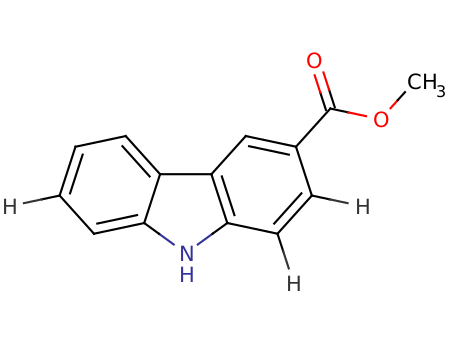 |
| Plant Source | Clausena excavata Burm. f. Common Name:Clausena (English) |
| Source Family | Rutaceae |
| Origin | India |
| Plant Part Used | Rhizome |
| Extract | Hexane |
| Target Bacteria | Mycobacterium tuberculosis |
| Assay / Test Done | Microplate Alamar Blue Assay (MABA) |
| Positive Control Used (conc.) | Isoniazid (0.040 – 0.090 µg/ml), Kanamycin sulphate (2 – 5 µg/ml) |
| Inhibition [%] | |
| Activity [MIC] µg/ml | 50 µg/ml |
| Activity (In terms of dilution) | |
| Activity (Zone of inhibition in mm) | |
| Active Compound Identified | 3 - Methoxycarbonylcarbazole |
| PubChem ID | NR |
| Ethnomedicinal Information | Fever, indigestion, malaria, colic, muscular pain, diuretic and as tonic; the allied species C. wampi Blanco for bronchitis, in Thai folk medicine for cold |
| PubMed ID [Source Literature] | 12624822 |
| Extract Preparation | N/A |
| Chemical Classification [Active Compound] | Aromatic, Tricyclic, Alkaloid, Carbazole, Ester |
| Media / Broth Used [Antimicrobial Assay/Test] | N/A |
| Cytotoxicity Assay [AID] | N/A |
| Molecular Weight | 225.079 |
| Molecular Formula | C14H11NO2 |
| SMILES | [nH]1c2c(c3c1ccc(c3)C(=O)OC)cccc2 |
| XLogP | 3.425 |
| PSA | 42.090 |
| H-bond Donor | 1 |
| H-bond Acceptor | 3 |
| No. of Rotatable Bond Count | 2 |
| No. of Rings | 3 |
| No. of N | 1 |
| No. of O | 2 |
| No. of S | 0 |
| Reference(s) | 1) Sunthitikawinsakul A, Kongkathip N, Kongkathip B, Phonnakhu S, Daly JW, Spande TF, Nimit Y, Rochanaruangrai S.Coumarins and carbazoles from Clausena excavata exhibited antimycobacterial and antifungal activities.Planta Med. 2003 Feb;69(2):155-7
2) Kirtikar, K.R., Basu, B.D., 1935. Indian Medicinal Plants, vols. 1–4. Lalit Mohan Basu, Allahabad, India
|
| Curator | |
| Compound ID | 1480 |
| Compound Structure | 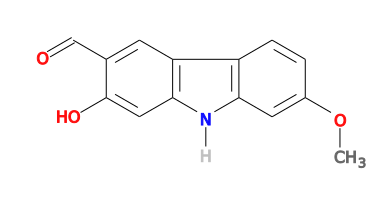 |
| Plant Source | Clausena excavata Burm. f. Common Name:Clausena (English) |
| Source Family | Rutaceae |
| Origin | India |
| Plant Part Used | Rhizome |
| Extract | Hexane |
| Target Bacteria | Mycobacterium tuberculosis |
| Assay / Test Done | Microplate Alamar Blue Assay (MABA) |
| Positive Control Used (conc.) | Isoniazid (0.040 – 0.090 µg/ml), Kanamycin sulphate (2 – 5 µg/ml) |
| Inhibition [%] | |
| Activity [MIC] µg/ml | 100 µg/ml |
| Activity (In terms of dilution) | |
| Activity (Zone of inhibition in mm) | |
| Active Compound Identified | 2 - Hydroxy - 3 - Formyl - 7 - Methoxycarbazole |
| PubChem ID | 189687 |
| Ethnomedicinal Information | Fever, indigestion, malaria, colic, muscular pain, diuretic and as tonic; the allied species C. wampi Blanco for bronchitis, in Thai folk medicine for cold |
| PubMed ID [Source Literature] | 12624822 |
| Extract Preparation | N/A |
| Chemical Classification [Active Compound] | Aromatic, Tricyclic, Alkaloid, Carbazole, Aldehyde, Ether, Phenol |
| Media / Broth Used [Antimicrobial Assay/Test] | N/A |
| Cytotoxicity Assay [AID] | N/A |
| Molecular Weight | 241.074 |
| Molecular Formula | C14H11NO3
|
| SMILES | O(c1cc2[nH]c3c(c2cc1)cc(c(O)c3)C=O)C |
| XLogP | 2.329 |
| PSA | 62.320 |
| H-bond Donor | 2 |
| H-bond Acceptor | 4 |
| No. of Rotatable Bond Count | 2 |
| No. of Rings | 3 |
| No. of N | 1 |
| No. of O | 3 |
| No. of S | 0 |
| Reference(s) | 1) Sunthitikawinsakul A, Kongkathip N, Kongkathip B, Phonnakhu S, Daly JW, Spande TF, Nimit Y, Rochanaruangrai S.Coumarins and carbazoles from Clausena excavata exhibited antimycobacterial and antifungal activities.Planta Med. 2003 Feb;69(2):155-7
2) Kirtikar, K.R., Basu, B.D., 1935. Indian Medicinal Plants, vols. 1–4. Lalit Mohan Basu, Allahabad, India
|
| Curator | |
| Compound ID | 1481 |
| Compound Structure | 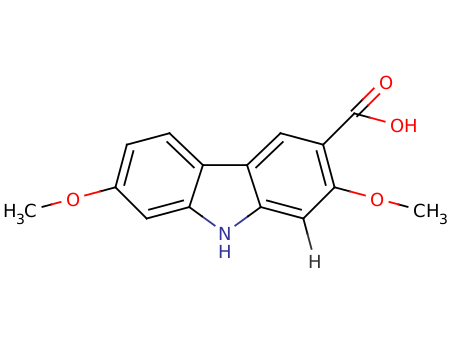 |
| Plant Source | Clausena excavata Burm. f. Common Name:Clausena (English) |
| Source Family | Rutaceae |
| Origin | India |
| Plant Part Used | Root |
| Extract | Chloroform |
| Target Bacteria | Mycobacterium tuberculosis |
| Assay / Test Done | Microplate Alamar Blue Assay (MABA) |
| Positive Control Used (conc.) | Isoniazid (0.040 – 0.090 µg/ml), Kanamycin sulphate (2 – 5 µg/ml) |
| Inhibition [%] | |
| Activity [MIC] µg/ml | 100 µg/ml |
| Activity (In terms of dilution) | |
| Activity (Zone of inhibition in mm) | |
| Active Compound Identified | Clauszoline J |
| PubChem ID | NR |
| Ethnomedicinal Information | Fever, indigestion, malaria, colic, muscular pain, diuretic and as tonic; the allied species C. wampi Blanco for bronchitis, in Thai folk medicine for cold |
| PubMed ID [Source Literature] | 12624822 |
| Extract Preparation | N/A |
| Chemical Classification [Active Compound] | Aromatic, Tricyclic, Alkaloid, Carbazole, Ether, Acid |
| Media / Broth Used [Antimicrobial Assay/Test] | N/A |
| Cytotoxicity Assay [AID] | N/A |
| Molecular Weight | 271.084 |
| Molecular Formula | C15H13NO4
|
| SMILES | [nH]1c2c(cc(c(c2)OC)C(=O)O)c2c1cc(cc2)OC |
| XLogP | 2.559 |
| PSA | 71.550 |
| H-bond Donor | 2 |
| H-bond Acceptor | 5 |
| No. of Rotatable Bond Count | 3 |
| No. of Rings | 3 |
| No. of N | 1 |
| No. of O | 4 |
| No. of S | 0 |
| Reference(s) | 1) Sunthitikawinsakul A, Kongkathip N, Kongkathip B, Phonnakhu S, Daly JW, Spande TF, Nimit Y, Rochanaruangrai S.Coumarins and carbazoles from Clausena excavata exhibited antimycobacterial and antifungal activities.Planta Med. 2003 Feb;69(2):155-7
2) Kirtikar, K.R., Basu, B.D., 1935. Indian Medicinal Plants, vols. 1–4. Lalit Mohan Basu, Allahabad, India
|
| Curator | |
| Compound ID | 3671 |
| Compound Structure | 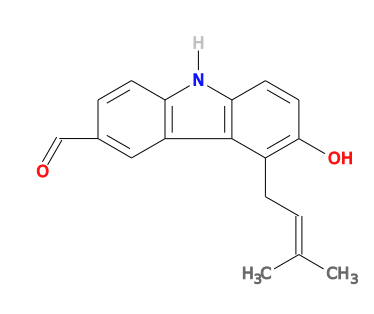 |
| Plant Source | Micromelum hirsutum Common Name: |
| Source Family | Rutaceae |
| Origin | |
| Plant Part Used | Stem bark |
| Extract | Dichloromethane |
| Target Bacteria | Mycobacterium tuberculosis H37Rv |
| Assay / Test Done | Fluorometric Alamar Blue Microassay (FMABA) |
| Positive Control Used (conc.) | Rifampin (0.040 ± 0.017 µg/ml) |
| Inhibition [%] | > 90 % |
| Activity [MIC] µg/ml | 31.5 ± 0.2 µg/ml |
| Activity (In terms of dilution) | NR |
| Activity (Zone of inhibition in mm) | NR |
| Active Compound Identified | Micromeline |
| PubChem ID | 5278450 |
| Ethnomedicinal Information | |
| PubMed ID [Source Literature] | 15770548 |
| Extract Preparation | The dried, milled stem bark of Micromelum hirsutum was extracted with CH2Cl2 to yield 45.5 g extract, of which 32.1 g were chromatographed by vacuum liquid chromatography over a silica gel column |
| Chemical Classification [Active Compound] | Aromatic, Tricyclic, Alkaloid, Carbazole, Prenylated, Aldehyde, Phenol |
| Media / Broth Used [Antimicrobial Assay/Test] | |
| Cytotoxicity Assay [AID] | Against Vero cells (ATCCCCL-
81) in the CellTiter 96 aqueous nonradioactive cell
proliferation assay |
| Molecular Weight | 279.126 |
| Molecular Formula | C18H17NO2 |
| SMILES | Oc1c(c2c3c([nH]c2cc1)ccc(c3)C=O)CC=C(C)C |
| XLogP | 3.814 |
| PSA | 53.090 |
| H-bond Donor | 2 |
| H-bond Acceptor | 3 |
| No. of Rotatable Bond Count | 3 |
| No. of Rings | 3 |
| No. of N | 1 |
| No. of O | 2 |
| No. of S | 0 |
| Reference(s) | 1) Ma C, Case RJ, Wang Y, Zhang HJ, Tan GT, Van Hung N, Cuong NM, Franzblau SG, Soejarto DD, Fong HH, Pauli GF.Anti-tuberculosis constituents from the stem bark of Micromelum hirsutum.Planta Med. 2005 Mar;71(3):261-7
|
| Curator | Vikramjitmandal |
| Compound ID | 3672 |
| Compound Structure | 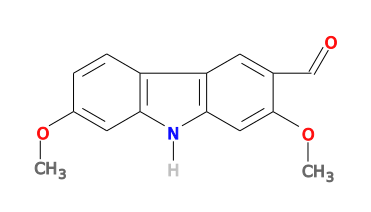 |
| Plant Source | Micromelum hirsutum Common Name: |
| Source Family | Rutaceae |
| Origin | |
| Plant Part Used | Stem bark |
| Extract | Dichloromethane |
| Target Bacteria | Mycobacterium tuberculosis H37Rv |
| Assay / Test Done | Fluorometric Alamar Blue Microassay (FMABA) |
| Positive Control Used (conc.) | Rifampin (0.040 ± 0.017 µg/ml) |
| Inhibition [%] | > 90 % |
| Activity [MIC] µg/ml | 14.3 ± 0.9 µg/ml |
| Activity (In terms of dilution) | NR |
| Activity (Zone of inhibition in mm) | NR |
| Active Compound Identified | Lansine |
| PubChem ID | 5317755 |
| Ethnomedicinal Information | |
| PubMed ID [Source Literature] | 15770548 |
| Extract Preparation | The dried, milled stem bark of Micromelum hirsutum was extracted with CH2Cl2 to yield 45.5 g extract, of which 32.1 g were chromatographed by vacuum liquid chromatography over a silica gel column |
| Chemical Classification [Active Compound] | Aromatic, Tricyclic, Alkaloid, Carbazole, Aldehyde, Ether |
| Media / Broth Used [Antimicrobial Assay/Test] | |
| Cytotoxicity Assay [AID] | Against Vero cells (ATCCCCL-
81) in the CellTiter 96 aqueous nonradioactive cell
proliferation assay |
| Molecular Weight | 255.090 |
| Molecular Formula | C15H13NO3 |
| SMILES | O(c1cc2[nH]c3c(c2cc1C=O)ccc(OC)c3)C |
| XLogP | 2.419 |
| PSA | 51.320 |
| H-bond Donor | 1 |
| H-bond Acceptor | 4 |
| No. of Rotatable Bond Count | 3 |
| No. of Rings | 3 |
| No. of N | 1 |
| No. of O | 3 |
| No. of S | 0 |
| Reference(s) | 1) Ma C, Case RJ, Wang Y, Zhang HJ, Tan GT, Van Hung N, Cuong NM, Franzblau SG, Soejarto DD, Fong HH, Pauli GF.Anti-tuberculosis constituents from the stem bark of Micromelum hirsutum.Planta Med. 2005 Mar;71(3):261-7
|
| Curator | Vikramjitmandal |
| Compound ID | 3673 |
| Compound Structure | |
| Plant Source | Micromelum hirsutum Common Name: |
| Source Family | Rutaceae |
| Origin | |
| Plant Part Used | Stem bark |
| Extract | Dichloromethane |
| Target Bacteria | Mycobacterium tuberculosis H37Rv |
| Assay / Test Done | Fluorometric Alamar Blue Microassay (FMABA) |
| Positive Control Used (conc.) | Rifampin (0.040 ± 0.017 µg/ml) |
| Inhibition [%] | > 90 % |
| Activity [MIC] µg/ml | > 128 µg/ml |
| Activity (In terms of dilution) | NR |
| Activity (Zone of inhibition in mm) | NR |
| Active Compound Identified | 3 - Methylcarbazole |
| PubChem ID | 20746 |
| Ethnomedicinal Information | |
| PubMed ID [Source Literature] | 15770548 |
| Extract Preparation | The dried, milled stem bark of Micromelum hirsutum was extracted with CH2Cl2 to yield 45.5 g extract, of which 32.1 g were chromatographed by vacuum liquid chromatography over a silica gel column |
| Chemical Classification [Active Compound] | Aromatic, Tricyclic, Carbazole, Alkaloid |
| Media / Broth Used [Antimicrobial Assay/Test] | |
| Cytotoxicity Assay [AID] | Against Vero cells (ATCCCCL-
81) in the CellTiter 96 aqueous nonradioactive cell
proliferation assay |
| Molecular Weight | 181.089 |
| Molecular Formula | C13H11N |
| SMILES | [nH]1c2c(c3c1cccc3)cc(cc2)C |
| XLogP | 4.401 |
| PSA | 15.790 |
| H-bond Donor | 1 |
| H-bond Acceptor | 1 |
| No. of Rotatable Bond Count | 0 |
| No. of Rings | 3 |
| No. of N | 1 |
| No. of O | 0 |
| No. of S | 0 |
| Reference(s) | 1) Ma C, Case RJ, Wang Y, Zhang HJ, Tan GT, Van Hung N, Cuong NM, Franzblau SG, Soejarto DD, Fong HH, Pauli GF.Anti-tuberculosis constituents from the stem bark of Micromelum hirsutum.Planta Med. 2005 Mar;71(3):261-7
|
| Curator | Vikramjitmandal |
| Compound ID | 3674 |
| Compound Structure | 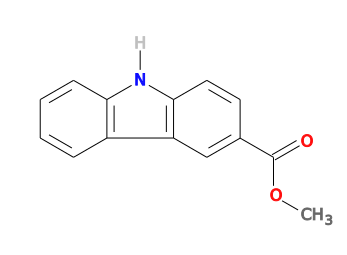 |
| Plant Source | Micromelum hirsutum Common Name: |
| Source Family | Rutaceae |
| Origin | |
| Plant Part Used | Stem bark |
| Extract | Dichloromethane |
| Target Bacteria | Mycobacterium tuberculosis H37Rv |
| Assay / Test Done | Fluorometric Alamar Blue Microassay (FMABA) |
| Positive Control Used (conc.) | Rifampin (0.040 ± 0.017 µg/ml) |
| Inhibition [%] | > 90 % |
| Activity [MIC] µg/ml | > 128 µg/ml |
| Activity (In terms of dilution) | NR |
| Activity (Zone of inhibition in mm) | NR |
| Active Compound Identified | Methyl Carbazole - 3 - Carboxylate |
| PubChem ID | 504069 |
| Ethnomedicinal Information | |
| PubMed ID [Source Literature] | 15770548 |
| Extract Preparation | The dried, milled stem bark of Micromelum hirsutum was extracted with CH2Cl2 to yield 45.5 g extract, of which 32.1 g were chromatographed by vacuum liquid chromatography over a silica gel column |
| Chemical Classification [Active Compound] | Aromatic, Tricyclic, Alkaloid, Carbazole, Ester |
| Media / Broth Used [Antimicrobial Assay/Test] | |
| Cytotoxicity Assay [AID] | Against Vero cells (ATCCCCL-
81) in the CellTiter 96 aqueous nonradioactive cell
proliferation assay |
| Molecular Weight | 225.079 |
| Molecular Formula | C14H11NO2 |
| SMILES | O(C(=O)c1cc2c3c([nH]c2cc1)cccc3)C |
| XLogP | 3.425 |
| PSA | 42.090 |
| H-bond Donor | 1 |
| H-bond Acceptor | 3 |
| No. of Rotatable Bond Count | 2 |
| No. of Rings | 3 |
| No. of N | 1 |
| No. of O | 2 |
| No. of S | 0 |
| Reference(s) | 1) Ma C, Case RJ, Wang Y, Zhang HJ, Tan GT, Van Hung N, Cuong NM, Franzblau SG, Soejarto DD, Fong HH, Pauli GF.Anti-tuberculosis constituents from the stem bark of Micromelum hirsutum.Planta Med. 2005 Mar;71(3):261-7
|
| Curator | Vikramjitmandal |
| Compound ID | 3675 |
| Compound Structure | |
| Plant Source | Micromelum hirsutum Common Name: |
| Source Family | Rutaceae |
| Origin | |
| Plant Part Used | Stem bark |
| Extract | Dichloromethane |
| Target Bacteria | Mycobacterium tuberculosis H37Rv |
| Assay / Test Done | Fluorometric Alamar Blue Microassay (FMABA) |
| Positive Control Used (conc.) | Rifampin (0.040 ± 0.017 µg/ml) |
| Inhibition [%] | > 90 % |
| Activity [MIC] µg/ml | 42.3 ± 0.5 µg/ml |
| Activity (In terms of dilution) | NR |
| Activity (Zone of inhibition in mm) | NR |
| Active Compound Identified | 3 - Formylcarbazole |
| PubChem ID | 20746 |
| Ethnomedicinal Information | |
| PubMed ID [Source Literature] | 15770548 |
| Extract Preparation | The dried, milled stem bark of Micromelum hirsutum was extracted with CH2Cl2 to yield 45.5 g extract, of which 32.1 g were chromatographed by vacuum liquid chromatography over a silica gel column |
| Chemical Classification [Active Compound] | Aromatic, Tricyclic, Carbazole, Alkaloid |
| Media / Broth Used [Antimicrobial Assay/Test] | |
| Cytotoxicity Assay [AID] | Against Vero cells (ATCCCCL-
81) in the CellTiter 96 aqueous nonradioactive cell
proliferation assay |
| Molecular Weight | 181.089 |
| Molecular Formula | C13H11N |
| SMILES | [nH]1c2c(c3c1cccc3)cc(cc2)C |
| XLogP | 4.401 |
| PSA | 15.790 |
| H-bond Donor | 1 |
| H-bond Acceptor | 1 |
| No. of Rotatable Bond Count | 0 |
| No. of Rings | 3 |
| No. of N | 1 |
| No. of O | 0 |
| No. of S | 0 |
| Reference(s) | 1) Ma C, Case RJ, Wang Y, Zhang HJ, Tan GT, Van Hung N, Cuong NM, Franzblau SG, Soejarto DD, Fong HH, Pauli GF.Anti-tuberculosis constituents from the stem bark of Micromelum hirsutum.Planta Med. 2005 Mar;71(3):261-7
|
| Curator | Vikramjitmandal |
| Compound ID | 3676 |
| Compound Structure | 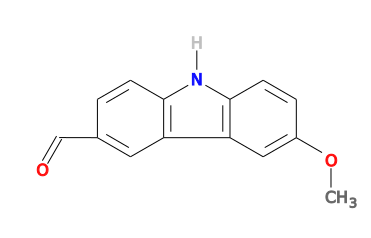 |
| Plant Source | Micromelum hirsutum Common Name: |
| Source Family | Rutaceae |
| Origin | |
| Plant Part Used | Stem bark |
| Extract | Dichloromethane |
| Target Bacteria | Mycobacterium tuberculosis H37Rv |
| Assay / Test Done | Fluorometric Alamar Blue Microassay (FMABA) |
| Positive Control Used (conc.) | Rifampin (0.040 ± 0.017 µg/ml) |
| Inhibition [%] | > 90 % |
| Activity [MIC] µg/ml | 15.6 ± 0.2 µg/ml |
| Activity (In terms of dilution) | NR |
| Activity (Zone of inhibition in mm) | NR |
| Active Compound Identified | 3 - Formyl - 6 - Methoxycarbazole |
| PubChem ID | 5278452 |
| Ethnomedicinal Information | |
| PubMed ID [Source Literature] | 15770548 |
| Extract Preparation | The dried, milled stem bark of Micromelum hirsutum was extracted with CH2Cl2 to yield 45.5 g extract, of which 32.1 g were chromatographed by vacuum liquid chromatography over a silica gel column |
| Chemical Classification [Active Compound] | Aromatic, Tricyclic, Carbazole, Alkaloid, Aldehyde, Ether |
| Media / Broth Used [Antimicrobial Assay/Test] | |
| Cytotoxicity Assay [AID] | Against Vero cells (ATCCCCL-
81) in the CellTiter 96 aqueous nonradioactive cell
proliferation assay |
| Molecular Weight | 225.079 |
| Molecular Formula | C14H11NO2 |
| SMILES | O(c1cc2c3c([nH]c2cc1)ccc(c3)C=O)C |
| XLogP | 2.863 |
| PSA | 42.090 |
| H-bond Donor | 1 |
| H-bond Acceptor | 3 |
| No. of Rotatable Bond Count | 2 |
| No. of Rings | 3 |
| No. of N | 1 |
| No. of O | 2 |
| No. of S | 0 |
| Reference(s) | 1) Ma C, Case RJ, Wang Y, Zhang HJ, Tan GT, Van Hung N, Cuong NM, Franzblau SG, Soejarto DD, Fong HH, Pauli GF.Anti-tuberculosis constituents from the stem bark of Micromelum hirsutum.Planta Med. 2005 Mar;71(3):261-7
|
| Curator | Vikramjitmandal |
| Compound ID | 3975 |
| Compound Structure | 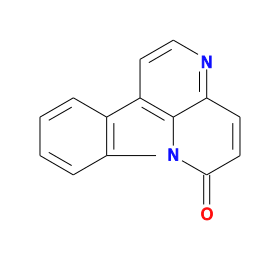 |
| Plant Source | Allium neapolitanum Common Name: |
| Source Family | Amaryllidaceae |
| Origin | Lincolnshire, UK |
| Plant Part Used | Bulb |
| Extract | Chloroform |
| Target Bacteria | Mycobacterium abcessus (ATCC 19977) |
| Assay / Test Done | Columbia Blood Agar |
| Positive Control Used (conc.) | Ethambutol (128 µg/ml), Isoniazid (128 µg/ml) |
| Inhibition [%] | |
| Activity [MIC] µg/ml | 16 µg/ml |
| Activity (In terms of dilution) | |
| Activity (Zone of inhibition in mm) | |
| Active Compound Identified | Canthin-6-one |
| PubChem ID | 97176 |
| Ethnomedicinal Information | |
| PubMed ID [Source Literature] | 17421058 |
| Extract Preparation | 6.3 kg of macerated bulb material underwent cold extraction with hexane, chloroform and methanol (3 l) |
| Chemical Classification [Active Compound] | Aromatic, Tetracyclic, Alkaloid, Carbazole, Quinoline, Amide |
| Media / Broth Used [Antimicrobial Assay/Test] | |
| Cytotoxicity Assay [AID] | |
| Molecular Weight | 220.064 |
| Molecular Formula | C14H8N2O
|
| SMILES | O=c1n2c3c(c4c2cccc4)ccnc3cc1 |
| XLogP | 2.809 |
| PSA | 34.890 |
| H-bond Donor | 0 |
| H-bond Acceptor | 2 |
| No. of Rotatable Bond Count | 0 |
| No. of Rings | 4 |
| No. of N | 2 |
| No. of O | 1 |
| No. of S | 0 |
| Reference(s) | 1) O'Donnell G, Gibbons S.Antibacterial activity of two canthin-6-one alkaloids from Allium neapolitanum.Phytother Res. 2007 Jul;21(7):653-7
|
| Curator | |
| Compound ID | 3974 |
| Compound Structure | |
| Plant Source | Allium neapolitanum Common Name: |
| Source Family | Amaryllidaceae |
| Origin | Lincolnshire, UK |
| Plant Part Used | Bulb |
| Extract | Chloroform |
| Target Bacteria | Mycobacterium fortuitum (ATCC 6841) |
| Assay / Test Done | Columbia Blood Agar |
| Positive Control Used (conc.) | Ethambutol (4 µg/ml), Isoniazid (0.25 µg/ml) |
| Inhibition [%] | |
| Activity [MIC] µg/ml | 16 µg/ml |
| Activity (In terms of dilution) | |
| Activity (Zone of inhibition in mm) | |
| Active Compound Identified | Canthin-6-one |
| PubChem ID | 97176 |
| Ethnomedicinal Information | |
| PubMed ID [Source Literature] | 17421058 |
| Extract Preparation | 6.3 kg of macerated bulb material underwent cold extraction with hexane, chloroform and methanol (3 l) |
| Chemical Classification [Active Compound] | Aromatic, Tetracyclic, Alkaloid, Carbazole, Quinoline, Amide |
| Media / Broth Used [Antimicrobial Assay/Test] | |
| Cytotoxicity Assay [AID] | |
| Molecular Weight | 220.064 |
| Molecular Formula | C14H8N2O
|
| SMILES | O=c1n2c3c(c4c2cccc4)ccnc3cc1 |
| XLogP | 2.809 |
| PSA | 34.890 |
| H-bond Donor | 0 |
| H-bond Acceptor | 2 |
| No. of Rotatable Bond Count | 0 |
| No. of Rings | 4 |
| No. of N | 2 |
| No. of O | 1 |
| No. of S | 0 |
| Reference(s) | 1) O'Donnell G, Gibbons S.Antibacterial activity of two canthin-6-one alkaloids from Allium neapolitanum.Phytother Res. 2007 Jul;21(7):653-7
|
| Curator | |
| Compound ID | 3796 |
| Compound Structure | |
| Plant Source | Allium neapolitanum Common Name:NR |
| Source Family | Amaryllidaceae |
| Origin | Lincolnshire, UK |
| Plant Part Used | Bulb |
| Extract | Chloroform |
| Target Bacteria | Mycobacterium phlei (ATCC 11758) |
| Assay / Test Done | Columbia Blood Agar |
| Positive Control Used (conc.) | Ethambutol (0.5 µg/ml), Isoniazid (2 µg/ml) |
| Inhibition [%] | NR |
| Activity [MIC] µg/ml | 8 µg/ml |
| Activity (In terms of dilution) | NR |
| Activity (Zone of inhibition in mm) | NR |
| Active Compound Identified | Canthin-6-one |
| PubChem ID | 97176 |
| Ethnomedicinal Information | NR |
| PubMed ID [Source Literature] | 17421058 |
| Extract Preparation | 6.3 kg of macerated bulb material underwent cold extraction with hexane, chloroform and methanol (3 l) |
| Chemical Classification [Active Compound] | Aromatic, Tetracyclic, Alkaloid, Carbazole, Quinoline, Amide |
| Media / Broth Used [Antimicrobial Assay/Test] | NR |
| Cytotoxicity Assay [AID] | NR |
| Molecular Weight | 220.064 |
| Molecular Formula | C14H8N2O |
| SMILES | O=c1n2c3c(c4c2cccc4)ccnc3cc1 |
| XLogP | 2.809 |
| PSA | 34.890 |
| H-bond Donor | 0 |
| H-bond Acceptor | 2 |
| No. of Rotatable Bond Count | 0 |
| No. of Rings | 4 |
| No. of N | 2 |
| No. of O | 1 |
| No. of S | 0 |
| Reference(s) | 1) O'Donnell G, Gibbons S.Antibacterial activity of two canthin-6-one alkaloids from Allium neapolitanum.Phytother Res. 2007 Jul;21(7):653-7
|
| Curator | Najiya-beegum, vikramjitmandal |
| Compound ID | 3797 |
| Compound Structure | 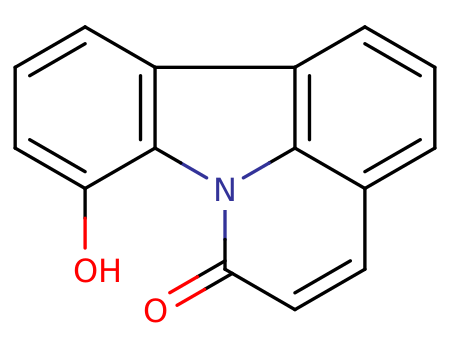 |
| Plant Source | Allium neapolitanum Common Name:NR |
| Source Family | Amaryllidaceae |
| Origin | Lincolnshire, UK |
| Plant Part Used | Bulb |
| Extract | Chloroform |
| Target Bacteria | Mycobacterium smegmatis (mc2 2700) |
| Assay / Test Done | NR |
| Positive Control Used (conc.) | Ethambutol (0.25 µg/ml), Isoniazid (2 µg/ml) |
| Inhibition [%] | NR |
| Activity [MIC] µg/ml | 2 µg/ml |
| Activity (In terms of dilution) | NR |
| Activity (Zone of inhibition in mm) | NR |
| Active Compound Identified | 8 - Hydroxy Canthin - 6 - One |
| PubChem ID | NR |
| Ethnomedicinal Information | NR |
| PubMed ID [Source Literature] | 17421058 |
| Extract Preparation | 6.3 kg of macerated bulb material underwent cold extraction with hexane, chloroform and methanol (3 l) |
| Chemical Classification [Active Compound] | Aromatic, Tetracyclic, Alkaloid, Carbazole, Quinoline, Amide, Phenol |
| Media / Broth Used [Antimicrobial Assay/Test] | NR |
| Cytotoxicity Assay [AID] | NR |
| Molecular Weight | 235.063 |
| Molecular Formula | C15H9NO2 |
| SMILES | C1ccc(c2c1c1c3n2c(=O)ccc3ccc1)O |
| XLogP | 2.854 |
| PSA | 42.230 |
| H-bond Donor | 1 |
| H-bond Acceptor | 3 |
| No. of Rotatable Bond Count | 0 |
| No. of Rings | 4 |
| No. of N | 1 |
| No. of O | 2 |
| No. of S | 0 |
| Reference(s) | 1) O'Donnell G, Gibbons S.Antibacterial activity of two canthin-6-one alkaloids from Allium neapolitanum.Phytother Res. 2007 Jul;21(7):653-7
|
| Curator | Najiya-beegum, vikramjitmandal |
| Compound ID | 3799 |
| Compound Structure | |
| Plant Source | Allium neapolitanum Common Name:NR |
| Source Family | Amaryllidaceae |
| Origin | Lincolnshire, UK |
| Plant Part Used | Bulb |
| Extract | Chloroform |
| Target Bacteria | Mycobacterium smegmatis (ATCC 14468) |
| Assay / Test Done | Columbia Blood Agar |
| Positive Control Used (conc.) | Ethambutol (0.25 µg/ml), Isoniazid (2 µg/ml) |
| Inhibition [%] | NR |
| Activity [MIC] µg/ml | 8 µg/ml |
| Activity (In terms of dilution) | NR |
| Activity (Zone of inhibition in mm) | NR |
| Active Compound Identified | Canthin-6-one |
| PubChem ID | 97176 |
| Ethnomedicinal Information | NR |
| PubMed ID [Source Literature] | 17421058 |
| Extract Preparation | 6.3 kg of macerated bulb material underwent cold extraction with hexane, chloroform and methanol (3 l) |
| Chemical Classification [Active Compound] | Aromatic, Tetracyclic, Alkaloid, Carbazole, Quinoline, Amide |
| Media / Broth Used [Antimicrobial Assay/Test] | NR |
| Cytotoxicity Assay [AID] | NR |
| Molecular Weight | 220.064 |
| Molecular Formula | C14H8N2O |
| SMILES | O=c1n2c3c(c4c2cccc4)ccnc3cc1 |
| XLogP | 2.809 |
| PSA | 34.890 |
| H-bond Donor | 0 |
| H-bond Acceptor | 2 |
| No. of Rotatable Bond Count | 0 |
| No. of Rings | 4 |
| No. of N | 2 |
| No. of O | 1 |
| No. of S | 0 |
| Reference(s) | 1) O'Donnell G, Gibbons S.Antibacterial activity of two canthin-6-one alkaloids from Allium neapolitanum.Phytother Res. 2007 Jul;21(7):653-7
|
| Curator | Najiya-beegum, vikramjitmandal |
| Compound ID | 3800 |
| Compound Structure | |
| Plant Source | Allium neapolitanum Common Name:NR |
| Source Family | Amaryllidaceae |
| Origin | Lincolnshire, UK |
| Plant Part Used | Bulb |
| Extract | Chloroform |
| Target Bacteria | Mycobacterium smegmatis (mc2 2700) |
| Assay / Test Done | Columbia Blood Agar |
| Positive Control Used (conc.) | Ethambutol (0.25 µg/ml), Isoniazid (2 µg/ml) |
| Inhibition [%] | NR |
| Activity [MIC] µg/ml | 8 µg/ml |
| Activity (In terms of dilution) | NR |
| Activity (Zone of inhibition in mm) | NR |
| Active Compound Identified | Canthin-6-one |
| PubChem ID | 97176 |
| Ethnomedicinal Information | NR |
| PubMed ID [Source Literature] | 17421058 |
| Extract Preparation | 6.3 kg of macerated bulb material underwent cold extraction with hexane, chloroform and methanol (3 l) |
| Chemical Classification [Active Compound] | Aromatic, Tetracyclic, Alkaloid, Carbazole, Quinoline, Amide |
| Media / Broth Used [Antimicrobial Assay/Test] | NR |
| Cytotoxicity Assay [AID] | NR |
| Molecular Weight | 220.064 |
| Molecular Formula | C14H8N2O |
| SMILES | O=c1n2c3c(c4c2cccc4)ccnc3cc1 |
| XLogP | 2.809 |
| PSA | 34.890 |
| H-bond Donor | 0 |
| H-bond Acceptor | 2 |
| No. of Rotatable Bond Count | 0 |
| No. of Rings | 4 |
| No. of N | 2 |
| No. of O | 1 |
| No. of S | 0 |
| Reference(s) | 1) O'Donnell G, Gibbons S.Antibacterial activity of two canthin-6-one alkaloids from Allium neapolitanum.Phytother Res. 2007 Jul;21(7):653-7
|
| Curator | Najiya-beegum, vikramjitmandal |
