| Compound ID | 1049 |
| Compound Structure | N/A |
| Plant Source | Acorus calamus L. var. americanus (Raf.) Common Name:Sweetflag |
| Source Family | Araceae |
| Origin | North America |
| Plant Part Used | Root |
| Extract | |
| Target Bacteria | |
| Assay / Test Done | Microplate Resazurin Assay (MRA) |
| Positive Control Used (conc.) | Rifampin (2 and 0.4 µg/ml) |
| Inhibition [%] | |
| Activity [MIC] µg/ml | |
| Activity (In terms of dilution) | |
| Activity (Zone of inhibition in mm) | |
| Active Compound Identified | N/A |
| PubChem ID | NR |
| Ethnomedicinal Information | Adjuvant, analgesic, antihelmintic, antihemorrhagic, anti-inflammatory, antipyretic, antirheumatic, cold, cough, dermatological, emetic, gastrointestinal, gynaecological, child birth, hallucinogen, panacea, tonic, pediatric, pulmonary, stimulant, venereal infection |
| PubMed ID [Source Literature] | 20657619 |
| Extract Preparation | N/A |
| Chemical Classification [Active Compound] | N/A |
| Media / Broth Used [Antimicrobial Assay/Test] | N/A |
| Cytotoxicity Assay [AID] | N/A |
| Reference(s) | 1) Duncan Webster, Timothy D.G. Lee, Jill MoWebster D, Lee TD, Moore J, Manning T, Kunimoto D, LeBlanc D, Johnson JA, Gray CA.Antimycobacterial screening of traditional medicinal plants using the microplate resazurin assay.Can J Microbiol. 2010 Jun;56(6):487-94
|
| Curator | |
| Compound ID | 1278 |
| Compound Structure | |
| Plant Source | Borago officinalis Linn. Common Name:Borage |
| Source Family | Boraginaceae |
| Origin | Europe, North Africa, North America |
| Plant Part Used | Herb |
| Extract | Methanol (19.44 %) |
| Target Bacteria | Mycobacterium aurum |
| Assay / Test Done | Broth Microdilution Method (BMM) |
| Positive Control Used (conc.) | Streptomycin (IC50 value 1.14) |
| Inhibition [%] | |
| Activity [MIC] µg/ml | > 500 µg/ml |
| Activity (In terms of dilution) | |
| Activity (Zone of inhibition in mm) | |
| Active Compound Identified | |
| PubChem ID | NR |
| Ethnomedicinal Information | Used in pulmonary diseases, consumption and to treat fever |
| PubMed ID [Source Literature] | 11744296 |
| Extract Preparation | N/A |
| Chemical Classification [Active Compound] | N/A |
| Media / Broth Used [Antimicrobial Assay/Test] | N/A |
| Cytotoxicity Assay [AID] | N/A |
| Reference(s) | 1) Newton SM, Lau C, Gurcha SS, Besra GS, Wright CW.The evaluation of forty-three plant species for in vitro antimycobacterial activities; isolation of active constituents from Psoralea corylifolia and Sanguinaria canadensis.J Ethnopharmacol. 2002 Jan;79(1):57-67
|
| Curator | |
| Compound ID | 1279 |
| Compound Structure | |
| Plant Source | Borago officinalis Linn. Common Name:Borage |
| Source Family | Boraginaceae |
| Origin | Europe, North Africa, North America |
| Plant Part Used | Herb |
| Extract | Methanol (19.44 %) |
| Target Bacteria | Mycobacterium smegmatis |
| Assay / Test Done | Broth Microdilution Method (BMM) |
| Positive Control Used (conc.) | Streptomycin (IC50 value 0.17) |
| Inhibition [%] | |
| Activity [MIC] µg/ml | > 500 µg/ml |
| Activity (In terms of dilution) | |
| Activity (Zone of inhibition in mm) | |
| Active Compound Identified | |
| PubChem ID | NR |
| Ethnomedicinal Information | Used in pulmonary diseases, consumption and to treat fever |
| PubMed ID [Source Literature] | 11744296 |
| Extract Preparation | N/A |
| Chemical Classification [Active Compound] | N/A |
| Media / Broth Used [Antimicrobial Assay/Test] | N/A |
| Cytotoxicity Assay [AID] | N/A |
| Reference(s) | 1) Newton SM, Lau C, Gurcha SS, Besra GS, Wright CW.The evaluation of forty-three plant species for in vitro antimycobacterial activities; isolation of active constituents from Psoralea corylifolia and Sanguinaria canadensis.J Ethnopharmacol. 2002 Jan;79(1):57-67
|
| Curator | |
| Compound ID | 1332 |
| Compound Structure | |
| Plant Source | Caesalpinia pulcherrima Common Name:Poinciana, Peacock Flower, Red Bird of Paradise |
| Source Family | Fabaceae |
| Origin | Native to Central America, grown widely in South and Southeast Asia |
| Plant Part Used | Root |
| Extract | |
| Target Bacteria | Mycobacterium tuberculosis |
| Assay / Test Done | |
| Positive Control Used (conc.) | |
| Inhibition [%] | |
| Activity [MIC] µg/ml | 6.25 µg/ml |
| Activity (In terms of dilution) | |
| Activity (Zone of inhibition in mm) | |
| Active Compound Identified | |
| PubChem ID | NR |
| Ethnomedicinal Information | Fever, sores, cough, breathing difficulty and chest pain |
| PubMed ID [Source Literature] | 14531033 |
| Extract Preparation | N/A |
| Chemical Classification [Active Compound] | N/A |
| Media / Broth Used [Antimicrobial Assay/Test] | N/A |
| Cytotoxicity Assay [AID] | N/A |
| Reference(s) | 1) Promsawan N, Kittakoop P, Boonphong S, Nongkunsarn P.Antitubercular cassane furanoditerpenoids from the roots of Caesalpinia pulcherrima.Planta Med. 2003 Aug;69(8):776-7
2) "Taxon: Caesalpinia pulcherrima (L.) Sw.". Germplasm Resources Information Network. United States Department of Agriculture. 2004-03-26
3) S. Allen Counter (2006-07-24). "Amazon mystery: A medicine man understood the secrets of this plant long before we did. How?". The Boston Globe.
|
| Curator | |
| Compound ID | 1333 |
| Compound Structure | |
| Plant Source | Caesalpinia pulcherrima Common Name:Poinciana, Peacock Flower, Red Bird of Paradise |
| Source Family | Fabaceae |
| Origin | Native to Central America, grown widely in South and Southeast Asia |
| Plant Part Used | Root |
| Extract | |
| Target Bacteria | Mycobacterium tuberculosis |
| Assay / Test Done | |
| Positive Control Used (conc.) | |
| Inhibition [%] | |
| Activity [MIC] µg/ml | 50 µg/ml |
| Activity (In terms of dilution) | |
| Activity (Zone of inhibition in mm) | |
| Active Compound Identified | |
| PubChem ID | NR |
| Ethnomedicinal Information | Tuberculosis |
| PubMed ID [Source Literature] | 14531033 |
| Extract Preparation | N/A |
| Chemical Classification [Active Compound] | N/A |
| Media / Broth Used [Antimicrobial Assay/Test] | N/A |
| Cytotoxicity Assay [AID] | N/A |
| Reference(s) | 1) Promsawan N, Kittakoop P, Boonphong S, Nongkunsarn P.Antitubercular cassane furanoditerpenoids from the roots of Caesalpinia pulcherrima.Planta Med. 2003 Aug;69(8):776-7
|
| Curator | |
| Compound ID | 1785 |
| Compound Structure | |
| Plant Source | Galipea officinalis Common Name:Angustura Vera |
| Source Family | Rutaceae |
| Origin | South America |
| Plant Part Used | Bark |
| Extract | Ethanol |
| Target Bacteria | Mycobacterium tuberculosis |
| Assay / Test Done | |
| Positive Control Used (conc.) | |
| Inhibition [%] | |
| Activity [MIC] µg/ml | |
| Activity (In terms of dilution) | 1:320 dilution |
| Activity (Zone of inhibition in mm) | |
| Active Compound Identified | |
| PubChem ID | NR |
| Ethnomedicinal Information | Used to treat diarrhoea and fevers |
| PubMed ID [Source Literature] | 2118130 |
| Extract Preparation | N/A |
| Chemical Classification [Active Compound] | N/A |
| Media / Broth Used [Antimicrobial Assay/Test] | N/A |
| Cytotoxicity Assay [AID] | N/A |
| Reference(s) | 1) Grange JM, Davey RW.Detection of antituberculous activity in plant extracts.J Appl Bacteriol. 1990 Jun;68(6):587-91
|
| Curator | |
| Compound ID | 1786 |
| Compound Structure | 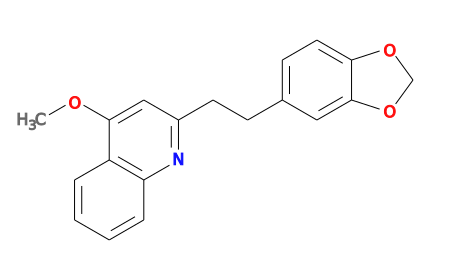 |
| Plant Source | Galipea officinalis Common Name:Angustura Vera |
| Source Family | Rutaceae |
| Origin | South America |
| Plant Part Used | Bark |
| Extract | Ethanol |
| Target Bacteria | Mycobacterium tuberculosis |
| Assay / Test Done | |
| Positive Control Used (conc.) | Isoniazid (0.12 µg/ml), Rifampin (0.001 µg/ml) |
| Inhibition [%] | |
| Activity [MIC] µg/ml | 12.5 µg/ml |
| Activity (In terms of dilution) | |
| Activity (Zone of inhibition in mm) | |
| Active Compound Identified | Cusparine |
| PubChem ID | 442893 |
| Ethnomedicinal Information | Used to treat diarrhoea and fevers |
| PubMed ID [Source Literature] | 10232071 |
| Extract Preparation | N/A |
| Chemical Classification [Active Compound] | Aromatic, Bicyclic, Alkaloid, Quinoline, Ether |
| Media / Broth Used [Antimicrobial Assay/Test] | N/A |
| Cytotoxicity Assay [AID] | N/A |
| Molecular Weight | 307.121 |
| Molecular Formula | C19H17NO3
|
| SMILES | O1c2cc(CCc3nc4c(c(OC)c3)cccc4)ccc2OC1 |
| XLogP | 4.688 |
| PSA | 40.580 |
| H-bond Donor | 0 |
| H-bond Acceptor | 3 |
| No. of Rotatable Bond Count | 4 |
| No. of Rings | 4 |
| No. of N | 1 |
| No. of O | 3 |
| No. of S | 0 |
| Reference(s) | 1) Houghton PJ, Woldemariam TZ, Watanabe Y, Yates M.Activity against Mycobacterium tuberculosis of alkaloid constituents of Angostura bark, Galipea officinalis.Planta Med. 1999 Apr;65(3):250-4
|
| Curator | |
| Compound ID | 1787 |
| Compound Structure | 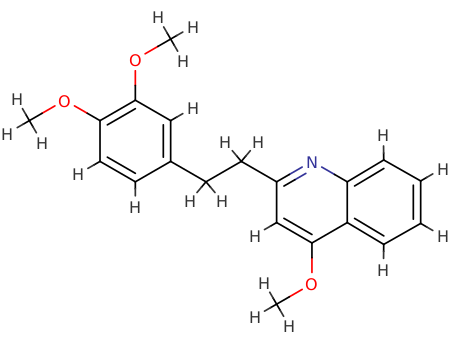 |
| Plant Source | Galipea officinalis Common Name:Angustura Vera |
| Source Family | Rutaceae |
| Origin | South America |
| Plant Part Used | Bark |
| Extract | Ethanol |
| Target Bacteria | Mycobacterium tuberculosis |
| Assay / Test Done | |
| Positive Control Used (conc.) | Isoniazid (0.12 µg/ml), Rifampin (0.001 µg/ml) |
| Inhibition [%] | |
| Activity [MIC] µg/ml | 6.25 µg/ml |
| Activity (In terms of dilution) | |
| Activity (Zone of inhibition in mm) | |
| Active Compound Identified | Galipine |
| PubChem ID | 68235 |
| Ethnomedicinal Information | Used to treat diarrhoea and fevers |
| PubMed ID [Source Literature] | 10232071 |
| Extract Preparation | N/A |
| Chemical Classification [Active Compound] | Aromatic, Tricyclic, Quinoline, Alkaloid, Ether |
| Media / Broth Used [Antimicrobial Assay/Test] | N/A |
| Cytotoxicity Assay [AID] | N/A |
| Molecular Weight | 323.152 |
| Molecular Formula | C20H21NO3
|
| SMILES | O(c1c2c(nc(CCc3cc(OC)c(OC)cc3)c1)cccc2)C |
| XLogP | 4.761 |
| PSA | 40.580 |
| H-bond Donor | 0 |
| H-bond Acceptor | 3 |
| No. of Rotatable Bond Count | 6 |
| No. of Rings | 3 |
| No. of N | 1 |
| No. of O | 3 |
| No. of S | 0 |
| Reference(s) | 1) Houghton PJ, Woldemariam TZ, Watanabe Y, Yates M.Activity against Mycobacterium tuberculosis of alkaloid constituents of Angostura bark, Galipea officinalis.Planta Med. 1999 Apr;65(3):250-4
|
| Curator | |
| Compound ID | 1788 |
| Compound Structure |  |
| Plant Source | Galipea officinalis Common Name:Angustura Vera |
| Source Family | Rutaceae |
| Origin | South America |
| Plant Part Used | Bark |
| Extract | Ethanol |
| Target Bacteria | Mycobacterium tuberculosis |
| Assay / Test Done | |
| Positive Control Used (conc.) | Isoniazid (0.12 µg/ml), Rifampin (0.001 µg/ml) |
| Inhibition [%] | |
| Activity [MIC] µg/ml | 6.25 µg/ml |
| Activity (In terms of dilution) | |
| Activity (Zone of inhibition in mm) | |
| Active Compound Identified | 4 - Methoxy - 2 - N - Pentylquinoleine |
| PubChem ID | 3009247 |
| Ethnomedicinal Information | Used to treat diarrhoea and fevers |
| PubMed ID [Source Literature] | 10232071 |
| Extract Preparation | N/A |
| Chemical Classification [Active Compound] | Aromatic, Bicyclic, Alkyl, Alkaloid, Quinoline, Ether |
| Media / Broth Used [Antimicrobial Assay/Test] | N/A |
| Cytotoxicity Assay [AID] | N/A |
| Molecular Weight | 229.147 |
| Molecular Formula | C15H19NO
|
| SMILES | O(c1cc(nc2c1cccc2)CCCCC)C |
| XLogP | 5.146 |
| PSA | 22.120 |
| H-bond Donor | 0 |
| H-bond Acceptor | 1 |
| No. of Rotatable Bond Count | 5 |
| No. of Rings | 2 |
| No. of N | 1 |
| No. of O | 1 |
| No. of S | 0 |
| Reference(s) | 1) Houghton PJ, Woldemariam TZ, Watanabe Y, Yates M.Activity against Mycobacterium tuberculosis of alkaloid constituents of Angostura bark, Galipea officinalis.Planta Med. 1999 Apr;65(3):250-4
|
| Curator | |
| Compound ID | 1789 |
| Compound Structure |  |
| Plant Source | Galipea officinalis Common Name:Angustura Vera |
| Source Family | Rutaceae |
| Origin | South America |
| Plant Part Used | Bark |
| Extract | Ethanol |
| Target Bacteria | Mycobacterium tuberculosis |
| Assay / Test Done | |
| Positive Control Used (conc.) | Isoniazid (0.12 µg/ml), Rifampin (0.001 µg/ml) |
| Inhibition [%] | |
| Activity [MIC] µg/ml | 25 µg/ml |
| Activity (In terms of dilution) | |
| Activity (Zone of inhibition in mm) | |
| Active Compound Identified | N - Methyl - 2 - Quinolone |
| PubChem ID | 11820 |
| Ethnomedicinal Information | Used to treat diarrhoea and fevers |
| PubMed ID [Source Literature] | 10232071 |
| Extract Preparation | N/A |
| Chemical Classification [Active Compound] | Aromatic, Quinolone, Alkaloid |
| Media / Broth Used [Antimicrobial Assay/Test] | N/A |
| Cytotoxicity Assay [AID] | N/A |
| Molecular Weight | 159.068 |
| Molecular Formula | C10H9NO
|
| SMILES | O=c1n(c2c(cc1)cccc2)C |
| XLogP | 2.261 |
| PSA | 17.070 |
| H-bond Donor | 0 |
| H-bond Acceptor | 1 |
| No. of Rotatable Bond Count | 0 |
| No. of Rings | 2 |
| No. of N | 1 |
| No. of O | 1 |
| No. of S | 0 |
| Reference(s) | 1) Houghton PJ, Woldemariam TZ, Watanabe Y, Yates M.Activity against Mycobacterium tuberculosis of alkaloid constituents of Angostura bark, Galipea officinalis.Planta Med. 1999 Apr;65(3):250-4
|
| Curator | |
| Compound ID | 1876 |
| Compound Structure |  |
| Plant Source | Hydrastis canadensis Common Name:Goldenseal |
| Source Family | Ranunculaceae |
| Origin | North America |
| Plant Part Used | Root |
| Extract | Ethanol |
| Target Bacteria | Mycobacterium smegmatis (ATCC 607) |
| Assay / Test Done | |
| Positive Control Used (conc.) | Streptomycin sulfate (1.56 µg/ml) |
| Inhibition [%] | |
| Activity [MIC] µg/ml | 25 µg/ml |
| Activity (In terms of dilution) | |
| Activity (Zone of inhibition in mm) | |
| Active Compound Identified | Berberine |
| PubChem ID | 2353 |
| Ethnomedicinal Information | Berberine has been demonstrated to reduce the infectivity of bacteria, fungi and protozoa in animals and humans by inhibiting the adherence of microorganisms to the host cells |
| PubMed ID [Source Literature] | 9784149, 4906191 |
| Extract Preparation | N/A |
| Chemical Classification [Active Compound] | Aromatic, Tetracyclic, Alkaloid, Isoquinoline, Ether |
| Media / Broth Used [Antimicrobial Assay/Test] | N/A |
| Cytotoxicity Assay [AID] | N/A |
| Molecular Weight | 336.124 |
| Molecular Formula | C20H18NO4 |
| SMILES | O1c2cc3CC[n+]4c(c3cc2OC1)cc1c(c4)c(OC)c(OC)cc1 |
| XLogP | 2.896 |
| PSA | 40.800 |
| H-bond Donor | 0 |
| H-bond Acceptor | 4 |
| No. of Rotatable Bond Count | 2 |
| No. of Rings | 5 |
| No. of N | 1 |
| No. of O | 4 |
| No. of S | 0 |
| Reference(s) | 1) Gentry EJ, Jampani HB, Keshavarz-Shokri A, Morton MD, Velde DV, Telikepalli H, Mitscher LA, Shawar R, Humble D, Baker W.Antitubercular natural products: berberine from the roots of commercial Hydrastis canadensis powder. Isolation of inactive 8-oxotetrahydrothalifendine, canadine, beta-hydrastine, and two new quinic acid esters, hycandinic acid esters-1 and -2.J Nat Prod. 1998 Oct;61(10):1187-93
2) Amin AH, Subbaiah TV, Abbasi KM.Berberine sulfate: antimicrobial activity, bioassay, and mode of action.Can J Microbiol. 1969 Sep;15(9):1067-76
|
| Curator | |
| Compound ID | 1877 |
| Compound Structure | |
| Plant Source | Hydrastis canadensis Common Name:Goldenseal |
| Source Family | Ranunculaceae |
| Origin | North America |
| Plant Part Used | Root |
| Extract | Ethanol |
| Target Bacteria | Mycobacterium bovis (BCG - Bacillus Calmette Guerin) |
| Assay / Test Done | |
| Positive Control Used (conc.) | NR |
| Inhibition [%] | |
| Activity [MIC] µg/ml | 200 µg/ml |
| Activity (In terms of dilution) | |
| Activity (Zone of inhibition in mm) | |
| Active Compound Identified | Berberine |
| PubChem ID | 2353 |
| Ethnomedicinal Information | Berberine has been demonstrated to reduce the infectivity of bacteria, fungi and protozoa in animals and humans by inhibiting the adherence of microorganisms to the host cells |
| PubMed ID [Source Literature] | 9784149, 4906191 |
| Extract Preparation | N/A |
| Chemical Classification [Active Compound] | Aromatic, Tetracyclic, Alkaloid, Isoquinoline, Ether |
| Media / Broth Used [Antimicrobial Assay/Test] | N/A |
| Cytotoxicity Assay [AID] | N/A |
| Molecular Weight | 336.124 |
| Molecular Formula | C20H18NO4 |
| SMILES | O1c2cc3CC[n+]4c(c3cc2OC1)cc1c(c4)c(OC)c(OC)cc1 |
| XLogP | 2.896 |
| PSA | 40.800 |
| H-bond Donor | 0 |
| H-bond Acceptor | 4 |
| No. of Rotatable Bond Count | 2 |
| No. of Rings | 5 |
| No. of N | 1 |
| No. of O | 4 |
| No. of S | 0 |
| Reference(s) | 1) Gentry EJ, Jampani HB, Keshavarz-Shokri A, Morton MD, Velde DV, Telikepalli H, Mitscher LA, Shawar R, Humble D, Baker W.Antitubercular natural products: berberine from the roots of commercial Hydrastis canadensis powder. Isolation of inactive 8-oxotetrahydrothalifendine, canadine, beta-hydrastine, and two new quinic acid esters, hycandinic acid esters-1 and -2.J Nat Prod. 1998 Oct;61(10):1187-93
2) Amin AH, Subbaiah TV, Abbasi KM.Berberine sulfate: antimicrobial activity, bioassay, and mode of action.Can J Microbiol. 1969 Sep;15(9):1067-76
|
| Curator | |
| Compound ID | 1878 |
| Compound Structure | |
| Plant Source | Hydrastis canadensis Common Name:Goldenseal |
| Source Family | Ranunculaceae |
| Origin | North America |
| Plant Part Used | Root |
| Extract | Ethanol |
| Target Bacteria | Mycobacterium avium complex |
| Assay / Test Done | |
| Positive Control Used (conc.) | Streptomycin sulfate (6.25 µg/ml) |
| Inhibition [%] | |
| Activity [MIC] µg/ml | 50 µg/ml |
| Activity (In terms of dilution) | |
| Activity (Zone of inhibition in mm) | |
| Active Compound Identified | Berberine |
| PubChem ID | 2353 |
| Ethnomedicinal Information | Berberine has been demonstrated to reduce the infectivity of bacteria, fungi and protozoa in animals and humans by inhibiting the adherence of microorganisms to the host cells |
| PubMed ID [Source Literature] | 9784149, 4906191 |
| Extract Preparation | N/A |
| Chemical Classification [Active Compound] | Aromatic, Tetracyclic, Alkaloid, Isoquinoline, Ether |
| Media / Broth Used [Antimicrobial Assay/Test] | N/A |
| Cytotoxicity Assay [AID] | N/A |
| Molecular Weight | 336.124 |
| Molecular Formula | C20H18NO4 |
| SMILES | O1c2cc3CC[n+]4c(c3cc2OC1)cc1c(c4)c(OC)c(OC)cc1 |
| XLogP | 2.896 |
| PSA | 40.800 |
| H-bond Donor | 0 |
| H-bond Acceptor | 4 |
| No. of Rotatable Bond Count | 2 |
| No. of Rings | 5 |
| No. of N | 1 |
| No. of O | 4 |
| No. of S | 0 |
| Reference(s) | 1) Gentry EJ, Jampani HB, Keshavarz-Shokri A, Morton MD, Velde DV, Telikepalli H, Mitscher LA, Shawar R, Humble D, Baker W.Antitubercular natural products: berberine from the roots of commercial Hydrastis canadensis powder. Isolation of inactive 8-oxotetrahydrothalifendine, canadine, beta-hydrastine, and two new quinic acid esters, hycandinic acid esters-1 and -2.J Nat Prod. 1998 Oct;61(10):1187-93
2) Amin AH, Subbaiah TV, Abbasi KM.Berberine sulfate: antimicrobial activity, bioassay, and mode of action.Can J Microbiol. 1969 Sep;15(9):1067-76
|
| Curator | |
| Compound ID | 1931 |
| Compound Structure |  |
| Plant Source | Ipomoea leptophylla Common Name:Bush Morning Glory, Manroot |
| Source Family | Convolvulaceae |
| Origin | North America |
| Plant Part Used | Leaf |
| Extract | Soluble extract |
| Target Bacteria | Mycobacterium tuberculosis |
| Assay / Test Done | BACTEC 460 radiometric system |
| Positive Control Used (conc.) | |
| Inhibition [%] | |
| Activity [MIC] µg/ml | NR (inactive) |
| Activity (In terms of dilution) | |
| Activity (Zone of inhibition in mm) | |
| Active Compound Identified | Operculinic acid |
| PubChem ID | 44584575 |
| Ethnomedicinal Information | Treatment for stomach troubles, tuberculosis |
| PubMed ID [Source Literature] | 14640518 |
| Extract Preparation | N/A |
| Chemical Classification [Active Compound] | Aliphatic, Fatty acid, Sugar |
| Media / Broth Used [Antimicrobial Assay/Test] | N/A |
| Cytotoxicity Assay [AID] | N/A |
| Molecular Weight | 1018.520 |
| Molecular Formula | C46H82O24 |
| SMILES | O([C@@H]1O[C@H]([C@H](O[C@@H]2O[C@H]([C@H](O)[C@@H](O)[C@H]2O)C)[C@@H](O)[C@H]1O[C@@H]1O[C@@H]([C@@H](O)[C@H](O)[C@H]1O)CO)C)[C@@H]1[C@@H](O)[C@@H](O)[C@@H](O[C@H]1C)O[C@@H]1[C@@H](O)[C@@H](O)[C@H](O[C@H]1O[C@H](CCCCCCCCCC(=O)O)CCCCC)C |
| XLogP | 1.041 |
| PSA | 372.360 |
| H-bond Donor | 13 |
| H-bond Acceptor | 24 |
| No. of Rotatable Bond Count | 25 |
| No. of Rings | 5 |
| No. of N | 0 |
| No. of O | 24 |
| No. of S | 0 |
| Reference(s) | 1) Barnes CC, Smalley MK, Manfredi KP, Kindscher K, Loring H, Sheeley DM.Characterization of an anti-tuberculosis resin glycoside from the prairie medicinal plant Ipomoea leptophylla.J Nat Prod. 2003 Nov;66(11):1457-62
|
| Curator | |
| Compound ID | 1932 |
| Compound Structure |  |
| Plant Source | Ipomoea leptophylla Common Name:Bush Morning Glory, Manroot |
| Source Family | Convolvulaceae |
| Origin | North America |
| Plant Part Used | Leaf |
| Extract | Soluble extract |
| Target Bacteria | Mycobacterium tuberculosis |
| Assay / Test Done | BACTEC 460 radiometric system |
| Positive Control Used (conc.) | |
| Inhibition [%] | |
| Activity [MIC] µg/ml | NR |
| Activity (In terms of dilution) | |
| Activity (Zone of inhibition in mm) | |
| Active Compound Identified | Trans - Cinnamic Acid |
| PubChem ID | 444539 |
| Ethnomedicinal Information | Treatment for stomach troubles, tuberculosis |
| PubMed ID [Source Literature] | 14640518 |
| Extract Preparation | N/A |
| Chemical Classification [Active Compound] | Aromatic, Alkene, Acid |
| Media / Broth Used [Antimicrobial Assay/Test] | N/A |
| Cytotoxicity Assay [AID] | N/A |
| Molecular Weight | 148.052 |
| Molecular Formula | C9H8O2 |
| SMILES | OC(=O)/C=C/c1ccccc1 |
| XLogP | 3.904 |
| PSA | 37.300 |
| H-bond Donor | 1 |
| H-bond Acceptor | 2 |
| No. of Rotatable Bond Count | 2 |
| No. of Rings | 1 |
| No. of N | 0 |
| No. of O | 2 |
| No. of S | 0 |
| Reference(s) | 1) Barnes CC, Smalley MK, Manfredi KP, Kindscher K, Loring H, Sheeley DM.Characterization of an anti-tuberculosis resin glycoside from the prairie medicinal plant Ipomoea leptophylla.J Nat Prod. 2003 Nov;66(11):1457-62
|
| Curator | |
| Compound ID | 1933 |
| Compound Structure | 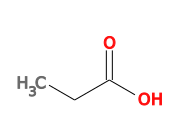 |
| Plant Source | Ipomoea leptophylla Common Name:Bush Morning Glory, Manroot |
| Source Family | Convolvulaceae |
| Origin | North America |
| Plant Part Used | Leaf |
| Extract | Soluble extract |
| Target Bacteria | Mycobacterium tuberculosis |
| Assay / Test Done | BACTEC 460 radiometric system |
| Positive Control Used (conc.) | |
| Inhibition [%] | |
| Activity [MIC] µg/ml | NR |
| Activity (In terms of dilution) | |
| Activity (Zone of inhibition in mm) | |
| Active Compound Identified | Propanoic acid |
| PubChem ID | 1032 |
| Ethnomedicinal Information | Treatment for stomach troubles, tuberculosis |
| PubMed ID [Source Literature] | 14640518 |
| Extract Preparation | N/A |
| Chemical Classification [Active Compound] | Aliphatic, Acid
|
| Media / Broth Used [Antimicrobial Assay/Test] | N/A |
| Cytotoxicity Assay [AID] | N/A |
| Molecular Weight | 74.037 |
| Molecular Formula | C3H6O2 |
| SMILES | OC(=O)CC |
| XLogP | 0.173 |
| PSA | 37.300 |
| H-bond Donor | 1 |
| H-bond Acceptor | 2 |
| No. of Rotatable Bond Count | 1 |
| No. of Rings | 0 |
| No. of N | 0 |
| No. of O | 2 |
| No. of S | 0 |
| Reference(s) | 1) Barnes CC, Smalley MK, Manfredi KP, Kindscher K, Loring H, Sheeley DM.Characterization of an anti-tuberculosis resin glycoside from the prairie medicinal plant Ipomoea leptophylla.J Nat Prod. 2003 Nov;66(11):1457-62
|
| Curator | |
| Compound ID | 1934 |
| Compound Structure |  |
| Plant Source | Ipomoea leptophylla Common Name:Bush Morning Glory, Manroot |
| Source Family | Convolvulaceae |
| Origin | North America |
| Plant Part Used | Leaf |
| Extract | Soluble extract |
| Target Bacteria | Mycobacterium tuberculosis |
| Assay / Test Done | BACTEC 460 radiometric system |
| Positive Control Used (conc.) | |
| Inhibition [%] | |
| Activity [MIC] µg/ml | NR |
| Activity (In terms of dilution) | |
| Activity (Zone of inhibition in mm) | |
| Active Compound Identified | Lauric acid |
| PubChem ID | 3893 |
| Ethnomedicinal Information | Treatment for stomach troubles, tuberculosis |
| PubMed ID [Source Literature] | 14640518 |
| Extract Preparation | N/A |
| Chemical Classification [Active Compound] | Aliphatic, Fatty acid |
| Media / Broth Used [Antimicrobial Assay/Test] | N/A |
| Cytotoxicity Assay [AID] | N/A |
| Molecular Weight | 200.178 |
| Molecular Formula | C12H24O2 |
| SMILES | OC(=O)CCCCCCCCCCC |
| XLogP | 5.294 |
| PSA | 37.300 |
| H-bond Donor | 1 |
| H-bond Acceptor | 2 |
| No. of Rotatable Bond Count | 10 |
| No. of Rings | 0 |
| No. of N | 0 |
| No. of O | 2 |
| No. of S | 0 |
| Reference(s) | 1) Barnes CC, Smalley MK, Manfredi KP, Kindscher K, Loring H, Sheeley DM.Characterization of an anti-tuberculosis resin glycoside from the prairie medicinal plant Ipomoea leptophylla.J Nat Prod. 2003 Nov;66(11):1457-62
|
| Curator | |
| Compound ID | 1993 |
| Compound Structure | |
| Plant Source | Lantana trifolia L. Common Name:Shrub Verbena |
| Source Family | Verbenaceae |
| Origin | America, Kenya |
| Plant Part Used | Leaf |
| Extract | Hexane, dichloromethane |
| Target Bacteria | Mycobacterium tuberculosis H37Rv (ATCC 27 294) |
| Assay / Test Done | Microplate Alamar Blue Assay (MABA) |
| Positive Control Used (conc.) | Rifampin |
| Inhibition [%] | |
| Activity [MIC] µg/ml | 100 µg/ml |
| Activity (In terms of dilution) | |
| Activity (Zone of inhibition in mm) | |
| Active Compound Identified | |
| PubChem ID | NR |
| Ethnomedicinal Information | Heart problems, gonorrhea, tuberculosis, coughs |
| PubMed ID [Source Literature] | |
| Extract Preparation | N/A |
| Chemical Classification [Active Compound] | N/A |
| Media / Broth Used [Antimicrobial Assay/Test] | N/A |
| Cytotoxicity Assay [AID] | N/A |
| Reference(s) | 1) LEITAO, Suzana G. et al. Screening of Central and South American plant extracts for antimycobacterial activity by the Alamar Blue test. Rev. bras. farmacogn. [online]. 2006, vol.16, n.1, pp. 6-11
|
| Curator | |
| Compound ID | 1994 |
| Compound Structure | |
| Plant Source | Lantana trifolia L. Common Name:Shrub Verbena |
| Source Family | Verbenaceae |
| Origin | America, Kenya |
| Plant Part Used | Leaf |
| Extract | Methanol |
| Target Bacteria | Mycobacterium tuberculosis |
| Assay / Test Done | BACTEC MGIT™ 960 System |
| Positive Control Used (conc.) | Isoniazid (2, 1 and 0.5 mg/ml) |
| Inhibition [%] | 100 % |
| Activity [MIC] µg/ml | 2000 µg/ml |
| Activity (In terms of dilution) | |
| Activity (Zone of inhibition in mm) | |
| Active Compound Identified | |
| PubChem ID | NR |
| Ethnomedicinal Information | Heart problems, gonorrhea, tuberculosis, coughs |
| PubMed ID [Source Literature] | |
| Extract Preparation | N/A |
| Chemical Classification [Active Compound] | N/A |
| Media / Broth Used [Antimicrobial Assay/Test] | N/A |
| Cytotoxicity Assay [AID] | N/A |
| Reference(s) | 1) Mariita, Richard M.; Okemo, Paul O.; Orodho, John A.; Kirimuhuzya, Claude; Otieno, Joseph N.; Magadula, J. Joseph.Efficacy of 13 medicinal plants used by indigenous communities around Lake Victoria, Kenya, against tuberculosis, diarrhoea aausing bacteria and candida albicans.Pharmacy & Technology IJPT, Sep-2010, Vol. 2, Issue No.3, 771-791
|
| Curator | |
| Compound ID | 1995 |
| Compound Structure | |
| Plant Source | Lantana trifolia L. Common Name:Shrub Verbena |
| Source Family | Verbenaceae |
| Origin | America, Kenya |
| Plant Part Used | Leaf |
| Extract | Methanol |
| Target Bacteria | Mycobacterium kansasii |
| Assay / Test Done | BACTEC MGIT™ 960 System |
| Positive Control Used (conc.) | Isoniazid (2, 1 and 0.5 mg/ml) |
| Inhibition [%] | 100 % |
| Activity [MIC] µg/ml | 2000 µg/ml |
| Activity (In terms of dilution) | |
| Activity (Zone of inhibition in mm) | |
| Active Compound Identified | |
| PubChem ID | NR |
| Ethnomedicinal Information | Heart problems, gonorrhea, tuberculosis, coughs |
| PubMed ID [Source Literature] | |
| Extract Preparation | N/A |
| Chemical Classification [Active Compound] | N/A |
| Media / Broth Used [Antimicrobial Assay/Test] | N/A |
| Cytotoxicity Assay [AID] | N/A |
| Reference(s) | 1) Mariita, Richard M.; Okemo, Paul O.; Orodho, John A.; Kirimuhuzya, Claude; Otieno, Joseph N.; Magadula, J. Joseph.Efficacy of 13 medicinal plants used by indigenous communities around Lake Victoria, Kenya, against tuberculosis, diarrhoea aausing bacteria and candida albicans.Pharmacy & Technology IJPT, Sep-2010, Vol. 2, Issue No.3, 771-791
|
| Curator | |
| Compound ID | 1996 |
| Compound Structure | |
| Plant Source | Lantana trifolia L. Common Name:Shrub Verbena |
| Source Family | Verbenaceae |
| Origin | America, Kenya |
| Plant Part Used | Leaf |
| Extract | Methanol |
| Target Bacteria | Mycobacterium fortuitum |
| Assay / Test Done | BACTEC MGIT™ 960 System |
| Positive Control Used (conc.) | Isoniazid (2, 1 and 0.5 mg/ml) |
| Inhibition [%] | 100 % |
| Activity [MIC] µg/ml | 2000 µg/ml |
| Activity (In terms of dilution) | |
| Activity (Zone of inhibition in mm) | |
| Active Compound Identified | |
| PubChem ID | NR |
| Ethnomedicinal Information | Heart problems, gonorrhea, tuberculosis, coughs |
| PubMed ID [Source Literature] | |
| Extract Preparation | N/A |
| Chemical Classification [Active Compound] | N/A |
| Media / Broth Used [Antimicrobial Assay/Test] | N/A |
| Cytotoxicity Assay [AID] | N/A |
| Reference(s) | 1) Mariita, Richard M.; Okemo, Paul O.; Orodho, John A.; Kirimuhuzya, Claude; Otieno, Joseph N.; Magadula, J. Joseph.Efficacy of 13 medicinal plants used by indigenous communities around Lake Victoria, Kenya, against tuberculosis, diarrhoea aausing bacteria and candida albicans.Pharmacy & Technology IJPT, Sep-2010, Vol. 2, Issue No.3, 771-791
|
| Curator | |
| Compound ID | 1997 |
| Compound Structure | |
| Plant Source | Lantana trifolia L. Common Name:Shrub Verbena |
| Source Family | Verbenaceae |
| Origin | America, Kenya |
| Plant Part Used | Leaf |
| Extract | Methanol |
| Target Bacteria | Mycobacterium smegmatis |
| Assay / Test Done | BACTEC MGIT™ 960 System |
| Positive Control Used (conc.) | Isoniazid (2,1 & 0.5 mg/ml) |
| Inhibition [%] | 100 % |
| Activity [MIC] µg/ml | 2000 µg/ml |
| Activity (In terms of dilution) | |
| Activity (Zone of inhibition in mm) | |
| Active Compound Identified | |
| PubChem ID | NR |
| Ethnomedicinal Information | Heart problems, gonorrhea, tuberculosis, coughs |
| PubMed ID [Source Literature] | |
| Extract Preparation | N/A |
| Chemical Classification [Active Compound] | N/A |
| Media / Broth Used [Antimicrobial Assay/Test] | N/A |
| Cytotoxicity Assay [AID] | N/A |
| Reference(s) | 1) Mariita, Richard M.; Okemo, Paul O.; Orodho, John A.; Kirimuhuzya, Claude; Otieno, Joseph N.; Magadula, J. Joseph.Efficacy of 13 medicinal plants used by indigenous communities around Lake Victoria, Kenya, against tuberculosis, diarrhoea aausing bacteria and candida albicans.Pharmacy & Technology IJPT, Sep-2010, Vol. 2, Issue No.3, 771-791
|
| Curator | |
| Compound ID | 2161 |
| Compound Structure | |
| Plant Source | Mentha piperita L emend Huds. Common Name:Peppermint, Brandy Mint (English), Vilaayati Pudinaa (Sanskrit) |
| Source Family | Labiatae |
| Origin | India, cultivated widely particularly in Europe and America |
| Plant Part Used | Leaf |
| Extract | Methanol (19.65 %) |
| Target Bacteria | Mycobacterium aurum |
| Assay / Test Done | Broth Microdilution Method (BMM) |
| Positive Control Used (conc.) | Streptomycin (IC50 value 1.14) |
| Inhibition [%] | |
| Activity [MIC] µg/ml | > 500 µg/ml |
| Activity (In terms of dilution) | |
| Activity (Zone of inhibition in mm) | |
| Active Compound Identified | |
| PubChem ID | NR |
| Ethnomedicinal Information | Antiseptic, antiviral, inhaled for chest complaints, ingredient of some cough and cold remedies. |
| PubMed ID [Source Literature] | 11744296 |
| Extract Preparation | N/A |
| Chemical Classification [Active Compound] | N/A |
| Media / Broth Used [Antimicrobial Assay/Test] | N/A |
| Cytotoxicity Assay [AID] | N/A |
| Reference(s) | 1) Newton SM, Lau C, Gurcha SS, Besra GS, Wright CW.The evaluation of forty-three plant species for in vitro antimycobacterial activities; isolation of active constituents from Psoralea corylifolia and Sanguinaria canadensis.J Ethnopharmacol. 2002 Jan;79(1):57-67
|
| Curator | |
| Compound ID | 2162 |
| Compound Structure | |
| Plant Source | Mentha piperita L emend Huds. Common Name:Peppermint, Brandy Mint (English), Vilaayati Pudinaa (Sanskrit) |
| Source Family | Labiatae |
| Origin | India, cultivated widely particularly in Europe and America |
| Plant Part Used | Leaf |
| Extract | Methanol (19.65 %) |
| Target Bacteria | Mycobacterium smegmatis |
| Assay / Test Done | Broth Microdilution Method (BMM) |
| Positive Control Used (conc.) | Streptomycin (IC50 value 0.17) |
| Inhibition [%] | |
| Activity [MIC] µg/ml | > 500 µg/ml |
| Activity (In terms of dilution) | |
| Activity (Zone of inhibition in mm) | |
| Active Compound Identified | |
| PubChem ID | NR |
| Ethnomedicinal Information | Antiseptic, antiviral, inhaled for chest complaints, ingredient of some cough and cold remedies. |
| PubMed ID [Source Literature] | 11744296 |
| Extract Preparation | N/A |
| Chemical Classification [Active Compound] | N/A |
| Media / Broth Used [Antimicrobial Assay/Test] | N/A |
| Cytotoxicity Assay [AID] | N/A |
| Reference(s) | 1) Newton SM, Lau C, Gurcha SS, Besra GS, Wright CW.The evaluation of forty-three plant species for in vitro antimycobacterial activities; isolation of active constituents from Psoralea corylifolia and Sanguinaria canadensis.J Ethnopharmacol. 2002 Jan;79(1):57-67
|
| Curator | |
| Compound ID | 2298 |
| Compound Structure |  |
| Plant Source | Pedilanthus tithymaloides Common Name:Devil's Backbone, Zigzag Plant, Jacob's Ladder |
| Source Family | Euphorbiaceae |
| Origin | Thailand, Tropical America |
| Plant Part Used | Milky juice or latex |
| Extract | Dichloromethane |
| Target Bacteria | Mycobacterium tuberculosis H37Ra |
| Assay / Test Done | Microplate Alamar Blue Assay (MABA) |
| Positive Control Used (conc.) | Isoniazid (0.1 µg/ml), Kanamycin (2.5 µg/ml) |
| Inhibition [%] | |
| Activity [MIC] µg/ml | 12.5 µg/ml |
| Activity (In terms of dilution) | |
| Activity (Zone of inhibition in mm) | |
| Active Compound Identified | 1α, 13β, 14α - trihydroxy - 3β, 7β - dibenzoyloxy - 9β, 15β - diacetoxyjatropha - 5, 11 E - diene |
| PubChem ID | 23642402 |
| Ethnomedicinal Information | Anti - inflammatory, antioxidant, anti - malaria |
| PubMed ID [Source Literature] | 17844996 |
| Extract Preparation | N/A |
| Chemical Classification [Active Compound] | Alicyclic, Bicyclic, Terpene, Diterpene, Jatrophane, Benzoyl, Acetyl |
| Media / Broth Used [Antimicrobial Assay/Test] | N/A |
| Cytotoxicity Assay [AID] | N/A |
| Molecular Weight | 678.304 |
| Molecular Formula | C38H46O11
|
| SMILES | O([C@@]12[C@H]([C@@H](OC(=O)c3ccccc3)[C@H]([C@@H]1O)C)/C=C([C@H](OC(=O)c1ccccc1)C[C@H](OC(=O)C)C(/C=C/[C@](O)([C@H]2O)C)(C)C)/C)C(=O)C |
| XLogP | 6.947 |
| PSA | 165.890 |
| H-bond Donor | 3 |
| H-bond Acceptor | 11 |
| No. of Rotatable Bond Count | 10 |
| No. of Rings | 4 |
| No. of N | 0 |
| No. of O | 11 |
| No. of S | 0 |
| Reference(s) | 1) Mongkolvisut W, Sutthivaiyakit S.Antimalarial and antituberculous poly-O-acylated jatrophane diterpenoids from Pedilanthus tithymaloides.J Nat Prod. 2007 Sep;70(9):1434-8
2) http://www.flowersofIndia.net/catalog/slides/Devil%27s%20Backbone.html
|
| Curator | |