| Compound ID | 1084 |
| Compound Structure | 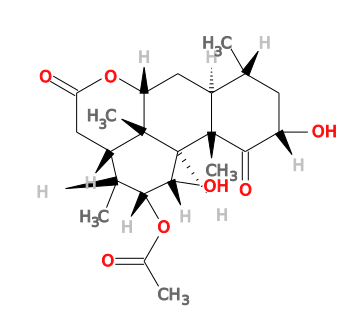 |
| Plant Source | Ailanthus altissima (Mill.) Swingle syn. Altissima glandulsa Desf. Common Name:Tree of Heaven, Ailanto (English), Aralu (Sanskrit) |
| Source Family | Simaroubaceae |
| Origin | India, China |
| Plant Part Used | Mother tinture |
| Extract | |
| Target Bacteria | Mycobacterium tuberculosis |
| Assay / Test Done | |
| Positive Control Used (conc.) | Rifampin (0.031 µg/ml) |
| Inhibition [%] | 19 % |
| Activity [MIC] µg/ml | 12.5 µg/ml |
| Activity (In terms of dilution) | |
| Activity (Zone of inhibition in mm) | |
| Active Compound Identified | Shinjulactone K |
| PubChem ID | 460541 |
| Ethnomedicinal Information | Used for treating mental illness, nausea and headache, treating cardiac palpitation, asthma and epilepsy |
| PubMed ID [Source Literature] | 17276637 |
| Extract Preparation | N/A |
| Chemical Classification [Active Compound] | Alicyclic, Tetracyclic, Terpene, Triterpene, Quassinoid, Lactone, O-Acetyl, Alcohol |
| Media / Broth Used [Antimicrobial Assay/Test] | N/A |
| Cytotoxicity Assay [AID] | N/A |
| Molecular Weight | 408.215 |
| Molecular Formula | C22H32O7 |
| SMILES | O1[C@H]2[C@@]3([C@@H]([C@@]4([C@@H](C2)[C@@H](C[C@H](O)C4=O)C)C)[C@H](O)[C@H](OC(=O)C)[C@@H]([C@@H]3CC1=O)C)C |
| XLogP | 1.595 |
| PSA | 110.130 |
| H-bond Donor | 2 |
| H-bond Acceptor | 7 |
| No. of Rotatable Bond Count | 2 |
| No. of Rings | 4 |
| No. of N | 0 |
| No. of O | 7 |
| No. of S | 0 |
| Reference(s) | 1) Gautam R, Saklani A, Jachak SM.Indian medicinal plants as a source of antimycobacterial agents.J Ethnopharmacol. 2007 Mar 21;110(2):200-34
2) Rahman S, Fukamiya N, Okano M, Tagahara K, Lee KH.Anti-tuberculosis activity of quassinoids.Chem Pharm Bull (Tokyo). 1997 Sep;45(9):1527-9
|
| Curator | |
| Compound ID | 1085 |
| Compound Structure |  |
| Plant Source | Ailanthus altissima (Mill.) Swingle syn. Altissima glandulsa Desf. Common Name:Tree of Heaven, Ailanto (English), Aralu (Sanskrit) |
| Source Family | Simaroubaceae |
| Origin | India, China |
| Plant Part Used | Mother tinture |
| Extract | |
| Target Bacteria | Mycobacterium tuberculosis |
| Assay / Test Done | |
| Positive Control Used (conc.) | Rifampin (0.031 µg/ml) |
| Inhibition [%] | 17 % |
| Activity [MIC] µg/ml | 12.5 µg/ml |
| Activity (In terms of dilution) | |
| Activity (Zone of inhibition in mm) | |
| Active Compound Identified | Ailanthone |
| PubChem ID | 72965 |
| Ethnomedicinal Information | Used for treating mental illness, nausea and headache, treating cardiac palpitation, asthma and epilepsy |
| PubMed ID [Source Literature] | 17276637 |
| Extract Preparation | N/A |
| Chemical Classification [Active Compound] | Alicyclic, Pentacyclic, Terpene, Triterpene, Quassinoid, Furanoid, Lactone, Alcohol |
| Media / Broth Used [Antimicrobial Assay/Test] | N/A |
| Cytotoxicity Assay [AID] | N/A |
| Molecular Weight | 376.152 |
| Molecular Formula | C20H24O7 |
| SMILES | O1[C@]2(O)[C@H]3[C@]4([C@H](OC(=O)C[C@H]4C(=C)[C@H]2O)C[C@@H]2[C@@]3([C@H](O)C(=O)C=C2C)C)C1 |
| XLogP | -0.429 |
| PSA | 113.290 |
| H-bond Donor | 3 |
| H-bond Acceptor | 7 |
| No. of Rotatable Bond Count | 0 |
| No. of Rings | 5 |
| No. of N | 0 |
| No. of O | 7 |
| No. of S | 0 |
| Reference(s) | 1) Gautam R, Saklani A, Jachak SM.Indian medicinal plants as a source of antimycobacterial agents.J Ethnopharmacol. 2007 Mar 21;110(2):200-34
2) Rahman S, Fukamiya N, Okano M, Tagahara K, Lee KH.Anti-tuberculosis activity of quassinoids.Chem Pharm Bull (Tokyo). 1997 Sep;45(9):1527-9
|
| Curator | |
| Compound ID | 1086 |
| Compound Structure | 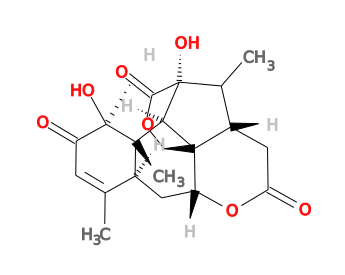 |
| Plant Source | Ailanthus altissima (Mill.) Swingle syn. Altissima glandulsa Desf. Common Name:Tree of Heaven, Ailanto (English), Aralu (Sanskrit) |
| Source Family | Simaroubaceae |
| Origin | India, China |
| Plant Part Used | Mother tinture |
| Extract | |
| Target Bacteria | Mycobacterium tuberculosis |
| Assay / Test Done | |
| Positive Control Used (conc.) | Rifampin (0.031 µg/ml) |
| Inhibition [%] | 15 % |
| Activity [MIC] µg/ml | 12.5 µg/ml |
| Activity (In terms of dilution) | |
| Activity (Zone of inhibition in mm) | |
| Active Compound Identified | Shinjudilactone |
| PubChem ID | 460534 |
| Ethnomedicinal Information | Used for treating mental illness, nausea and headache, treating cardiac palpitation, asthma and epilepsy |
| PubMed ID [Source Literature] | 17276637 |
| Extract Preparation | N/A |
| Chemical Classification [Active Compound] | Alicyclic, Pentacyclic, Terpene, Triterpene, Quassinoid, Lactone |
| Media / Broth Used [Antimicrobial Assay/Test] | N/A |
| Cytotoxicity Assay [AID] | N/A |
| Molecular Weight | 376.152 |
| Molecular Formula | C20H24O7 |
| SMILES | O1[C@H]2[C@]34[C@@H]([C@@]5([C@@H](C2)C(=CC(=O)[C@H]5O)C)C)[C@](O)(C([C@@H]3CC1=O)C)C(=O)OC4 |
| XLogP | 0.413 |
| PSA | 110.130 |
| H-bond Donor | 2 |
| H-bond Acceptor | 7 |
| No. of Rotatable Bond Count | 0 |
| No. of Rings | 5 |
| No. of N | 0 |
| No. of O | 7 |
| No. of S | 0 |
| Reference(s) | 1) Gautam R, Saklani A, Jachak SM.Indian medicinal plants as a source of antimycobacterial agents.J Ethnopharmacol. 2007 Mar 21;110(2):200-34
2) Rahman S, Fukamiya N, Okano M, Tagahara K, Lee KH.Anti-tuberculosis activity of quassinoids.Chem Pharm Bull (Tokyo). 1997 Sep;45(9):1527-9
|
| Curator | |
| Compound ID | 1146 |
| Compound Structure | |
| Plant Source | Aloe chinensis Common Name: |
| Source Family | Liliaceae |
| Origin | China |
| Plant Part Used | Leaf |
| Extract | Ethanol |
| Target Bacteria | Mycobacterium tuberculosis |
| Assay / Test Done | |
| Positive Control Used (conc.) | |
| Inhibition [%] | |
| Activity [MIC] µg/ml | |
| Activity (In terms of dilution) | |
| Activity (Zone of inhibition in mm) | |
| Active Compound Identified | |
| PubChem ID | NR |
| Ethnomedicinal Information | Tuberculosis |
| PubMed ID [Source Literature] | 16695763 |
| Extract Preparation | N/A |
| Chemical Classification [Active Compound] | N/A |
| Media / Broth Used [Antimicrobial Assay/Test] | N/A |
| Cytotoxicity Assay [AID] | N/A |
| Reference(s) | 1) Gottshall RY, Lucas EH, Lickfeldt A, Roberts JM. 1949. The occurrence of antibacterial substances active against Mycobacterium tuberculosis in seed plants. J Clin Invest 28: 920-923
|
| Curator | |
| Compound ID | 1156 |
| Compound Structure | |
| Plant Source | Alpinia Kumatake Mak. Common Name: |
| Source Family | Zingiberaceae |
| Origin | China |
| Plant Part Used | |
| Extract | Alcohol |
| Target Bacteria | Mycobacterium tuberculosis |
| Assay / Test Done | |
| Positive Control Used (conc.) | |
| Inhibition [%] | |
| Activity [MIC] µg/ml | |
| Activity (In terms of dilution) | 1:50 dilution |
| Activity (Zone of inhibition in mm) | |
| Active Compound Identified | |
| PubChem ID | NR |
| Ethnomedicinal Information | Treatment of flatulence (gas), dyspepsia (stomach upset), vomiting, high blood pressure, gastrointestinal complaints and sea sickness |
| PubMed ID [Source Literature] | 14778141 |
| Extract Preparation | N/A |
| Chemical Classification [Active Compound] | N/A |
| Media / Broth Used [Antimicrobial Assay/Test] | N/A |
| Cytotoxicity Assay [AID] | N/A |
| Reference(s) | 1) Wang VF.In vitro antibacterial activity of some common Chinese herbs on Mycobacteria tuberculosis.Chin Med J. 1950 May-Jun;68(5-6):169-72
2) http://www.healthline.com/natstandardcontent/alpinia
|
| Curator | |
| Compound ID | 1297 |
| Compound Structure |  |
| Plant Source | Brucea javanica (L.) Merrill syn. Rhus javanica L. Common Name:Java Brucea |
| Source Family | Simaroubaceae |
| Origin | India, China |
| Plant Part Used | |
| Extract | |
| Target Bacteria | Mycobacterium tuberculosis |
| Assay / Test Done | |
| Positive Control Used (conc.) | Rifampin |
| Inhibition [%] | 7 % |
| Activity [MIC] µg/ml | 12.5 µg/ml |
| Activity (In terms of dilution) | |
| Activity (Zone of inhibition in mm) | |
| Active Compound Identified | Bruceoside D |
| PubChem ID | 460525 |
| Ethnomedicinal Information | Treatment of amoebic dysentery and malaria, stomach complaints |
| PubMed ID [Source Literature] | 9332005 |
| Extract Preparation | N/A |
| Chemical Classification [Active Compound] | Alicyclic, Pentacyclic, Terpene, Triterpene, Quassinoid, Sugar |
| Media / Broth Used [Antimicrobial Assay/Test] | N/A |
| Cytotoxicity Assay [AID] | N/A |
| Molecular Weight | 668.232 |
| Molecular Formula | C31H40O16 |
| SMILES | O1C2([C@H]3[C@]4([C@@H]([C@@]5([C@@H](C[C@H]4OC(=O)[C@@H]3OC(=O)C=C(C)C)[C@@H](C(=O)C(=C5)O[C@@H]3O[C@@H]([C@@H](O)[C@H](O)[C@H]3O)CO)C)C)[C@@H](O)[C@@H]2O)C1)C(=O)O |
| XLogP | -0.909 |
| PSA | 256.040 |
| H-bond Donor | 7 |
| H-bond Acceptor | 16 |
| No. of Rotatable Bond Count | 7 |
| No. of Rings | 6 |
| No. of N | 0 |
| No. of O | 16 |
| No. of S | 0 |
| Reference(s) | 1) Rahman S, Fukamiya N, Okano M, Tagahara K, Lee KH.Anti-tuberculosis activity of quassinoids.Chem Pharm Bull (Tokyo). 1997 Sep;45(9):1527-9
2) http://www.hear.org/pier/commonnames/details/brucea_javanica.htm
|
| Curator | |
| Compound ID | 1445 |
| Compound Structure | |
| Plant Source | Chrysanthum sinense Sab. Common Name:Flos Chrysanthemi |
| Source Family | Asteraceae (Compositae) |
| Origin | China |
| Plant Part Used | |
| Extract | Alcohol |
| Target Bacteria | Mycobacterium tuberculosis |
| Assay / Test Done | |
| Positive Control Used (conc.) | |
| Inhibition [%] | |
| Activity [MIC] µg/ml | |
| Activity (In terms of dilution) | 1:50 dilution |
| Activity (Zone of inhibition in mm) | |
| Active Compound Identified | |
| PubChem ID | NR |
| Ethnomedicinal Information | Used in Chinese medicine in the treatment of allergic reactions and skin irritations |
| PubMed ID [Source Literature] | 14778141 |
| Extract Preparation | N/A |
| Chemical Classification [Active Compound] | N/A |
| Media / Broth Used [Antimicrobial Assay/Test] | N/A |
| Cytotoxicity Assay [AID] | N/A |
| Reference(s) | 1) Wang VF.In vitro antibacterial activity of some common Chinese herbs on Mycobacteria tuberculosis.Chin Med J. 1950 May-Jun;68(5-6):169-72
|
| Curator | |
| Compound ID | 1533 |
| Compound Structure | 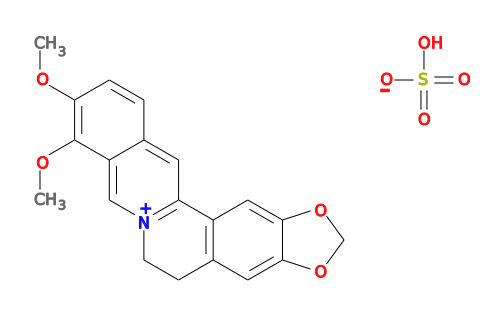 |
| Plant Source | Coptis coinensia French Common Name: |
| Source Family | Ranunculaceae |
| Origin | China |
| Plant Part Used | Root |
| Extract | |
| Target Bacteria | Mycobacterium phlei |
| Assay / Test Done | |
| Positive Control Used (conc.) | |
| Inhibition [%] | |
| Activity [MIC] µg/ml | NR |
| Activity (In terms of dilution) | 1:800 dilution |
| Activity (Zone of inhibition in mm) | |
| Active Compound Identified | Berberine bisulphate |
| PubChem ID | 12457 |
| Ethnomedicinal Information | Tuberculosis |
| PubMed ID [Source Literature] | 14778141 |
| Extract Preparation | N/A |
| Chemical Classification [Active Compound] | Aromatic, Tetracyclic, Isoquinoline, Sulphate |
| Media / Broth Used [Antimicrobial Assay/Test] | N/A |
| Cytotoxicity Assay [AID] | N/A |
| Molecular Weight | 336.124 |
| Molecular Formula | C20H19NO8S |
| SMILES | S(=O)(=O)(O)[O-].O1c2cc3CC[n+]4c(c3cc2OC1)cc1c(c4)c(OC)c(OC)cc1 |
| XLogP | 2.896 |
| PSA | 40.800 |
| H-bond Donor | 0 |
| H-bond Acceptor | 4 |
| No. of Rotatable Bond Count | 2 |
| No. of Rings | 5 |
| No. of N | 1 |
| No. of O | 4 |
| No. of S | 0 |
| Reference(s) | 1) Wang VF.In vitro antibacterial activity of some common Chinese herbs on Mycobacteria tuberculosis.Chin Med J. 1950 May-Jun;68(5-6):169-72
|
| Curator | |
| Compound ID | 1554 |
| Compound Structure |  |
| Plant Source | Croton kongensis Common Name: |
| Source Family | Lamiaceae |
| Origin | China |
| Plant Part Used | |
| Extract | |
| Target Bacteria | Mycobacterium tuberculosis |
| Assay / Test Done | |
| Positive Control Used (conc.) | |
| Inhibition [%] | |
| Activity [MIC] µg/ml | 25 µg/ml |
| Activity (In terms of dilution) | |
| Activity (Zone of inhibition in mm) | |
| Active Compound Identified | Ent - 8, 9 - Seco - 7α, 11β - Diacetoxykaura - 8 (14), 16 - Dien - 9, 15 - Dione |
| PubChem ID | 3010860 |
| Ethnomedicinal Information | Antimalarial activity, tuberculosis, dysmenorrheal treatment |
| PubMed ID [Source Literature] | 12828479, 1511068 |
| Extract Preparation | N/A |
| Chemical Classification [Active Compound] | Alicyclic, Tricyclic, Terpene, Diterpene, O-Acetyl, Ketone |
| Media / Broth Used [Antimicrobial Assay/Test] | N/A |
| Cytotoxicity Assay [AID] | Against Vero, human epidermoid carcinoma in the mouth (KB) and human breast cancer cells (BC) |
| Molecular Weight | 416.220 |
| Molecular Formula | C24H32O6
|
| SMILES | O([C@@H]1C[C@H]2[C@@](CCCC2(C)C)(C(=O)[C@@H](OC(=O)C)C[C@@H]2C=C1C(=O)C2=C)C)C(=O)C |
| XLogP | 3.668 |
| PSA | 86.740 |
| H-bond Donor | 0 |
| H-bond Acceptor | 6 |
| No. of Rotatable Bond Count | 4 |
| No. of Rings | 3 |
| No. of N | 0 |
| No. of O | 6 |
| No. of S | 0 |
| Reference(s) | 1) Thongtan J, Kittakoop P, Ruangrungsi N, Saenboonrueng J, Thebtaranonth Y.New antimycobacterial and antimalarial 8,9-secokaurane diterpenes from Croton kongensis.J Nat Prod. 2003 Jun;66(6):868-70
2) Hendrix PG, Hoylaerts MF, Nouwen EJ, Van de Voorde A, De Broe ME.Magnetic beads in suspension enable a rapid and sensitive immunodetection of human placental alkaline phosphatase.Eur J Clin Chem Clin Biochem. 1992 Jun;30(6):343-7
|
| Curator | |
| Compound ID | 1555 |
| Compound Structure | 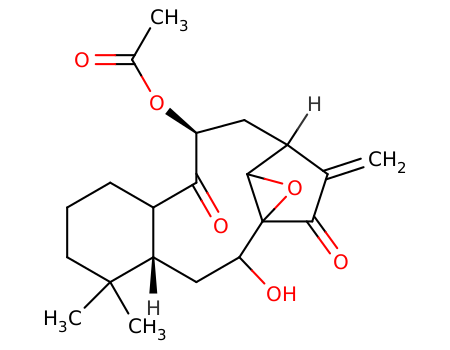 |
| Plant Source | Croton kongensis Common Name: |
| Source Family | Lamiaceae |
| Origin | China |
| Plant Part Used | |
| Extract | |
| Target Bacteria | Mycobacterium tuberculosis |
| Assay / Test Done | |
| Positive Control Used (conc.) | |
| Inhibition [%] | |
| Activity [MIC] µg/ml | 6.25 µg/ml |
| Activity (In terms of dilution) | |
| Activity (Zone of inhibition in mm) | |
| Active Compound Identified | Ent - 8, 9 - Seco - 8, 14 - Epoxy - 7α - Hydroxy - 11β - Acetoxy - 16 - Kauren - 9, 15 - Dione |
| PubChem ID | NR |
| Ethnomedicinal Information | Antimalarial activity, tuberculosis, dysmenorrheal treatment |
| PubMed ID [Source Literature] | 12828479, 1511068 |
| Extract Preparation | N/A |
| Chemical Classification [Active Compound] | Alicyclic, Tetracyclic, Terpene, Sesquiterpene, Epoxy, Ketone, O-Acetyl, Alcohol |
| Media / Broth Used [Antimicrobial Assay/Test] | N/A |
| Cytotoxicity Assay [AID] | Against Vero, human epidermoid carcinoma in the mouth (KB) and human breast cancer cells (BC) |
| Molecular Weight | 376.189 |
| Molecular Formula | C21H28O6
|
| SMILES | C1CCC([C@@H]2C1C(=O)[C@H](CC1C3C(C(=O)C1=C)(C(C2)O)O3)OC(=O)C)(C)C |
| XLogP | 1.760 |
| PSA | 93.200 |
| H-bond Donor | 1 |
| H-bond Acceptor | 6 |
| No. of Rotatable Bond Count | 2 |
| No. of Rings | 4 |
| No. of N | 0 |
| No. of O | 6 |
| No. of S | 0 |
| Reference(s) | 1) Thongtan J, Kittakoop P, Ruangrungsi N, Saenboonrueng J, Thebtaranonth Y.New antimycobacterial and antimalarial 8,9-secokaurane diterpenes from Croton kongensis.J Nat Prod. 2003 Jun;66(6):868-70
2) Hendrix PG, Hoylaerts MF, Nouwen EJ, Van de Voorde A, De Broe ME.Magnetic beads in suspension enable a rapid and sensitive immunodetection of human placental alkaline phosphatase.Eur J Clin Chem Clin Biochem. 1992 Jun;30(6):343-7
|
| Curator | |
| Compound ID | 1556 |
| Compound Structure | 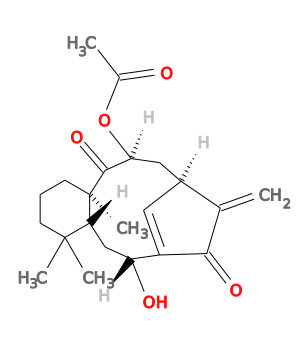 |
| Plant Source | Croton kongensis Common Name: |
| Source Family | Lamiaceae |
| Origin | China |
| Plant Part Used | |
| Extract | |
| Target Bacteria | Mycobacterium tuberculosis |
| Assay / Test Done | |
| Positive Control Used (conc.) | |
| Inhibition [%] | |
| Activity [MIC] µg/ml | 6.25 µg/ml |
| Activity (In terms of dilution) | |
| Activity (Zone of inhibition in mm) | |
| Active Compound Identified | Ent - 8, 9 - Seco - 7α - Hydroxy - 11β - Acetoxykaura - 8 (14), 16 - Dien - 9, 15 - Dione |
| PubChem ID | 3010861 |
| Ethnomedicinal Information | Antimalarial activity, tuberculosis, dysmenorrheal treatment |
| PubMed ID [Source Literature] | 12828479, 1511068 |
| Extract Preparation | N/A |
| Chemical Classification [Active Compound] | Alicyclic, Tricyclic, Terpene, Diterpene, Ketone, Alcohol, O-Acetyl |
| Media / Broth Used [Antimicrobial Assay/Test] | N/A |
| Cytotoxicity Assay [AID] | Against Vero, human epidermoid carcinoma in the mouth (KB) and human breast cancer cells (BC) |
| Molecular Weight | 374.209 |
| Molecular Formula | C22H30O5
|
| SMILES | O=C1[C@]2([C@@H](C(CCC2)(C)C)C[C@@H](O)C2=C[C@@H](C[C@@H]1OC(=O)C)C(=C)C2=O)C |
| XLogP | 2.928 |
| PSA | 80.670 |
| H-bond Donor | 1 |
| H-bond Acceptor | 5 |
| No. of Rotatable Bond Count | 2 |
| No. of Rings | 3 |
| No. of N | 0 |
| No. of O | 5 |
| No. of S | 0 |
| Reference(s) | 1) Thongtan J, Kittakoop P, Ruangrungsi N, Saenboonrueng J, Thebtaranonth Y.New antimycobacterial and antimalarial 8,9-secokaurane diterpenes from Croton kongensis.J Nat Prod. 2003 Jun;66(6):868-70
2) Hendrix PG, Hoylaerts MF, Nouwen EJ, Van de Voorde A, De Broe ME.Magnetic beads in suspension enable a rapid and sensitive immunodetection of human placental alkaline phosphatase.Eur J Clin Chem Clin Biochem. 1992 Jun;30(6):343-7
|
| Curator | |
| Compound ID | 1918 |
| Compound Structure | |
| Plant Source | Inula helenium L. Common Name:Scabwort, Horse Heal, Wild Sunflower |
| Source Family | Asteraceae (Compositae) |
| Origin | Europe and temperate Asia, USA, China |
| Plant Part Used | Root |
| Extract | Dichloromethane, hexane |
| Target Bacteria | Mycobacterium tuberculosis |
| Assay / Test Done | |
| Positive Control Used (conc.) | Rifampin, Clarithromycin |
| Inhibition [%] | 100 % |
| Activity [MIC] µg/ml | 1000 µg/ml |
| Activity (In terms of dilution) | |
| Activity (Zone of inhibition in mm) | |
| Active Compound Identified | |
| PubChem ID | NR |
| Ethnomedicinal Information | Used for stomach ulcers and chronic cough, respiratory tract infections, digestive support |
| PubMed ID [Source Literature] | 23195767 |
| Extract Preparation | N/A |
| Chemical Classification [Active Compound] | N/A |
| Media / Broth Used [Antimicrobial Assay/Test] | N/A |
| Cytotoxicity Assay [AID] | N/A |
| Reference(s) | 1) C.L. Cantrell, N.H. Fischer, L. Urbatsch, M.S. McGuire, S.G. Franzblau.Antimycobacterial crude plant extracts from South, Central, and North America.Phytomedicine, Volume 5, Issue 2, April 1998, Pages 137–145
|
| Curator | |
| Compound ID | 1919 |
| Compound Structure | |
| Plant Source | Inula helenium L. Common Name:Scabwort, Horse Heal, Wild Sunflower |
| Source Family | Asteraceae (Compositae) |
| Origin | Europe and Temperate Asia, USA, China |
| Plant Part Used | Root |
| Extract | Methanol (12.26 %) |
| Target Bacteria | Mycobacterium aurum |
| Assay / Test Done | Broth Microdilution Method (BMM) |
| Positive Control Used (conc.) | Streptomycin (IC50 value 1.14) |
| Inhibition [%] | |
| Activity [MIC] µg/ml | 500 µg/ml |
| Activity (In terms of dilution) | |
| Activity (Zone of inhibition in mm) | |
| Active Compound Identified | |
| PubChem ID | NR |
| Ethnomedicinal Information | Used for stomach ulcers and chronic cough, respiratory tract infections, digestive support |
| PubMed ID [Source Literature] | 11744296 |
| Extract Preparation | N/A |
| Chemical Classification [Active Compound] | N/A |
| Media / Broth Used [Antimicrobial Assay/Test] | N/A |
| Cytotoxicity Assay [AID] | N/A |
| Reference(s) | 1) Newton SM, Lau C, Gurcha SS, Besra GS, Wright CW.The evaluation of forty-three plant species for in vitro antimycobacterial activities; isolation of active constituents from Psoralea corylifolia and Sanguinaria canadensis.J Ethnopharmacol. 2002 Jan;79(1):57-67
|
| Curator | |
| Compound ID | 1920 |
| Compound Structure | |
| Plant Source | Inula helenium L. Common Name:Scabwort, Horse Heal, Wild Sunflower |
| Source Family | Asteraceae (Compositae) |
| Origin | Europe and Temperate Asia, USA, China |
| Plant Part Used | Root |
| Extract | Methanol (12.26 %) |
| Target Bacteria | Mycobacterium smegmatis |
| Assay / Test Done | Broth Microdilution Method (BMM) |
| Positive Control Used (conc.) | Streptomycin (IC50 value 0.17) |
| Inhibition [%] | |
| Activity [MIC] µg/ml | 500 µg/ml |
| Activity (In terms of dilution) | |
| Activity (Zone of inhibition in mm) | |
| Active Compound Identified | |
| PubChem ID | NR |
| Ethnomedicinal Information | Used for stomach ulcers and chronic cough, respiratory tract infections, digestive support |
| PubMed ID [Source Literature] | 11744296 |
| Extract Preparation | N/A |
| Chemical Classification [Active Compound] | N/A |
| Media / Broth Used [Antimicrobial Assay/Test] | N/A |
| Cytotoxicity Assay [AID] | N/A |
| Reference(s) | 1) Newton SM, Lau C, Gurcha SS, Besra GS, Wright CW.The evaluation of forty-three plant species for in vitro antimycobacterial activities; isolation of active constituents from Psoralea corylifolia and Sanguinaria canadensis.J Ethnopharmacol. 2002 Jan;79(1):57-67
|
| Curator | |
| Compound ID | 1069 |
| Compound Structure |  |
| Plant Source | Agelica sinensis Common Name:Female Ginseng |
| Source Family | Apiaceae (Umbelliferae) |
| Origin | China |
| Plant Part Used | Root |
| Extract | Petroleum ether, chloroform |
| Target Bacteria | Mycobacterium tuberculosis (Erdman) |
| Assay / Test Done | Microplate Alamar Blue Assay (MABA) |
| Positive Control Used (conc.) | Rifampin (0.05 µg/ml) |
| Inhibition [%] | >= 90 % |
| Activity [MIC] µg/ml | 49.5 µg/ml |
| Activity (In terms of dilution) | |
| Activity (Zone of inhibition in mm) | |
| Active Compound Identified | Oplopandiol |
| PubChem ID | 6474833 |
| Ethnomedicinal Information | To treat gynecological ailments, fatigue, mild anemia and high blood pressure |
| PubMed ID [Source Literature] | 18567055, 12696940 |
| Extract Preparation | N/A |
| Chemical Classification [Active Compound] | Aliphatic, Alkene, Alkyne, Alcohol |
| Media / Broth Used [Antimicrobial Assay/Test] | N/A |
| Cytotoxicity Assay [AID] | N/A |
| Molecular Weight | 262.193 |
| Molecular Formula | C17H26O2
|
| SMILES | O[C@@H](/C=CCCCCCCC)C#CC#C[C@@H](O)CC |
| XLogP | 4.977 |
| PSA | 40.460 |
| H-bond Donor | 2 |
| H-bond Acceptor | 2 |
| No. of Rotatable Bond Count | 8 |
| No. of Rings | 0 |
| No. of N | 0 |
| No. of O | 2 |
| No. of S | 0 |
| Reference(s) | 1) Deng S, Wang Y, Inui T, Chen SN, Farnsworth NR, Cho S, Franzblau SG, Pauli GF.Anti-TB polyynes from the roots of Angelica sinensis.Phytother Res. 2008 Jul;22(7):878-82
2) Zhao KJ, Dong TT, Tu PF, Song ZH, Lo CK, Tsim KW (April 2003).Molecular genetic and chemical assessment of radix Angelica (Danggui) in China. J. Agric. Food Chem. 51 (9): 2576.83
|
| Curator | |
| Compound ID | 2285 |
| Compound Structure | |
| Plant Source | Panax ginseng Common Name:Asian Ginseng, Chinese Ginseng |
| Source Family | Araliaceae |
| Origin | China |
| Plant Part Used | Root |
| Extract | Methanol |
| Target Bacteria | Mycobacterium tuberculosis H37Rv |
| Assay / Test Done | |
| Positive Control Used (conc.) | |
| Inhibition [%] | |
| Activity [MIC] µg/ml | 500 µg/ml |
| Activity (In terms of dilution) | |
| Activity (Zone of inhibition in mm) | |
| Active Compound Identified | |
| PubChem ID | NR |
| Ethnomedicinal Information | Treatment of diabetes, erectile dysfunction, fatigue, weakness, depression and anxiety |
| PubMed ID [Source Literature] | 113372 |
| Extract Preparation | N/A |
| Chemical Classification [Active Compound] | N/A |
| Media / Broth Used [Antimicrobial Assay/Test] | N/A |
| Cytotoxicity Assay [AID] | N/A |
| Reference(s) | 1) Chang MW, Tasaka H, Kuwabara M, Watanabe T, Matsuo Y.Effects of panax ginseng extracts on the growth of Mycobacterium tuberculosis H37Rv.Hiroshima J Med Sci. 1979 Jun;28(2):115-8
|
| Curator | |
| Compound ID | 2286 |
| Compound Structure | |
| Plant Source | Panax ginseng Common Name:Asian Ginseng, Chinese Ginseng |
| Source Family | Araliaceae |
| Origin | China |
| Plant Part Used | Root |
| Extract | Ethanol |
| Target Bacteria | Mycobacterium tuberculosis H37Rv |
| Assay / Test Done | |
| Positive Control Used (conc.) | |
| Inhibition [%] | |
| Activity [MIC] µg/ml | 500 µg/ml |
| Activity (In terms of dilution) | |
| Activity (Zone of inhibition in mm) | |
| Active Compound Identified | |
| PubChem ID | NR |
| Ethnomedicinal Information | Treatment of diabetes, erectile dysfunction, fatigue, weakness, depression and anxiety |
| PubMed ID [Source Literature] | 113372 |
| Extract Preparation | N/A |
| Chemical Classification [Active Compound] | N/A |
| Media / Broth Used [Antimicrobial Assay/Test] | N/A |
| Cytotoxicity Assay [AID] | N/A |
| Reference(s) | 1) Chang MW, Tasaka H, Kuwabara M, Watanabe T, Matsuo Y.Effects of panax ginseng extracts on the growth of Mycobacterium tuberculosis H37Rv.Hiroshima J Med Sci. 1979 Jun;28(2):115-8
|
| Curator | |
| Compound ID | 2287 |
| Compound Structure | |
| Plant Source | Panax ginseng Common Name:Asian Ginseng, Chinese Ginseng |
| Source Family | Araliaceae |
| Origin | China |
| Plant Part Used | Root |
| Extract | Ether |
| Target Bacteria | Mycobacterium tuberculosis H37Rv |
| Assay / Test Done | |
| Positive Control Used (conc.) | |
| Inhibition [%] | |
| Activity [MIC] µg/ml | 100 µg/ml |
| Activity (In terms of dilution) | |
| Activity (Zone of inhibition in mm) | |
| Active Compound Identified | |
| PubChem ID | NR |
| Ethnomedicinal Information | Treatment of diabetes, erectile dysfunction, fatigue, weakness, depression and anxiety |
| PubMed ID [Source Literature] | 113372 |
| Extract Preparation | N/A |
| Chemical Classification [Active Compound] | N/A |
| Media / Broth Used [Antimicrobial Assay/Test] | N/A |
| Cytotoxicity Assay [AID] | N/A |
| Reference(s) | 1) Chang MW, Tasaka H, Kuwabara M, Watanabe T, Matsuo Y.Effects of panax ginseng extracts on the growth of Mycobacterium tuberculosis H37Rv.Hiroshima J Med Sci. 1979 Jun;28(2):115-8
|
| Curator | |
| Compound ID | 2317 |
| Compound Structure | 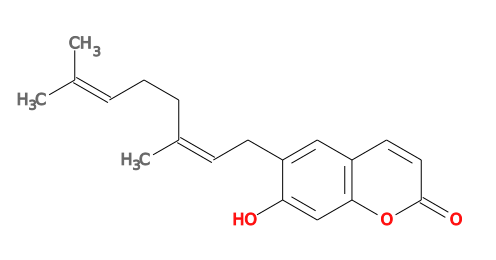 |
| Plant Source | Peucedanum ostruthium Koch Common Name:Masterwort |
| Source Family | Apiaceae (Umbelliferae) |
| Origin | China |
| Plant Part Used | Root |
| Extract | |
| Target Bacteria | Mycobacterium aurum (PI 104 482) |
| Assay / Test Done | |
| Positive Control Used (conc.) | |
| Inhibition [%] | |
| Activity [MIC] µg/ml | 1 µg/ml |
| Activity (In terms of dilution) | |
| Activity (Zone of inhibition in mm) | |
| Active Compound Identified | Ostruthin |
| PubChem ID | 5281420 |
| Ethnomedicinal Information | Has folkloric reputation for the topical treatment of athletes foot |
| PubMed ID [Source Literature] | 12709907 |
| Extract Preparation | N/A |
| Chemical Classification [Active Compound] | Aromatic, Bicyclic, Coumarin, Prenylated, Phenol |
| Media / Broth Used [Antimicrobial Assay/Test] | N/A |
| Cytotoxicity Assay [AID] | N/A |
| Molecular Weight | 298.157 |
| Molecular Formula | C19H22O3 |
| SMILES | O1c2c(cc(C/C=C(/CCC=C(C)C)C)c(O)c2)ccc1=O |
| XLogP | 5.348 |
| PSA | 37.300 |
| H-bond Donor | 1 |
| H-bond Acceptor | 2 |
| No. of Rotatable Bond Count | 5 |
| No. of Rings | 2 |
| No. of N | 0 |
| No. of O | 3 |
| No. of S | 0 |
| Reference(s) | 1) Schinkovitz A, Gibbons S, Stavri M, Cocksedge MJ, Bucar F.Ostruthin: an antimycobacterial coumarin from the Roots of Peucedanum ostruthium. Planta Med. 2003 Apr;69(4):369-7
|
| Curator | |
| Compound ID | 2318 |
| Compound Structure | |
| Plant Source | Peucedanum ostruthium Koch Common Name:Masterwort |
| Source Family | Apiaceae (Umbelliferae) |
| Origin | China |
| Plant Part Used | Root |
| Extract | |
| Target Bacteria | Mycobacterium fortuitum (ATCC 6841) |
| Assay / Test Done | |
| Positive Control Used (conc.) | |
| Inhibition [%] | |
| Activity [MIC] µg/ml | 2 µg/ml |
| Activity (In terms of dilution) | |
| Activity (Zone of inhibition in mm) | |
| Active Compound Identified | Ostruthin |
| PubChem ID | 5281420 |
| Ethnomedicinal Information | Has folkloric reputation for the topical treatment of athletes foot |
| PubMed ID [Source Literature] | 12709907 |
| Extract Preparation | N/A |
| Chemical Classification [Active Compound] | Aromatic, Bicyclic, Coumarin, Prenylated, Phenol |
| Media / Broth Used [Antimicrobial Assay/Test] | N/A |
| Cytotoxicity Assay [AID] | N/A |
| Molecular Weight | 298.157 |
| Molecular Formula | C19H22O3 |
| SMILES | O1c2c(cc(C/C=C(/CCC=C(C)C)C)c(O)c2)ccc1=O |
| XLogP | 5.348 |
| PSA | 37.300 |
| H-bond Donor | 1 |
| H-bond Acceptor | 2 |
| No. of Rotatable Bond Count | 5 |
| No. of Rings | 2 |
| No. of N | 0 |
| No. of O | 3 |
| No. of S | 0 |
| Reference(s) | 1) Schinkovitz A, Gibbons S, Stavri M, Cocksedge MJ, Bucar F.Ostruthin: an antimycobacterial coumarin from the Roots of Peucedanum ostruthium. Planta Med. 2003 Apr;69(4):369-7
|
| Curator | |
| Compound ID | 2319 |
| Compound Structure | |
| Plant Source | Peucedanum ostruthium Koch Common Name:Masterwort |
| Source Family | Apiaceae (Umbelliferae) |
| Origin | China |
| Plant Part Used | Root |
| Extract | |
| Target Bacteria | Mycobacterium phlei (ATCC 11 758) |
| Assay / Test Done | |
| Positive Control Used (conc.) | |
| Inhibition [%] | |
| Activity [MIC] µg/ml | 2 µg/ml |
| Activity (In terms of dilution) | |
| Activity (Zone of inhibition in mm) | |
| Active Compound Identified | Ostruthin |
| PubChem ID | 5281420 |
| Ethnomedicinal Information | Has folkloric reputation for the topical treatment of athletes foot |
| PubMed ID [Source Literature] | 12709907 |
| Extract Preparation | N/A |
| Chemical Classification [Active Compound] | Aromatic, Bicyclic, Coumarin, Prenylated, Phenol |
| Media / Broth Used [Antimicrobial Assay/Test] | N/A |
| Cytotoxicity Assay [AID] | N/A |
| Molecular Weight | 298.157 |
| Molecular Formula | C19H22O3 |
| SMILES | O1c2c(cc(C/C=C(/CCC=C(C)C)C)c(O)c2)ccc1=O |
| XLogP | 5.348 |
| PSA | 37.300 |
| H-bond Donor | 1 |
| H-bond Acceptor | 2 |
| No. of Rotatable Bond Count | 5 |
| No. of Rings | 2 |
| No. of N | 0 |
| No. of O | 3 |
| No. of S | 0 |
| Reference(s) | 1) Schinkovitz A, Gibbons S, Stavri M, Cocksedge MJ, Bucar F.Ostruthin: an antimycobacterial coumarin from the Roots of Peucedanum ostruthium. Planta Med. 2003 Apr;69(4):369-7
|
| Curator | |
| Compound ID | 2320 |
| Compound Structure | |
| Plant Source | Peucedanum ostruthium Koch Common Name:Masterwort |
| Source Family | Apiaceae (Umbelliferae) |
| Origin | China |
| Plant Part Used | Root |
| Extract | |
| Target Bacteria | Mycobacterium smegmatis (ATCC 14468) |
| Assay / Test Done | |
| Positive Control Used (conc.) | |
| Inhibition [%] | |
| Activity [MIC] µg/ml | 2 µg/ml |
| Activity (In terms of dilution) | |
| Activity (Zone of inhibition in mm) | |
| Active Compound Identified | Ostruthin |
| PubChem ID | 5281420 |
| Ethnomedicinal Information | Has folkloric reputation for the topical treatment of athletes foot |
| PubMed ID [Source Literature] | 12709907 |
| Extract Preparation | N/A |
| Chemical Classification [Active Compound] | Aromatic, Bicyclic, Coumarin, Prenylated, Phenol |
| Media / Broth Used [Antimicrobial Assay/Test] | N/A |
| Cytotoxicity Assay [AID] | N/A |
| Molecular Weight | 298.157 |
| Molecular Formula | C19H22O3 |
| SMILES | O1c2c(cc(C/C=C(/CCC=C(C)C)C)c(O)c2)ccc1=O |
| XLogP | 5.348 |
| PSA | 37.300 |
| H-bond Donor | 1 |
| H-bond Acceptor | 2 |
| No. of Rotatable Bond Count | 5 |
| No. of Rings | 2 |
| No. of N | 0 |
| No. of O | 3 |
| No. of S | 0 |
| Reference(s) | 1) Schinkovitz A, Gibbons S, Stavri M, Cocksedge MJ, Bucar F.Ostruthin: an antimycobacterial coumarin from the Roots of Peucedanum ostruthium. Planta Med. 2003 Apr;69(4):369-7
|
| Curator | |
| Compound ID | 2339 |
| Compound Structure | |
| Plant Source | Pieris japonica Common Name:Japanese Pieris |
| Source Family | Ericaceae |
| Origin | China |
| Plant Part Used | Leaf |
| Extract | Water |
| Target Bacteria | Mycobacterium tuberculosis |
| Assay / Test Done | |
| Positive Control Used (conc.) | |
| Inhibition [%] | 100 % |
| Activity [MIC] µg/ml | 1:640 dilution |
| Activity (In terms of dilution) | |
| Activity (Zone of inhibition in mm) | |
| Active Compound Identified | |
| PubChem ID | NR |
| Ethnomedicinal Information | Tuberculosis |
| PubMed ID [Source Literature] | |
| Extract Preparation | N/A |
| Chemical Classification [Active Compound] | N/A |
| Media / Broth Used [Antimicrobial Assay/Test] | N/A |
| Cytotoxicity Assay [AID] | N/A |
| Reference(s) | 1) Fitzpatrick, F.K.Plant substances achieve against mycobacterium tuberculoses.Antibiotics and Chemotherapy, Vol 4, Pages 528-536
|
| Curator | |
| Compound ID | 2446 |
| Compound Structure |  |
| Plant Source | Prunus mume Common Name:Japanese Apricot, Japanese Plum, Chinese Plum |
| Source Family | Rosaceae |
| Origin | China |
| Plant Part Used | Berry |
| Extract | |
| Target Bacteria | Mycobacterium tuberculosis 607 |
| Assay / Test Done | Paper Disk Method |
| Positive Control Used (conc.) | |
| Inhibition [%] | |
| Activity [MIC] µg/ml | NR |
| Activity (In terms of dilution) | |
| Activity (Zone of inhibition in mm) | 7.1 mm |
| Active Compound Identified | Citric acid |
| PubChem ID | NR |
| Ethnomedicinal Information | Used as traditional Chinese medicine in stopping ulcers and promoting a strong digestive system and heart |
| PubMed ID [Source Literature] | 4978259, 4978260 |
| Extract Preparation | N/A |
| Chemical Classification [Active Compound] | Aliphatic, Acid, Alcohol |
| Media / Broth Used [Antimicrobial Assay/Test] | N/A |
| Cytotoxicity Assay [AID] | N/A |
| Molecular Weight | 192.027 |
| Molecular Formula | C6H8O7 |
| SMILES | OC(CC(=O)O)(CC(=O)O)C(=O)O |
| XLogP | -2.247 |
| PSA | 132.130 |
| H-bond Donor | 4 |
| H-bond Acceptor | 7 |
| No. of Rotatable Bond Count | 5 |
| No. of Rings | 0 |
| No. of N | 0 |
| No. of O | 7 |
| No. of S | 0 |
| Reference(s) | 1) Ma TS, Roper R.Microchemical investigation of medicinal plants. I. The antitubercular principle in Prunus mume and Schizandra chinensis.Mikrochim Acta. 1968;(1):167-81
2) Roper R, Ma TS.Microchemical investigation of medicinal plants. II. The antitubercular activity of some plant acids and their hydrazides.Mikrochim Acta. 1968;(1):212-8
3) Kariyone T, Kimura Y. 196 Japanese and Chinese Medicinal Plants (in Japanese), 3rd edn. Hirokawa: Tokyo, 250-290 AND Li Shih-Chen. 1930. Compendium of Materia Medica (in Chinese), 1st edn, Naking, 1593; revised a
|
| Curator | |
| Compound ID | 2472 |
| Compound Structure | |
| Plant Source | Punica granatum L. Common Name:Pomegranate (English), Daadima, Daadimba (Sanskrit) |
| Source Family | Punicaceae |
| Origin | India, China, Malaysia |
| Plant Part Used | Whole plant |
| Extract | Ethanol (95 %) |
| Target Bacteria | Mycobacterium tuberculosis |
| Assay / Test Done | Tube Dilution Test |
| Positive Control Used (conc.) | |
| Inhibition [%] | 100 % |
| Activity [MIC] µg/ml | |
| Activity (In terms of dilution) | 1:50 dilution |
| Activity (Zone of inhibition in mm) | |
| Active Compound Identified | |
| PubChem ID | NR |
| Ethnomedicinal Information | Bronchitis, sore throat, chest troubles, cough |
| PubMed ID [Source Literature] | 14778141 |
| Extract Preparation | N/A |
| Chemical Classification [Active Compound] | N/A |
| Media / Broth Used [Antimicrobial Assay/Test] | N/A |
| Cytotoxicity Assay [AID] | N/A |
| Reference(s) | 1) Wang VF.In vitro antibacterial activity of some common Chinese herbs on Mycobacteria tuberculosis.Chin Med J. 1950 May-Jun;68(5-6):169-72
2) Anon., 1986. The Useful Plants of India. Council of Scientific and Industrial Research, New Delhi, India
|
| Curator | |