| Compound ID | 1033 |
| Compound Structure | |
| Plant Source | Achillea millefolium L. Common Name:Yarrow (English), Brinjasipha (Sanskrit) |
| Source Family | Asteraceae (Compositae) |
| Origin | Mexico, India |
| Plant Part Used | Flower, leaf |
| Extract | Water |
| Target Bacteria | Mycobacterium tuberculosis |
| Assay / Test Done | Broth Dilution Assay |
| Positive Control Used (conc.) | |
| Inhibition [%] | |
| Activity [MIC] µg/ml | |
| Activity (In terms of dilution) | < 1:20 dilution |
| Activity (Zone of inhibition in mm) | |
| Active Compound Identified | N/A |
| PubChem ID | NR |
| Ethnomedicinal Information | Cough, tuberculosis, colds, flu, fever, astringent |
| PubMed ID [Source Literature] | 17276637 |
| Extract Preparation | N/A |
| Chemical Classification [Active Compound] | N/A |
| Media / Broth Used [Antimicrobial Assay/Test] | N/A |
| Cytotoxicity Assay [AID] | N/A |
| Reference(s) | 1) Gautam R, Saklani A, Jachak SM.Indian medicinal plants as a source of antimycobacterial agents.J Ethnopharmacol. 2007 Mar 21;110(2):200-34
|
| Curator | |
| Compound ID | 1167 |
| Compound Structure | |
| Plant Source | Ambrosia peruviana Willd Common Name: |
| Source Family | Asteraceae (Compositae) |
| Origin | Peru |
| Plant Part Used | Leaf and flower |
| Extract | Dichloromethane |
| Target Bacteria | Mycobacterium tuberculosis (ATCC 27294) |
| Assay / Test Done | BACTEC 460 (Becton Dickinson Diagnostic Instrument Systems, Sparks MD) Radiometric Assay |
| Positive Control Used (conc.) | Rifampin (2 µg/ml), Ethambutol (7.5 µg/ml) |
| Inhibition [%] | 58 % |
| Activity [MIC] µg/ml | 50 µg/ml |
| Activity (In terms of dilution) | |
| Activity (Zone of inhibition in mm) | |
| Active Compound Identified | |
| PubChem ID | NR |
| Ethnomedicinal Information | Tuberculosis |
| PubMed ID [Source Literature] | 13678239 |
| Extract Preparation | N/A |
| Chemical Classification [Active Compound] | N/A |
| Media / Broth Used [Antimicrobial Assay/Test] | N/A |
| Cytotoxicity Assay [AID] | N/A |
| Reference(s) | 1) Graham JG, Pendland SL, Prause JL, Danzinger LH, Schunke Vigo J, Cabieses F, Farnsworth NR.Antimycobacterial evaluation of Peruvian plants.Phytomedicine. 2003;10(6-7):528-35
|
| Curator | |
| Compound ID | 1280 |
| Compound Structure | 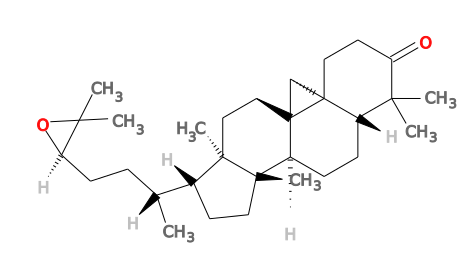 |
| Plant Source | Borrichia frutescens L. Common Name:Sea Daisy |
| Source Family | Asteraceae (Compositae) |
| Origin | Southeastern USA |
| Plant Part Used | Flower, leaf, stem |
| Extract | Dichloromethane |
| Target Bacteria | Mycobacterium tuberculosis H37Rv |
| Assay / Test Done | |
| Positive Control Used (conc.) | Fusidic acid (4 µg/ml) |
| Inhibition [%] | |
| Activity [MIC] µg/ml | 8 µg/ml |
| Activity (In terms of dilution) | |
| Activity (Zone of inhibition in mm) | |
| Active Compound Identified | (24R)-24,25-epoxycycloartan-3-one |
| PubChem ID | 469544 |
| Ethnomedicinal Information | Tuberculosis |
| PubMed ID [Source Literature] | 8988597 |
| Extract Preparation | N/A |
| Chemical Classification [Active Compound] | Alicyclic, Tetracyclic, Terpene, Triterpene, Cycloartane, Ketone, Epoxy |
| Media / Broth Used [Antimicrobial Assay/Test] | N/A |
| Cytotoxicity Assay [AID] | Against vero cells |
| Molecular Weight | 440.365 |
| Molecular Formula | C30H48O2 |
| SMILES | O=C1C([C@H]2[C@@]3([C@@]4(C3)[C@H]([C@]3([C@](CC4)([C@H](CC3)[C@@H](CC[C@H]3OC3(C)C)C)C)C)CC2)CC1)(C)C |
| XLogP | 9.983 |
| PSA | 29.600 |
| H-bond Donor | 0 |
| H-bond Acceptor | 2 |
| No. of Rotatable Bond Count | 4 |
| No. of Rings | 6 |
| No. of N | 0 |
| No. of O | 2 |
| No. of S | 0 |
| Reference(s) | 1) Cantrell CL, Lu T, Fronczek FR, Fischer NH, Adams LB, Franzblau SG.Antimycobacterial cycloartanes from Borrichia frutescens.J Nat Prod. 1996 Dec;59(12):1131-6
|
| Curator | |
| Compound ID | 1281 |
| Compound Structure | 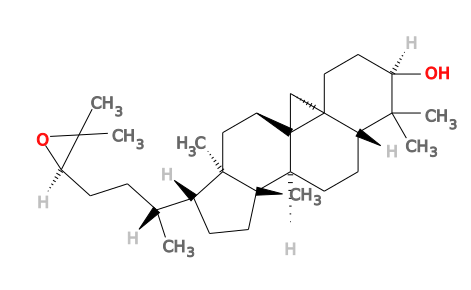 |
| Plant Source | Borrichia frutescens L. Common Name:Sea Daisy |
| Source Family | Asteraceae (Compositae) |
| Origin | USA |
| Plant Part Used | Flower, leaf, stem |
| Extract | Dichloromethane |
| Target Bacteria | Mycobacterium tuberculosis H37Rv |
| Assay / Test Done | |
| Positive Control Used (conc.) | Fusidic acid (4 µg/ml) |
| Inhibition [%] | |
| Activity [MIC] µg/ml | 8 µg/ml |
| Activity (In terms of dilution) | |
| Activity (Zone of inhibition in mm) | |
| Active Compound Identified | (3β, 24R) - 24, 25 - Epoxycycloartan - 3 - Ol |
| PubChem ID | 469545 |
| Ethnomedicinal Information | Tuberculosis |
| PubMed ID [Source Literature] | 8988597 |
| Extract Preparation | N/A |
| Chemical Classification [Active Compound] | Alicyclic, Tetracyclic, Terpene, Triterpene, Cycloartane, Epoxy, Alcohol |
| Media / Broth Used [Antimicrobial Assay/Test] | N/A |
| Cytotoxicity Assay [AID] | Against Vero cells |
| Molecular Weight | 442.381 |
| Molecular Formula | C30H50O2 |
| SMILES | O[C@H]1C([C@H]2[C@@]3([C@@]4(C3)[C@H]([C@]3([C@](CC4)([C@H](CC3)[C@@H](CC[C@H]3OC3(C)C)C)C)C)CC2)CC1)(C)C |
| XLogP | 10.590 |
| PSA | 32.760 |
| H-bond Donor | 1 |
| H-bond Acceptor | 2 |
| No. of Rotatable Bond Count | 4 |
| No. of Rings | 6 |
| No. of N | 0 |
| No. of O | 2 |
| No. of S | 0 |
| Reference(s) | 1) Cantrell CL, Lu T, Fronczek FR, Fischer NH, Adams LB, Franzblau SG.Antimycobacterial cycloartanes from Borrichia frutescens.J Nat Prod. 1996 Dec;59(12):1131-6
|
| Curator | |
| Compound ID | 1282 |
| Compound Structure | 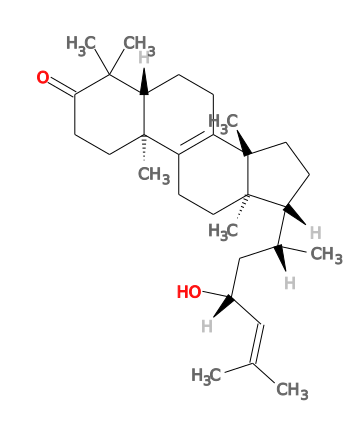 |
| Plant Source | Borrichia frutescens L. Common Name:Sea Daisy |
| Source Family | Asteraceae (Compositae) |
| Origin | USA |
| Plant Part Used | Flower, leaf, stem |
| Extract | Dichloromethane |
| Target Bacteria | Mycobacterium tuberculosis H37Rv |
| Assay / Test Done | |
| Positive Control Used (conc.) | Fusidic acid (4 µg/ml) |
| Inhibition [%] | |
| Activity [MIC] µg/ml | 64 - 128 µg/ml |
| Activity (In terms of dilution) | |
| Activity (Zone of inhibition in mm) | |
| Active Compound Identified | (23R)-3-Oxolanosta-8,24-dien-23-Ol |
| PubChem ID | 469546 |
| Ethnomedicinal Information | Tuberculosis |
| PubMed ID [Source Literature] | 8988597 |
| Extract Preparation | N/A |
| Chemical Classification [Active Compound] | Alicyclic, Tetracyclic, Steroid, Ketone, Prenylated |
| Media / Broth Used [Antimicrobial Assay/Test] | N/A |
| Cytotoxicity Assay [AID] | Against Vero cells |
| Molecular Weight | 440.365 |
| Molecular Formula | C30H48O2
|
| SMILES | O=C1C([C@H]2[C@@](C3=C([C@]4([C@@]([C@H](CC4)[C@@H](C[C@@H](O)C=C(C)C)C)(CC3)C)C)CC2)(CC1)C)(C)C |
| XLogP | 7.784 |
| PSA | 37.300 |
| H-bond Donor | 1 |
| H-bond Acceptor | 2 |
| No. of Rotatable Bond Count | 4 |
| No. of Rings | 4 |
| No. of N | 0 |
| No. of O | 2 |
| No. of S | 0 |
| Reference(s) | 1) Cantrell CL, Lu T, Fronczek FR, Fischer NH, Adams LB, Franzblau SG.Antimycobacterial cycloartanes from Borrichia frutescens.J Nat Prod. 1996 Dec;59(12):1131-6
|
| Curator | |
| Compound ID | 1283 |
| Compound Structure | |
| Plant Source | Borrichia frutescens L. Common Name:Sea Daisy |
| Source Family | Asteraceae (Compositae) |
| Origin | USA |
| Plant Part Used | Flower |
| Extract | Dichloromethane |
| Target Bacteria | Mycobacterium tuberculosis H37Rv |
| Assay / Test Done | |
| Positive Control Used (conc.) | Fusidic acid (4 µg/ml) |
| Inhibition [%] | 100 % |
| Activity [MIC] µg/ml | 100 µg/ml |
| Activity (In terms of dilution) | |
| Activity (Zone of inhibition in mm) | |
| Active Compound Identified | |
| PubChem ID | NR |
| Ethnomedicinal Information | Tuberculosis |
| PubMed ID [Source Literature] | 8988597 |
| Extract Preparation | N/A |
| Chemical Classification [Active Compound] | N/A |
| Media / Broth Used [Antimicrobial Assay/Test] | N/A |
| Cytotoxicity Assay [AID] | N/A |
| Reference(s) | 1) Cantrell CL, Lu T, Fronczek FR, Fischer NH, Adams LB, Franzblau SG.Antimycobacterial cycloartanes from Borrichia frutescens.J Nat Prod. 1996 Dec;59(12):1131-6
|
| Curator | |
| Compound ID | 1284 |
| Compound Structure | |
| Plant Source | Borrichia frutescens L. Common Name:Sea Daisy |
| Source Family | Asteraceae (Compositae) |
| Origin | USA |
| Plant Part Used | Flower |
| Extract | Dichloromethane |
| Target Bacteria | Mycobacterium avium |
| Assay / Test Done | |
| Positive Control Used (conc.) | Rifampin, Clarithromycin |
| Inhibition [%] | 99 % |
| Activity [MIC] µg/ml | 1000 µg/ml |
| Activity (In terms of dilution) | |
| Activity (Zone of inhibition in mm) | |
| Active Compound Identified | |
| PubChem ID | NR |
| Ethnomedicinal Information | Tuberculosis |
| PubMed ID [Source Literature] | 23195767 |
| Extract Preparation | N/A |
| Chemical Classification [Active Compound] | N/A |
| Media / Broth Used [Antimicrobial Assay/Test] | N/A |
| Cytotoxicity Assay [AID] | N/A |
| Reference(s) | 1) C.L. Cantrell, N.H. Fischer, L. Urbatsch, M.S. McGuire, S.G. Franzblau.Antimycobacterial crude plant extracts from South, Central, and North America.Phytomedicine, Volume 5, Issue 2, April 1998, Pages 137–145
|
| Curator | |
| Compound ID | 1288 |
| Compound Structure | |
| Plant Source | Brassica nigra (L.) Koch. Common Name:Black Mustard (English), Banarasi Raai, Raajika (Sanskrit) |
| Source Family | Brassicaceae |
| Origin | India |
| Plant Part Used | Flower, leaf |
| Extract | Water |
| Target Bacteria | Mycobacterium tuberculosis |
| Assay / Test Done | Broth Dilution Assay |
| Positive Control Used (conc.) | |
| Inhibition [%] | |
| Activity [MIC] µg/ml | |
| Activity (In terms of dilution) | < 1:40 dilution |
| Activity (Zone of inhibition in mm) | |
| Active Compound Identified | |
| PubChem ID | NR |
| Ethnomedicinal Information | Leprosy, cough, sore throat |
| PubMed ID [Source Literature] | 17276637 |
| Extract Preparation | N/A |
| Chemical Classification [Active Compound] | N/A |
| Media / Broth Used [Antimicrobial Assay/Test] | N/A |
| Cytotoxicity Assay [AID] | N/A |
| Reference(s) | 1) Gautam R, Saklani A, Jachak SM.Indian medicinal plants as a source of antimycobacterial agents.J Ethnopharmacol. 2007 Mar 21;110(2):200-34
2) Kirtikar, K.R., Basu, B.D., 1935. Indian Medicinal Plants, vols. 1–4. Lalit Mohan Basu, Allahabad, India
|
| Curator | |
| Compound ID | 1435 |
| Compound Structure | |
| Plant Source | Chenopodium ambrosioides L. Common Name:Indian Wormseed, Sweet Pigweed, Mexican Tea (English), Sugandh - Vaastuuka, Kshetra - Vaastuuka (Sanskrit) |
| Source Family | Chenopodiaceae |
| Origin | India, Africa |
| Plant Part Used | Flower, fruit |
| Extract | Essential oil |
| Target Bacteria | Mycobacterium tuberculosis |
| Assay / Test Done | |
| Positive Control Used (conc.) | |
| Inhibition [%] | |
| Activity [MIC] µg/ml | |
| Activity (In terms of dilution) | |
| Activity (Zone of inhibition in mm) | |
| Active Compound Identified | |
| PubChem ID | NR |
| Ethnomedicinal Information | Cough, pulmonary complaints, tuberculosis |
| PubMed ID [Source Literature] | |
| Extract Preparation | N/A |
| Chemical Classification [Active Compound] | N/A |
| Media / Broth Used [Antimicrobial Assay/Test] | N/A |
| Cytotoxicity Assay [AID] | N/A |
| Reference(s) | 1) Opdyke, D.L.J., 1976. Fragrance raw materials monographs. Chenopodium oil.Food Chemistry and Toxicology 14, 713–715.
2) Kirtikar, K.R., Basu, B.D., 1935. Indian Medicinal Plants, vols. 1–4. Lalit Mohan Basu, Allahabad, India
|
| Curator | |
| Compound ID | 1440 |
| Compound Structure | 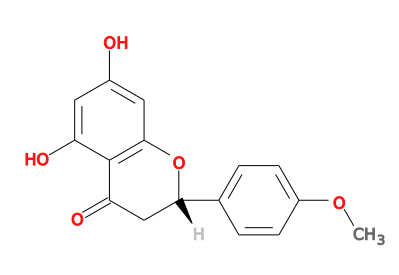 |
| Plant Source | Chromolaena odorata Common Name:Siam Weed, Christmas Bush, Common Floss Flower |
| Source Family | Asteraceae (Compositae) |
| Origin | Neotropics, Worldwide |
| Plant Part Used | Flower |
| Extract | |
| Target Bacteria | Mycobacterium tuberculosis |
| Assay / Test Done | Microplate Alamar Blue Assay (MABA) |
| Positive Control Used (conc.) | Kanamycin sulphate (2.50 µg/ml), Isoniazid (0.06 µg/ml) |
| Inhibition [%] | |
| Activity [MIC] µg/ml | 50 µg/ml |
| Activity (In terms of dilution) | |
| Activity (Zone of inhibition in mm) | |
| Active Compound Identified | Isosakuranetin |
| PubChem ID | 160481 |
| Ethnomedicinal Information | Treat skin wounds |
| PubMed ID [Source Literature] | 15202555, 10811796 |
| Extract Preparation | N/A |
| Chemical Classification [Active Compound] | Aromatic, Tricyclic, Flavonoid, Ether, Phenol |
| Media / Broth Used [Antimicrobial Assay/Test] | N/A |
| Cytotoxicity Assay [AID] | N/A |
| Molecular Weight | 286.084 |
| Molecular Formula | C16H14O5 |
| SMILES | O1[C@@H](CC(=O)c2c1cc(O)cc2O)c1ccc(OC)cc1 |
| XLogP | 1.416 |
| PSA | 75.990 |
| H-bond Donor | 2 |
| H-bond Acceptor | 5 |
| No. of Rotatable Bond Count | 2 |
| No. of Rings | 3 |
| No. of N | 0 |
| No. of O | 5 |
| No. of S | 0 |
| Reference(s) | 1) Suksamrarn, A., Chotipong, A., Suavansri, T., Boongird, S., Timsuksai, P., Vimuttipong, S., et al. (2004). Antimycobacterial activity and cytotoxicity of flavonoids from the flowers of Chromolaena odorata. Arch Pharm Res 27, 507u511
2) Schmidt GJ, Schilling EE.Phylogeny and biogeography of Eupatorium (Asteraceae: Eupatorieae) based on nuclear ITS sequence data.Am J Bot. 2000 May;87(5):716-26
|
| Curator | |
| Compound ID | 1441 |
| Compound Structure |  |
| Plant Source | Chromolaena odorata Common Name:Siam Weed, Christmas Bush, Common Floss Flower |
| Source Family | Asteraceae (Compositae) |
| Origin | Neotropics, Worldwide |
| Plant Part Used | Flower |
| Extract | |
| Target Bacteria | Mycobacterium tuberculosis |
| Assay / Test Done | Microplate Alamar Blue Assay (MABA) |
| Positive Control Used (conc.) | Kanamycin sulphate (2.50 µg/ml), Isoniazid (0.06 µg/ml) |
| Inhibition [%] | |
| Activity [MIC] µg/ml | 200 µg/ml |
| Activity (In terms of dilution) | |
| Activity (Zone of inhibition in mm) | |
| Active Compound Identified | 4` - Hydroxy - 5, 6, 7 - Trimethoxyflavanone |
| PubChem ID | 244387 |
| Ethnomedicinal Information | Treats skin wounds |
| PubMed ID [Source Literature] | 15202555, 10811796 |
| Extract Preparation | N/A |
| Chemical Classification [Active Compound] | Aromatic, Tricyclic, Flavonoid, Ether, Phenol |
| Media / Broth Used [Antimicrobial Assay/Test] | N/A |
| Cytotoxicity Assay [AID] | N/A |
| Molecular Weight | 330.110 |
| Molecular Formula | C18H18O6 |
| SMILES | O1C(CC(=O)c2c1cc(OC)c(OC)c2OC)c1ccc(O)cc1 |
| XLogP | 1.491 |
| PSA | 74.220 |
| H-bond Donor | 1 |
| H-bond Acceptor | 6 |
| No. of Rotatable Bond Count | 4 |
| No. of Rings | 3 |
| No. of N | 0 |
| No. of O | 6 |
| No. of S | 0 |
| Reference(s) | 1) Suksamrarn, A., Chotipong, A., Suavansri, T., Boongird, S., Timsuksai, P., Vimuttipong, S., et al. (2004). Antimycobacterial activity and cytotoxicity of flavonoids from the flowers of Chromolaena odorata. Arch Pharm Res 27, 507u511
2) Schmidt GJ, Schilling EE.Phylogeny and biogeography of Eupatorium (Asteraceae: Eupatorieae) based on nuclear ITS sequence data.Am J Bot. 2000 May;87(5):716-26
|
| Curator | |
| Compound ID | 1442 |
| Compound Structure |  |
| Plant Source | Chromolaena odorata Common Name:Siam Weed, Christmas Bush, Common Floss Flower |
| Source Family | Asteraceae (Compositae) |
| Origin | Neotropics, Worldwide |
| Plant Part Used | Flower |
| Extract | |
| Target Bacteria | Mycobacterium tuberculosis |
| Assay / Test Done | Microplate Alamar Blue Assay (MABA) |
| Positive Control Used (conc.) | Kanamycin sulphate (2.50 µg/ml), Isoniazid (0.06 µg/ml) |
| Inhibition [%] | |
| Activity [MIC] µg/ml | 200 µg/ml |
| Activity (In terms of dilution) | |
| Activity (Zone of inhibition in mm) | |
| Active Compound Identified | Acacetin |
| PubChem ID | 5280442 |
| Ethnomedicinal Information | Treats skin wounds |
| PubMed ID [Source Literature] | 15202555, 10811796 |
| Extract Preparation | N/A |
| Chemical Classification [Active Compound] | Aromatic, Tricyclic, Flavonoid, Ether, Phenol |
| Media / Broth Used [Antimicrobial Assay/Test] | N/A |
| Cytotoxicity Assay [AID] | N/A |
| Molecular Weight | 284.068 |
| Molecular Formula | C16H12O5 |
| SMILES | O1c2c(c(=O)cc1c1ccc(OC)cc1)c(O)cc(O)c2 |
| XLogP | 1.645 |
| PSA | 66.760 |
| H-bond Donor | 2 |
| H-bond Acceptor | 4 |
| No. of Rotatable Bond Count | 2 |
| No. of Rings | 3 |
| No. of N | 0 |
| No. of O | 5 |
| No. of S | 0 |
| Reference(s) | 1) Suksamrarn, A., Chotipong, A., Suavansri, T., Boongird, S., Timsuksai, P., Vimuttipong, S., et al. (2004). Antimycobacterial activity and cytotoxicity of flavonoids from the flowers of Chromolaena odorata. Arch Pharm Res 27, 507u511
2) Schmidt GJ, Schilling EE.Phylogeny and biogeography of Eupatorium (Asteraceae: Eupatorieae) based on nuclear ITS sequence data.Am J Bot. 2000 May;87(5):716-26
|
| Curator | |
| Compound ID | 1443 |
| Compound Structure |  |
| Plant Source | Chromolaena odorata Common Name:Siam Weed, Christmas Bush, Common Floss Flower |
| Source Family | Asteraceae (Compositae) |
| Origin | Neotropics, Worldwide |
| Plant Part Used | Flower |
| Extract | |
| Target Bacteria | Mycobacterium tuberculosis |
| Assay / Test Done | Microplate Alamar Blue Assay (MABA) |
| Positive Control Used (conc.) | Kanamycin sulphate (2.50 µg/ml), Isoniazid (0.06 µg/ml) |
| Inhibition [%] | |
| Activity [MIC] µg/ml | 200 µg/ml |
| Activity (In terms of dilution) | |
| Activity (Zone of inhibition in mm) | |
| Active Compound Identified | Luteolin |
| PubChem ID | 5280445 |
| Ethnomedicinal Information | Treats skin wounds |
| PubMed ID [Source Literature] | 15202555, 10811796 |
| Extract Preparation | N/A |
| Chemical Classification [Active Compound] | Aromatic, Tricyclic, Flavonoid, Phenol |
| Media / Broth Used [Antimicrobial Assay/Test] | N/A |
| Cytotoxicity Assay [AID] | N/A |
| Molecular Weight | 286.048 |
| Molecular Formula | C15H10O6 |
| SMILES | O1c2c(c(=O)cc1c1cc(O)c(O)cc1)c(O)cc(O)c2 |
| XLogP | 0.592 |
| PSA | 97.990 |
| H-bond Donor | 4 |
| H-bond Acceptor | 5 |
| No. of Rotatable Bond Count | 1 |
| No. of Rings | 3 |
| No. of N | 0 |
| No. of O | 6 |
| No. of S | 0 |
| Reference(s) | 1) Suksamrarn, A., Chotipong, A., Suavansri, T., Boongird, S., Timsuksai, P., Vimuttipong, S., et al. (2004). Antimycobacterial activity and cytotoxicity of flavonoids from the flowers of Chromolaena odorata. Arch Pharm Res 27, 507u511
2) Schmidt GJ, Schilling EE.Phylogeny and biogeography of Eupatorium (Asteraceae: Eupatorieae) based on nuclear ITS sequence data.Am J Bot. 2000 May;87(5):716-26
|
| Curator | |
| Compound ID | 1487 |
| Compound Structure | |
| Plant Source | Clerodendrum indicum (L.) Kuntze Common Name:Tuber Flower, Turk's Turban, Skyrocket (English), Bhargi (Sanskrit) |
| Source Family | Verbenaceae |
| Origin | Malaysia |
| Plant Part Used | Flower, stem |
| Extract | Methanol |
| Target Bacteria | Mycobacterium tuberculosis H37Rv |
| Assay / Test Done | Colorimetric Tetrazolium Microplate Assay (TEMA) |
| Positive Control Used (conc.) | Isoniazid (0.078 µg/ml) |
| Inhibition [%] | |
| Activity [MIC] µg/ml | 1600 µg/ml |
| Activity (In terms of dilution) | |
| Activity (Zone of inhibition in mm) | |
| Active Compound Identified | |
| PubChem ID | NR |
| Ethnomedicinal Information | Cough |
| PubMed ID [Source Literature] | |
| Extract Preparation | N/A |
| Chemical Classification [Active Compound] | N/A |
| Media / Broth Used [Antimicrobial Assay/Test] | N/A |
| Cytotoxicity Assay [AID] | N/A |
| Reference(s) | 1) Chooi, O.H., 2006. Tanaman Hiasan, Khasiat Makanan dan Ubatan. Utusan Publications and Distributors Sdn Bhd, Kuala Lumpur, Malaysia
|
| Curator | |
| Compound ID | 1535 |
| Compound Structure | |
| Plant Source | Cordia boissieri Common Name:Anacahuita, Mexican Olive, Texas Olive, Texas Wild Olive, White Geiger |
| Source Family | Boraginaceae |
| Origin | Mexico |
| Plant Part Used | Flower |
| Extract | Hexane, methanol |
| Target Bacteria | |
| Assay / Test Done | |
| Positive Control Used (conc.) | |
| Inhibition [%] | |
| Activity [MIC] µg/ml | > 200 µg/ml |
| Activity (In terms of dilution) | |
| Activity (Zone of inhibition in mm) | |
| Active Compound Identified | |
| PubChem ID | NR |
| Ethnomedicinal Information | Cough, used to alleviate rheumatism and pulmonary illness |
| PubMed ID [Source Literature] | 13680821 |
| Extract Preparation | N/A |
| Chemical Classification [Active Compound] | N/A |
| Media / Broth Used [Antimicrobial Assay/Test] | N/A |
| Cytotoxicity Assay [AID] | N/A |
| Reference(s) | 1) Jimenez-Arellanes A, Meckes M, Ramirez R, Torres J, Luna-Herrera J. Activity against multidrug-resistant Mycobacterium tuberculosis in Mexican plants used to treat respiratory diseases. Phytother Res. 2003 Sep;17(8):903-8
2) Lara, Teresa Rojas; Robert E. Paull (2008). Jules Janick; Robert E. Paull. ed. The Encyclopedia of Fruit & Nuts. CABI. p. 187
3) "Cordia boissieri". Germplasm Resources Information Network. United States Department of Agriculture. 2005-11-08. Retrieved 2009-12-09.
|
| Curator | |
| Compound ID | 1544 |
| Compound Structure | |
| Plant Source | Costus speciosus (J. Koenig) Sm. Common Name:Crepe Ginger (English), Kushtha (Sanskrit) |
| Source Family | Costaceae |
| Origin | Malaysia |
| Plant Part Used | Stem, flower |
| Extract | Methanol |
| Target Bacteria | Mycobacterium tuberculosis H37Rv |
| Assay / Test Done | Colorimetric Tetrazolium Microplate Assay (TEMA) |
| Positive Control Used (conc.) | Isoniazid (0.078 µg/ml) |
| Inhibition [%] | |
| Activity [MIC] µg/ml | 800 µg/ml |
| Activity (In terms of dilution) | |
| Activity (Zone of inhibition in mm) | |
| Active Compound Identified | |
| PubChem ID | NR |
| Ethnomedicinal Information | Cough |
| PubMed ID [Source Literature] | |
| Extract Preparation | N/A |
| Chemical Classification [Active Compound] | N/A |
| Media / Broth Used [Antimicrobial Assay/Test] | N/A |
| Cytotoxicity Assay [AID] | N/A |
| Reference(s) | 1) Chooi, O.H., 2004. Tumbuhan Liar, Khasiat Ubatan dan Kegunaan Lain. Utusan Publications and Distributors Sdn Bhd, Kuala Lumpur, Malaysia
2) http://www.flowersofIndia.net/catalog/slides/Crepe%20Ginger.html
|
| Curator | |
| Compound ID | 1852 |
| Compound Structure | |
| Plant Source | Hebe stricta Common Name:Koromiko |
| Source Family | Plantaginaceae |
| Origin | New Zealand |
| Plant Part Used | Flower, leaf |
| Extract | |
| Target Bacteria | Mycobacterium smegmatis |
| Assay / Test Done | 96 well - plate format assay for bacteriostatic activity, two - fold serial dilution to measure any background optical density or fluorescence associated with the extract |
| Positive Control Used (conc.) | Rifampin (100 µM), Streptomycin (100 µM) |
| Inhibition [%] | |
| Activity [MIC] µg/ml | |
| Activity (In terms of dilution) | |
| Activity (Zone of inhibition in mm) | |
| Active Compound Identified | |
| PubChem ID | NR |
| Ethnomedicinal Information | Skin problems, ulcers, diarrhoea, dysentery, kidney and bladder complaints |
| PubMed ID [Source Literature] | 20537175 |
| Extract Preparation | N/A |
| Chemical Classification [Active Compound] | N/A |
| Media / Broth Used [Antimicrobial Assay/Test] | N/A |
| Cytotoxicity Assay [AID] | N/A |
| Reference(s) | 1) Earl EA, Altaf M, Murikoli RV, Swift S, O Toole R.Native New Zealand plants with inhibitory activity towards Mycobacterium tuberculosis.BMC Complement Altern Med. 2010 Jun 10;10:25
|
| Curator | |
| Compound ID | 1874 |
| Compound Structure | |
| Plant Source | Humulus lupulus L. Common Name:Hops (English) |
| Source Family | Cannabaceae |
| Origin | India, USA |
| Plant Part Used | Flower |
| Extract | Water, ethanol |
| Target Bacteria | Mycobacterium tuberculosis |
| Assay / Test Done | Agar - Dilution Test |
| Positive Control Used (conc.) | |
| Inhibition [%] | |
| Activity [MIC] µg/ml | |
| Activity (In terms of dilution) | |
| Activity (Zone of inhibition in mm) | |
| Active Compound Identified | |
| PubChem ID | NR |
| Ethnomedicinal Information | Stomach ache, diuretic, antiseptic, indigestion, tonic, sedative, nervous conditions, bacteriostatic, random screening |
| PubMed ID [Source Literature] | 16695763 |
| Extract Preparation | N/A |
| Chemical Classification [Active Compound] | N/A |
| Media / Broth Used [Antimicrobial Assay/Test] | N/A |
| Cytotoxicity Assay [AID] | N/A |
| Reference(s) | 1) Gottshall RY, Lucas EH, Lickfeldt A, Roberts JM.The occurrence of antibacterial substances active against Mycobacterium tuberculosis in seed plants.J Clin Invest. 1949 Sep;28(5 Pt 1):920-3
2) Kirtikar, K.R., Basu, B.D., 1935. Indian Medicinal Plants, vols. 1–4. Lalit Mohan Basu, Allahabad, India
|
| Curator | |
| Compound ID | 2028 |
| Compound Structure | |
| Plant Source | Leptospermum scoparium Common Name:Manuka |
| Source Family | Myrtaceae |
| Origin | New Zealand |
| Plant Part Used | Flower |
| Extract | |
| Target Bacteria | Mycobacterium smegmatis |
| Assay / Test Done | 96 well - plate format assay for bacteriostatic activity, two - fold serial dilution to measure any background optical density or fluorescence associated with the extract |
| Positive Control Used (conc.) | Rifampin (100 µM), Streptomycin (100 µM) |
| Inhibition [%] | |
| Activity [MIC] µg/ml | |
| Activity (In terms of dilution) | |
| Activity (Zone of inhibition in mm) | |
| Active Compound Identified | |
| PubChem ID | NR |
| Ethnomedicinal Information | Colds, pains, urinary troubles |
| PubMed ID [Source Literature] | 20537175 |
| Extract Preparation | N/A |
| Chemical Classification [Active Compound] | N/A |
| Media / Broth Used [Antimicrobial Assay/Test] | N/A |
| Cytotoxicity Assay [AID] | N/A |
| Reference(s) | 1) Earl EA, Altaf M, Murikoli RV, Swift S, O Toole R.Native New Zealand plants with inhibitory activity towards Mycobacterium tuberculosis.BMC Complement Altern Med. 2010 Jun 10;10:25
|
| Curator | |
| Compound ID | 2106 |
| Compound Structure | |
| Plant Source | Magnolia grandiflora L. Common Name:Bull Bay, Great Laurel Magnolia, Southern Magnolia (English), Him - Champaa (Sanskrit) |
| Source Family | Magnoliaceae |
| Origin | India, USA |
| Plant Part Used | Flower |
| Extract | Dichloromethane |
| Target Bacteria | Mycobacterium tuberculosis |
| Assay / Test Done | Radiorespirometric Bioassay |
| Positive Control Used (conc.) | Rifampin (2 µg/ml), Clarithromycin (32 µg/ml) |
| Inhibition [%] | 99 % |
| Activity [MIC] µg/ml | 100 µg/ml |
| Activity (In terms of dilution) | |
| Activity (Zone of inhibition in mm) | |
| Active Compound Identified | |
| PubChem ID | NR |
| Ethnomedicinal Information | Stimulant, diaphoretic, tonic, malaria, rheumatism, random screening, Other u - methylene - g - lactone - bearing sesquiterpene lactones are moderately active against MT with MICs of 64, |
| PubMed ID [Source Literature] | 23195767 |
| Extract Preparation | N/A |
| Chemical Classification [Active Compound] | N/A |
| Media / Broth Used [Antimicrobial Assay/Test] | N/A |
| Cytotoxicity Assay [AID] | N/A |
| Reference(s) | 1) C.L. Cantrell, N.H. Fischer, L. Urbatsch, M.S. McGuire, S.G. Franzblau.Antimycobacterial crude plant extracts from South, Central, and North America.Phytomedicine, Volume 5, Issue 2 , Pages 137-145, April 1998
|
| Curator | |
| Compound ID | 2107 |
| Compound Structure | |
| Plant Source | Magnolia grandiflora L. Common Name:Bull Bay, Great Laurel Magnolia, Southern Magnolia (English), Him - Champaa (Sanskrit) |
| Source Family | Magnoliaceae |
| Origin | India, USA |
| Plant Part Used | Flower |
| Extract | Dichloromethane |
| Target Bacteria | Mycobacterium avium |
| Assay / Test Done | Radiorespirometric Bioassay |
| Positive Control Used (conc.) | Rifampin (2 µg/ml), Clarithromycin (32 µg/ml) |
| Inhibition [%] | 91 % |
| Activity [MIC] µg/ml | 100 µg/ml |
| Activity (In terms of dilution) | |
| Activity (Zone of inhibition in mm) | |
| Active Compound Identified | |
| PubChem ID | NR |
| Ethnomedicinal Information | Stimulant, diaphoretic, tonic, malaria, rheumatism, random screening, Other u - methylene - g - lactone - bearing sesquiterpene lactones are moderately active against MT with MICs of 64, |
| PubMed ID [Source Literature] | 23195767 |
| Extract Preparation | N/A |
| Chemical Classification [Active Compound] | N/A |
| Media / Broth Used [Antimicrobial Assay/Test] | N/A |
| Cytotoxicity Assay [AID] | N/A |
| Reference(s) | 1) C.L. Cantrell, N.H. Fischer, L. Urbatsch, M.S. McGuire, S.G. Franzblau.Antimycobacterial crude plant extracts from South, Central, and North America.Phytomedicine, Volume 5, Issue 2 , Pages 137-145, April 1998
|
| Curator | |
| Compound ID | 2112 |
| Compound Structure | |
| Plant Source | Magnolia grandiflora L. Common Name:Bull Bay, Great Laurel Magnolia, Southern Magnolia (English), Him - Champaa (Sanskrit) |
| Source Family | Magnoliaceae |
| Origin | India, USA |
| Plant Part Used | Flower, fruit, leaf |
| Extract | Dichloromethane |
| Target Bacteria | Mycobacterium tuberculosis |
| Assay / Test Done | |
| Positive Control Used (conc.) | |
| Inhibition [%] | 100 % |
| Activity [MIC] µg/ml | 1000 µg/ml |
| Activity (In terms of dilution) | |
| Activity (Zone of inhibition in mm) | |
| Active Compound Identified | |
| PubChem ID | NR |
| Ethnomedicinal Information | Stimulant, diaphoretic, tonic, malaria, rheumatism, random screening, Other u - methylene - g - lactone - bearing sesquiterpene lactones are moderately active against MT with MICs of 64, |
| PubMed ID [Source Literature] | 23195767 |
| Extract Preparation | N/A |
| Chemical Classification [Active Compound] | N/A |
| Media / Broth Used [Antimicrobial Assay/Test] | N/A |
| Cytotoxicity Assay [AID] | N/A |
| Reference(s) | 1) Fischer NH, Lu T, Cantrell CL, Castañeda-Acosta J, Quijano L, Franzblau SG.Antimycobacterial evaluation of germacranolides.Phytochemistry. 1998 Sep;49(2):559-64
|
| Curator | |
| Compound ID | 2142 |
| Compound Structure | |
| Plant Source | Marrubium vulgare L. Common Name:Horehound (English) |
| Source Family | Lamiaceae |
| Origin | India |
| Plant Part Used | Flower |
| Extract | Water |
| Target Bacteria | Mycobacterium tuberculosis |
| Assay / Test Done | Broth Dilution Assay |
| Positive Control Used (conc.) | |
| Inhibition [%] | |
| Activity [MIC] µg/ml | |
| Activity (In terms of dilution) | 1:25 dilution |
| Activity (Zone of inhibition in mm) | |
| Active Compound Identified | |
| PubChem ID | NR |
| Ethnomedicinal Information | Cough, pulmonary troubles |
| PubMed ID [Source Literature] | 17276637 |
| Extract Preparation | N/A |
| Chemical Classification [Active Compound] | N/A |
| Media / Broth Used [Antimicrobial Assay/Test] | N/A |
| Cytotoxicity Assay [AID] | N/A |
| Reference(s) | 1) Gautam R, Saklani A, Jachak SM.Indian medicinal plants as a source of antimycobacterial agents.J Ethnopharmacol. 2007 Mar 21;110(2):200-34
2) Anonymous, 1986. The Useful Plants of India. Council of Scientific and Industrial Research, New Delhi, India
|
| Curator | |
| Compound ID | 2146 |
| Compound Structure | |
| Plant Source | Matricaria chamomilla L. Common Name:German Chamomile, Chamomile(English) |
| Source Family | Asteraceae (Compositae) |
| Origin | India |
| Plant Part Used | Flower |
| Extract | Water |
| Target Bacteria | Mycobacterium tuberculosis |
| Assay / Test Done | Agar - Dilution Test |
| Positive Control Used (conc.) | |
| Inhibition [%] | |
| Activity [MIC] µg/ml | |
| Activity (In terms of dilution) | |
| Activity (Zone of inhibition in mm) | |
| Active Compound Identified | |
| PubChem ID | NR |
| Ethnomedicinal Information | Expectorant |
| PubMed ID [Source Literature] | |
| Extract Preparation | N/A |
| Chemical Classification [Active Compound] | N/A |
| Media / Broth Used [Antimicrobial Assay/Test] | N/A |
| Cytotoxicity Assay [AID] | N/A |
| Reference(s) | 1) Gottshall RY, Lucas EH, Lickfeldt A, Roberts JM.The occurrence of antibacterial substances active against Mycobacterium tuberculosis in seed plants.J Clin Invest. 1949 Sep;28(5 Pt 1):920-3
2) Anonymous, 1986. The Useful Plants of India. Council of Scientific and Industrial Research, New Delhi, India
|
| Curator | |
| Compound ID | 2147 |
| Compound Structure | |
| Plant Source | Matricaria chamomilla L. Common Name:German Chamomile, Chamomile (English) |
| Source Family | Asteraceae (Compositae) |
| Origin | India |
| Plant Part Used | Flower |
| Extract | Essential oil |
| Target Bacteria | Mycobacterium phlei |
| Assay / Test Done | |
| Positive Control Used (conc.) | |
| Inhibition [%] | |
| Activity [MIC] µg/ml | |
| Activity (In terms of dilution) | |
| Activity (Zone of inhibition in mm) | |
| Active Compound Identified | |
| PubChem ID | NR |
| Ethnomedicinal Information | Expectorant |
| PubMed ID [Source Literature] | 17276637 |
| Extract Preparation | N/A |
| Chemical Classification [Active Compound] | N/A |
| Media / Broth Used [Antimicrobial Assay/Test] | N/A |
| Cytotoxicity Assay [AID] | N/A |
| Reference(s) | 1) Gautam R, Saklani A, Jachak SM.Indian medicinal plants as a source of antimycobacterial agents.J Ethnopharmacol. 2007 Mar 21;110(2):200-34
2) Anonymous, 1986. The Useful Plants of India. Council of Scientific and Industrial Research, New Delhi, India
|
| Curator | |