| Compound ID | 1082 |
| Compound Structure | |
| Plant Source | Agrophyron repens Linn. Beauv. Common Name:Couch Grass |
| Source Family | Gramineae |
| Origin | Worldwide |
| Plant Part Used | Rhizome |
| Extract | Methanol (6.83 %) |
| Target Bacteria | Mycobacterium aurum |
| Assay / Test Done | Broth Microdilution Method (BMM) |
| Positive Control Used (conc.) | Streptomycin (IC50 value 1.14) |
| Inhibition [%] | |
| Activity [MIC] µg/ml | > 500 µg/ml |
| Activity (In terms of dilution) | |
| Activity (Zone of inhibition in mm) | |
| Active Compound Identified | |
| PubChem ID | NR |
| Ethnomedicinal Information | Antibiotic |
| PubMed ID [Source Literature] | 11744296 |
| Extract Preparation | N/A |
| Chemical Classification [Active Compound] | N/A |
| Media / Broth Used [Antimicrobial Assay/Test] | N/A |
| Cytotoxicity Assay [AID] | N/A |
| Reference(s) | 1) Newton SM, Lau C, Gurcha SS, Besra GS, Wright CW.The evaluation of forty-three plant species for in vitro antimycobacterial activities; isolation of active constituents from Psoralea corylifolia and Sanguinaria canadensis.J Ethnopharmacol. 2002 Jan;79(1):57-67
|
| Curator | |
| Compound ID | 1083 |
| Compound Structure | |
| Plant Source | Agrophyron repens Linn. Beauv. Common Name:Couch Grass |
| Source Family | Gramineae |
| Origin | Worldwide |
| Plant Part Used | Rhizome |
| Extract | Methanol (6.83 %) |
| Target Bacteria | Mycobacterium smegmatis |
| Assay / Test Done | Broth Microdilution Method (BMM) |
| Positive Control Used (conc.) | Streptomycin (IC50 value 0.17) |
| Inhibition [%] | |
| Activity [MIC] µg/ml | > 500 µg/ml |
| Activity (In terms of dilution) | |
| Activity (Zone of inhibition in mm) | |
| Active Compound Identified | |
| PubChem ID | NR |
| Ethnomedicinal Information | Antibiotic |
| PubMed ID [Source Literature] | 11744296 |
| Extract Preparation | N/A |
| Chemical Classification [Active Compound] | N/A |
| Media / Broth Used [Antimicrobial Assay/Test] | N/A |
| Cytotoxicity Assay [AID] | N/A |
| Reference(s) | 1) Newton SM, Lau C, Gurcha SS, Besra GS, Wright CW.The evaluation of forty-three plant species for in vitro antimycobacterial activities; isolation of active constituents from Psoralea corylifolia and Sanguinaria canadensis.J Ethnopharmacol. 2002 Jan;79(1):57-67
|
| Curator | |
| Compound ID | 1093 |
| Compound Structure | |
| Plant Source | Allium cepa L. Common Name:Onion (English), Palaandu, Durgandh (Sanskrit) |
| Source Family | Amaryllidaceae |
| Origin | Malaysia, India |
| Plant Part Used | Rhizome |
| Extract | Methanol |
| Target Bacteria | Mycobacterium tuberculosis H37Rv |
| Assay / Test Done | Colorimetric Tetrazolium Microplate Assay (TEMA) |
| Positive Control Used (conc.) | Isoniazid (0.078 µg/ml) |
| Inhibition [%] | |
| Activity [MIC] µg/ml | |
| Activity (In terms of dilution) | |
| Activity (Zone of inhibition in mm) | |
| Active Compound Identified | |
| PubChem ID | NR |
| Ethnomedicinal Information | Cough |
| PubMed ID [Source Literature] | |
| Extract Preparation | N/A |
| Chemical Classification [Active Compound] | N/A |
| Media / Broth Used [Antimicrobial Assay/Test] | N/A |
| Cytotoxicity Assay [AID] | N/A |
| Reference(s) | 1) Anonymous, 2010b. Herba dan tumbuhan ubatan, (Available at: http://pkukmweb.ukm.my/uahmad/tugasan/s2 99/a58713.htm)
|
| Curator | |
| Compound ID | 1124 |
| Compound Structure | |
| Plant Source | Allium sativum L. Common Name:Garlic (English), Lashuna (Sanskrit) |
| Source Family | Amaryllidaceae |
| Origin | India, Africa, Malaysia |
| Plant Part Used | Rhizome |
| Extract | Methanol |
| Target Bacteria | Mycobacterium tuberculosis H37Rv |
| Assay / Test Done | Colorimetric Tetrazolium Microplate Assay (TEMA) |
| Positive Control Used (conc.) | Isoniazid (0.078 µg/ml) |
| Inhibition [%] | |
| Activity [MIC] µg/ml | |
| Activity (In terms of dilution) | |
| Activity (Zone of inhibition in mm) | |
| Active Compound Identified | |
| PubChem ID | NR |
| Ethnomedicinal Information | Bronchitis, asthma, expectorant, cough, pulmonary phthisis, consumption, chronic diseases of lungs, whooping cough, laryngeal tuberculosis |
| PubMed ID [Source Literature] | |
| Extract Preparation | N/A |
| Chemical Classification [Active Compound] | N/A |
| Media / Broth Used [Antimicrobial Assay/Test] | N/A |
| Cytotoxicity Assay [AID] | N/A |
| Reference(s) | 1) Zakaria, M., Mohd, M.A., 1994. Traditional Malay Medicinal Plants. Fajar Bakti Sdn Bhd, Kuala Lumpur, Malaysia
|
| Curator | |
| Compound ID | 1474 |
| Compound Structure | 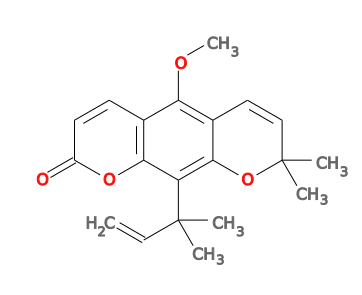 |
| Plant Source | Clausena excavata Burm. f. Common Name:Clausena (English) |
| Source Family | Rutaceae |
| Origin | India |
| Plant Part Used | Rhizome |
| Extract | Chloroform |
| Target Bacteria | Mycobacterium tuberculosis |
| Assay / Test Done | Microplate Alamar Blue Assay (MABA) |
| Positive Control Used (conc.) | Isoniazid (0.040 – 0.090 µg/ml), Kanamycin sulphate (2 – 5 µg/ml) |
| Inhibition [%] | |
| Activity [MIC] µg/ml | 50 µg/ml |
| Activity (In terms of dilution) | |
| Activity (Zone of inhibition in mm) | |
| Active Compound Identified | Dentatin |
| PubChem ID | 342801 |
| Ethnomedicinal Information | Fever, indigestion, malaria, colic, muscular pain, diuretic and as tonic; the allied species C. wampi Blanco for bronchitis, in Thai folk medicine for cold |
| PubMed ID [Source Literature] | 12624822 |
| Extract Preparation | N/A |
| Chemical Classification [Active Compound] | Aromatic, Tricyclic, Coumarin, Benzopyran, Alkene, Ether |
| Media / Broth Used [Antimicrobial Assay/Test] | N/A |
| Cytotoxicity Assay [AID] | Against KB and BC - 1 cell lines |
| Molecular Weight | 326.152 |
| Molecular Formula | C20H22O4
|
| SMILES | O1c2c(C(C)(C)C=C)c3oc(=O)ccc3c(OC)c2C=CC1(C)C |
| XLogP | 4.812 |
| PSA | 35.530 |
| H-bond Donor | 0 |
| H-bond Acceptor | 3 |
| No. of Rotatable Bond Count | 3 |
| No. of Rings | 3 |
| No. of N | 0 |
| No. of O | 4 |
| No. of S | 0 |
| Reference(s) | 1) Sunthitikawinsakul A, Kongkathip N, Kongkathip B, Phonnakhu S, Daly JW, Spande TF, Nimit Y, Rochanaruangrai S.Coumarins and carbazoles from Clausena excavata exhibited antimycobacterial and antifungal activities.Planta Med. 2003 Feb;69(2):155-7
2) Kirtikar, K.R., Basu, B.D., 1935. Indian Medicinal Plants, vols. 1–4. Lalit Mohan Basu, Allahabad, India
|
| Curator | |
| Compound ID | 1475 |
| Compound Structure |  |
| Plant Source | Clausena excavata Burm. f. Common Name:Clausena (English) |
| Source Family | Rutaceae |
| Origin | India |
| Plant Part Used | Rhizome |
| Extract | Chloroform |
| Target Bacteria | Mycobacterium tuberculosis |
| Assay / Test Done | Microplate Alamar Blue Assay (MABA) |
| Positive Control Used (conc.) | Isoniazid (0.040 – 0.090 µg/ml), Kanamycin sulphate (2 – 5 µg/ml) |
| Inhibition [%] | |
| Activity [MIC] µg/ml | 100 µg/ml |
| Activity (In terms of dilution) | |
| Activity (Zone of inhibition in mm) | |
| Active Compound Identified | Nor - Dentatin |
| PubChem ID | 5495613 |
| Ethnomedicinal Information | Fever, indigestion, malaria, colic, muscular pain, diuretic and as tonic; the allied species C. wampi Blanco for bronchitis, in Thai folk medicine for cold |
| PubMed ID [Source Literature] | 12624822 |
| Extract Preparation | N/A |
| Chemical Classification [Active Compound] | Aromatic, Tricyclic, Coumarin, Benzopyran, Alkene, Phenol |
| Media / Broth Used [Antimicrobial Assay/Test] | N/A |
| Cytotoxicity Assay [AID] | Against KB and BC - 1 cell lines |
| Molecular Weight | 312.136 |
| Molecular Formula | C19H20O4
|
| SMILES | O1c2c(C(C)(C)C=C)c3oc(=O)ccc3c(O)c2C=CC1(C)C |
| XLogP | 4.293 |
| PSA | 46.530 |
| H-bond Donor | 1 |
| H-bond Acceptor | 3 |
| No. of Rotatable Bond Count | 2 |
| No. of Rings | 3 |
| No. of N | 0 |
| No. of O | 4 |
| No. of S | 0 |
| Reference(s) | 1) Sunthitikawinsakul A, Kongkathip N, Kongkathip B, Phonnakhu S, Daly JW, Spande TF, Nimit Y, Rochanaruangrai S.Coumarins and carbazoles from Clausena excavata exhibited antimycobacterial and antifungal activities.Planta Med. 2003 Feb;69(2):155-7
2) Kirtikar, K.R., Basu, B.D., 1935. Indian Medicinal Plants, vols. 1–4. Lalit Mohan Basu, Allahabad, India
|
| Curator | |
| Compound ID | 1476 |
| Compound Structure |  |
| Plant Source | Clausena excavata Burm. f. Common Name:Clausena (English) |
| Source Family | Rutaceae |
| Origin | India |
| Plant Part Used | Rhizome |
| Extract | Chloroform |
| Target Bacteria | Mycobacterium tuberculosis |
| Assay / Test Done | Microplate Alamar Blue Assay (MABA) |
| Positive Control Used (conc.) | Isoniazid (0.040 – 0.090 µg/ml), Kanamycin sulphate (2 – 5 µg/ml) |
| Inhibition [%] | |
| Activity [MIC] µg/ml | 200 µg/ml |
| Activity (In terms of dilution) | |
| Activity (Zone of inhibition in mm) | |
| Active Compound Identified | Clausenidin |
| PubChem ID | 5315947 |
| Ethnomedicinal Information | Fever, indigestion, malaria, colic, muscular pain, diuretic and as tonic; the allied species C. wampi Blanco for bronchitis, in Thai folk medicine for cold |
| PubMed ID [Source Literature] | 12624822 |
| Extract Preparation | N/A |
| Chemical Classification [Active Compound] | Aromatic, Tricyclic, Coumarin, Chromone, Alkene, Phenol |
| Media / Broth Used [Antimicrobial Assay/Test] | N/A |
| Cytotoxicity Assay [AID] | Against KB and BC - 1 cell lines |
| Molecular Weight | 328.131 |
| Molecular Formula | C19H20O5
|
| SMILES | O1C(CC(=O)c2c1c(C(C)(C)C=C)c1oc(=O)ccc1c2O)(C)C |
| XLogP | 3.411 |
| PSA | 63.600 |
| H-bond Donor | 1 |
| H-bond Acceptor | 4 |
| No. of Rotatable Bond Count | 2 |
| No. of Rings | 3 |
| No. of N | 0 |
| No. of O | 5 |
| No. of S | 0 |
| Reference(s) | 1) Sunthitikawinsakul A, Kongkathip N, Kongkathip B, Phonnakhu S, Daly JW, Spande TF, Nimit Y, Rochanaruangrai S.Coumarins and carbazoles from Clausena excavata exhibited antimycobacterial and antifungal activities.Planta Med. 2003 Feb;69(2):155-7
2) Kirtikar, K.R., Basu, B.D., 1935. Indian Medicinal Plants, vols. 1–4. Lalit Mohan Basu, Allahabad, India
|
| Curator | |
| Compound ID | 1477 |
| Compound Structure |  |
| Plant Source | Clausena excavata Burm. f. Common Name:Clausena (English) |
| Source Family | Rutaceae |
| Origin | India |
| Plant Part Used | Rhizome |
| Extract | Chloroform |
| Target Bacteria | Mycobacterium tuberculosis |
| Assay / Test Done | Microplate Alamar Blue Assay (MABA) |
| Positive Control Used (conc.) | Isoniazid (0.040 – 0.090 µg/ml), Kanamycin sulphate (2 – 5 µg/ml) |
| Inhibition [%] | |
| Activity [MIC] µg/ml | 100 µg/ml |
| Activity (In terms of dilution) | |
| Activity (Zone of inhibition in mm) | |
| Active Compound Identified | 3 - Formylcarbazole |
| PubChem ID | 20746 |
| Ethnomedicinal Information | Fever, indigestion, malaria, colic, muscular pain, diuretic and as tonic; the allied species C. wampi Blanco for bronchitis, in Thai folk medicine for cold |
| PubMed ID [Source Literature] | 12624822 |
| Extract Preparation | N/A |
| Chemical Classification [Active Compound] | Aromatic, Tricyclic, Carbazole, Alkaloid |
| Media / Broth Used [Antimicrobial Assay/Test] | N/A |
| Cytotoxicity Assay [AID] | N/A |
| Molecular Weight | 181.089 |
| Molecular Formula | C13H11N
|
| SMILES | [nH]1c2c(c3c1cccc3)cc(cc2)C |
| XLogP | 4.401 |
| PSA | 15.790 |
| H-bond Donor | 1 |
| H-bond Acceptor | 1 |
| No. of Rotatable Bond Count | 0 |
| No. of Rings | 3 |
| No. of N | 1 |
| No. of O | 0 |
| No. of S | 0 |
| Reference(s) | 1) Sunthitikawinsakul A, Kongkathip N, Kongkathip B, Phonnakhu S, Daly JW, Spande TF, Nimit Y, Rochanaruangrai S.Coumarins and carbazoles from Clausena excavata exhibited antimycobacterial and antifungal activities.Planta Med. 2003 Feb;69(2):155-7
2) Kirtikar, K.R., Basu, B.D., 1935. Indian Medicinal Plants, vols. 1–4. Lalit Mohan Basu, Allahabad, India
|
| Curator | |
| Compound ID | 1478 |
| Compound Structure |  |
| Plant Source | Clausena excavata Burm. f. Common Name:Clausena (English) |
| Source Family | Rutaceae |
| Origin | India |
| Plant Part Used | Rhizome |
| Extract | Chloroform |
| Target Bacteria | Mycobacterium tuberculosis |
| Assay / Test Done | Microplate Alamar Blue Assay (MABA) |
| Positive Control Used (conc.) | Isoniazid (0.040 – 0.090 µg/ml), Kanamycin sulphate (2 – 5 µg/ml) |
| Inhibition [%] | |
| Activity [MIC] µg/ml | 200 µg/ml |
| Activity (In terms of dilution) | |
| Activity (Zone of inhibition in mm) | |
| Active Compound Identified | Mukonal |
| PubChem ID | 504068 |
| Ethnomedicinal Information | Fever, indigestion, malaria, colic, muscular pain, diuretic and as tonic; the allied species C. wampi Blanco for bronchitis, in Thai folk medicine for cold |
| PubMed ID [Source Literature] | 12624822 |
| Extract Preparation | N/A |
| Chemical Classification [Active Compound] | Aromatic, Tricyclic, Alkaloid, Aldehyde, Phenol |
| Media / Broth Used [Antimicrobial Assay/Test] | N/A |
| Cytotoxicity Assay [AID] | N/A |
| Molecular Weight | 211.063 |
| Molecular Formula | C13H9NO2
|
| SMILES | Oc1cc2[nH]c3c(c2cc1C=O)cccc3 |
| XLogP | 2.984 |
| PSA | 53.090 |
| H-bond Donor | 2 |
| H-bond Acceptor | 3 |
| No. of Rotatable Bond Count | 1 |
| No. of Rings | 3 |
| No. of N | 1 |
| No. of O | 2 |
| No. of S | 0 |
| Reference(s) | 1) Sunthitikawinsakul A, Kongkathip N, Kongkathip B, Phonnakhu S, Daly JW, Spande TF, Nimit Y, Rochanaruangrai S.Coumarins and carbazoles from Clausena excavata exhibited antimycobacterial and antifungal activities.Planta Med. 2003 Feb;69(2):155-7
2) Kirtikar, K.R., Basu, B.D., 1935. Indian Medicinal Plants, vols. 1–4. Lalit Mohan Basu, Allahabad, India
|
| Curator | |
| Compound ID | 1479 |
| Compound Structure | 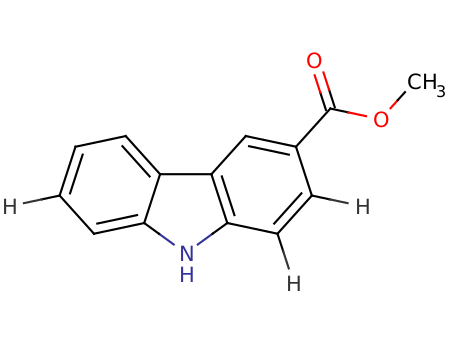 |
| Plant Source | Clausena excavata Burm. f. Common Name:Clausena (English) |
| Source Family | Rutaceae |
| Origin | India |
| Plant Part Used | Rhizome |
| Extract | Hexane |
| Target Bacteria | Mycobacterium tuberculosis |
| Assay / Test Done | Microplate Alamar Blue Assay (MABA) |
| Positive Control Used (conc.) | Isoniazid (0.040 – 0.090 µg/ml), Kanamycin sulphate (2 – 5 µg/ml) |
| Inhibition [%] | |
| Activity [MIC] µg/ml | 50 µg/ml |
| Activity (In terms of dilution) | |
| Activity (Zone of inhibition in mm) | |
| Active Compound Identified | 3 - Methoxycarbonylcarbazole |
| PubChem ID | NR |
| Ethnomedicinal Information | Fever, indigestion, malaria, colic, muscular pain, diuretic and as tonic; the allied species C. wampi Blanco for bronchitis, in Thai folk medicine for cold |
| PubMed ID [Source Literature] | 12624822 |
| Extract Preparation | N/A |
| Chemical Classification [Active Compound] | Aromatic, Tricyclic, Alkaloid, Carbazole, Ester |
| Media / Broth Used [Antimicrobial Assay/Test] | N/A |
| Cytotoxicity Assay [AID] | N/A |
| Molecular Weight | 225.079 |
| Molecular Formula | C14H11NO2 |
| SMILES | [nH]1c2c(c3c1ccc(c3)C(=O)OC)cccc2 |
| XLogP | 3.425 |
| PSA | 42.090 |
| H-bond Donor | 1 |
| H-bond Acceptor | 3 |
| No. of Rotatable Bond Count | 2 |
| No. of Rings | 3 |
| No. of N | 1 |
| No. of O | 2 |
| No. of S | 0 |
| Reference(s) | 1) Sunthitikawinsakul A, Kongkathip N, Kongkathip B, Phonnakhu S, Daly JW, Spande TF, Nimit Y, Rochanaruangrai S.Coumarins and carbazoles from Clausena excavata exhibited antimycobacterial and antifungal activities.Planta Med. 2003 Feb;69(2):155-7
2) Kirtikar, K.R., Basu, B.D., 1935. Indian Medicinal Plants, vols. 1–4. Lalit Mohan Basu, Allahabad, India
|
| Curator | |
| Compound ID | 1480 |
| Compound Structure | 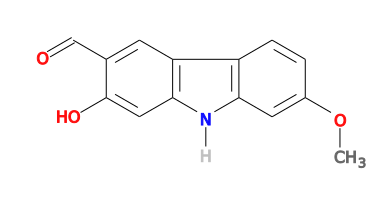 |
| Plant Source | Clausena excavata Burm. f. Common Name:Clausena (English) |
| Source Family | Rutaceae |
| Origin | India |
| Plant Part Used | Rhizome |
| Extract | Hexane |
| Target Bacteria | Mycobacterium tuberculosis |
| Assay / Test Done | Microplate Alamar Blue Assay (MABA) |
| Positive Control Used (conc.) | Isoniazid (0.040 – 0.090 µg/ml), Kanamycin sulphate (2 – 5 µg/ml) |
| Inhibition [%] | |
| Activity [MIC] µg/ml | 100 µg/ml |
| Activity (In terms of dilution) | |
| Activity (Zone of inhibition in mm) | |
| Active Compound Identified | 2 - Hydroxy - 3 - Formyl - 7 - Methoxycarbazole |
| PubChem ID | 189687 |
| Ethnomedicinal Information | Fever, indigestion, malaria, colic, muscular pain, diuretic and as tonic; the allied species C. wampi Blanco for bronchitis, in Thai folk medicine for cold |
| PubMed ID [Source Literature] | 12624822 |
| Extract Preparation | N/A |
| Chemical Classification [Active Compound] | Aromatic, Tricyclic, Alkaloid, Carbazole, Aldehyde, Ether, Phenol |
| Media / Broth Used [Antimicrobial Assay/Test] | N/A |
| Cytotoxicity Assay [AID] | N/A |
| Molecular Weight | 241.074 |
| Molecular Formula | C14H11NO3
|
| SMILES | O(c1cc2[nH]c3c(c2cc1)cc(c(O)c3)C=O)C |
| XLogP | 2.329 |
| PSA | 62.320 |
| H-bond Donor | 2 |
| H-bond Acceptor | 4 |
| No. of Rotatable Bond Count | 2 |
| No. of Rings | 3 |
| No. of N | 1 |
| No. of O | 3 |
| No. of S | 0 |
| Reference(s) | 1) Sunthitikawinsakul A, Kongkathip N, Kongkathip B, Phonnakhu S, Daly JW, Spande TF, Nimit Y, Rochanaruangrai S.Coumarins and carbazoles from Clausena excavata exhibited antimycobacterial and antifungal activities.Planta Med. 2003 Feb;69(2):155-7
2) Kirtikar, K.R., Basu, B.D., 1935. Indian Medicinal Plants, vols. 1–4. Lalit Mohan Basu, Allahabad, India
|
| Curator | |
| Compound ID | 1543 |
| Compound Structure | |
| Plant Source | Costus sp. Common Name: |
| Source Family | Zingiberaceae |
| Origin | Peru |
| Plant Part Used | Rhizome |
| Extract | Dichloromethane |
| Target Bacteria | Mycobacterium tuberculosis (ATCC 27294) |
| Assay / Test Done | BACTEC 460 (Becton Dickinson Diagnostic Instrument Systems, Sparks MD) Radiometric Assay |
| Positive Control Used (conc.) | Rifampin (2 µg/ml), Ethambutol (7.5 µg/ml) |
| Inhibition [%] | < 50 % |
| Activity [MIC] µg/ml | 50 µg/ml |
| Activity (In terms of dilution) | |
| Activity (Zone of inhibition in mm) | |
| Active Compound Identified | |
| PubChem ID | NR |
| Ethnomedicinal Information | Tuberculosis |
| PubMed ID [Source Literature] | 13678239 |
| Extract Preparation | N/A |
| Chemical Classification [Active Compound] | N/A |
| Media / Broth Used [Antimicrobial Assay/Test] | N/A |
| Cytotoxicity Assay [AID] | N/A |
| Reference(s) | 1) Graham JG, Pendland SL, Prause JL, Danzinger LH, Schunke Vigo J, Cabieses F, Farnsworth NR.Antimycobacterial evaluation of Peruvian plants.Phytomedicine. 2003;10(6-7):528-35
|
| Curator | |
| Compound ID | 1583 |
| Compound Structure | |
| Plant Source | Cymbopogon citratus (DC. ex Nees) Stapf Common Name:Lemon Grass, Oil grass, West Indian Lemon Grass (English), Bhustrina (Sanskrit) |
| Source Family | Gramineae |
| Origin | Malaysia |
| Plant Part Used | Stem, rhizome |
| Extract | Methanol |
| Target Bacteria | Mycobacterium tuberculosis H37Rv |
| Assay / Test Done | Colorimetric Tetrazolium Microplate Assay (TEMA) |
| Positive Control Used (conc.) | Isoniazid (0.078 µg/ml) |
| Inhibition [%] | |
| Activity [MIC] µg/ml | |
| Activity (In terms of dilution) | |
| Activity (Zone of inhibition in mm) | |
| Active Compound Identified | |
| PubChem ID | NR |
| Ethnomedicinal Information | Cough |
| PubMed ID [Source Literature] | |
| Extract Preparation | N/A |
| Chemical Classification [Active Compound] | N/A |
| Media / Broth Used [Antimicrobial Assay/Test] | N/A |
| Cytotoxicity Assay [AID] | N/A |
| Reference(s) | 1) Chin, W.Y., 2002. A Guide to Medicinal Plants. Singapore Science Centre, Singapore
2) http://www.flowersofIndia.net/catalog/slides/Lemon%20Grass.html
|
| Curator | |
| Compound ID | 1738 |
| Compound Structure | 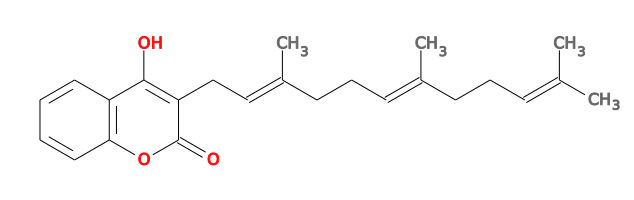 |
| Plant Source | Ferula communis Common Name:Giant Fennel |
| Source Family | Apiaceae (Umbelliferae) |
| Origin | Saudi Arabia |
| Plant Part Used | Rhizome |
| Extract | |
| Target Bacteria | Mycobacterium intracellulare |
| Assay / Test Done | |
| Positive Control Used (conc.) | Amikacin (0.25 µg/ml), Streptomycin (10 µg/ml), Isoniazid (10 µg/ml) |
| Inhibition [%] | |
| Activity [MIC] µg/ml | 1.25 µg/ml |
| Activity (In terms of dilution) | |
| Activity (Zone of inhibition in mm) | |
| Active Compound Identified | Ferulenol |
| PubChem ID | 54679300 |
| Ethnomedicinal Information | Anti-mycobacterial |
| PubMed ID [Source Literature] | |
| Extract Preparation | N/A |
| Chemical Classification [Active Compound] | Aromatic, Bicyclic, Alkyl, Alkene, Coumarin, Prenylated, Phenol |
| Media / Broth Used [Antimicrobial Assay/Test] | N/A |
| Cytotoxicity Assay [AID] | N/A |
| Molecular Weight | 366.219 |
| Molecular Formula | C24H30O3
|
| SMILES | O1c2c(c(O)c(C/C=C(/CC/C=C(/CCC=C(C)C)C)C)c1=O)cccc2 |
| XLogP | 8.182 |
| PSA | 37.300 |
| H-bond Donor | 1 |
| H-bond Acceptor | 2 |
| No. of Rotatable Bond Count | 8 |
| No. of Rings | 2 |
| No. of N | 0 |
| No. of O | 3 |
| No. of S | 0 |
| Reference(s) | 1) Mohammed A. Al-Yahya, Ilias Muhammad, Humayun H. Mirza, Farouk S. El-Feraly.Antibacterial constituents from the rhizomes of Ferula communis.Phytotherapy Research.12/1998;12(5):335-339
2) http://www.pfaf.org/user/Plant.aspx?LatinName=Ferula+communis
|
| Curator | |
| Compound ID | 1739 |
| Compound Structure |  |
| Plant Source | Ferula communis Common Name:Giant Fennel |
| Source Family | Apiaceae (Umbelliferae) |
| Origin | Saudi Arabia |
| Plant Part Used | Rhizome |
| Extract | |
| Target Bacteria | Mycobacterium intracellulare |
| Assay / Test Done | |
| Positive Control Used (conc.) | |
| Inhibition [%] | |
| Activity [MIC] µg/ml | 50 µg/ml |
| Activity (In terms of dilution) | |
| Activity (Zone of inhibition in mm) | |
| Active Compound Identified | Ferchromone |
| PubChem ID | NR |
| Ethnomedicinal Information | Tuberculosis |
| PubMed ID [Source Literature] | |
| Extract Preparation | N/A |
| Chemical Classification [Active Compound] | Aromatic, Tricyclic, Terpene, Sesquiterpene, Chromone, Prenylated, Alcohol |
| Media / Broth Used [Antimicrobial Assay/Test] | N/A |
| Cytotoxicity Assay [AID] | N/A |
| Molecular Weight | 384.230 |
| Molecular Formula | C24H32O4
|
| SMILES | C1c2c(ccc1)OC1C(C2=O)CC([C@@](O1)(CC/C=C(/CCC=C(C)C)C)C)O |
| XLogP | 5.430 |
| PSA | 55.760 |
| H-bond Donor | 1 |
| H-bond Acceptor | 4 |
| No. of Rotatable Bond Count | 6 |
| No. of Rings | 3 |
| No. of N | 0 |
| No. of O | 4 |
| No. of S | 0 |
| Reference(s) | 1) Mohammed A. Al-Yahya, Ilias Muhammad, Humayun H. Mirza, Farouk S. El-Feraly.Antibacterial constituents from the rhizomes of Ferula communis.Phytotherapy Research.12/1998;12(5):335-339
2) http://www.pfaf.org/user/Plant.aspx?LatinName=Ferula+communis
|
| Curator | |
| Compound ID | 2252 |
| Compound Structure | |
| Plant Source | Nuphar lutea L. Common Name:Yellow Water Lily, Yellow Pond Lily |
| Source Family | Nymphaceae |
| Origin | British Columbia |
| Plant Part Used | Rhizome |
| Extract | Methanol |
| Target Bacteria | Mycobacterium tuberculosis, Mycobacterium avium |
| Assay / Test Done | Disk Diffusion Assay |
| Positive Control Used (conc.) | Isoniazid |
| Inhibition [%] | |
| Activity [MIC] µg/ml | 50 µg extract/Disc |
| Activity (In terms of dilution) | |
| Activity (Zone of inhibition in mm) | |
| Active Compound Identified | |
| PubChem ID | NR |
| Ethnomedicinal Information | Food, healing wound or sores and treating infection |
| PubMed ID [Source Literature] | |
| Extract Preparation | N/A |
| Chemical Classification [Active Compound] | N/A |
| Media / Broth Used [Antimicrobial Assay/Test] | N/A |
| Cytotoxicity Assay [AID] | N/A |
| Reference(s) | 1) A.R. McCutcheon, R.W. Stokes, L.M. Thorson, S.M. Ellis, R.E.W. Hancock and G.H.N. Towers.Anti-Mycobacterial Screening of British Columbian Medicinal Plants.Pharmaceutical Biology, 1997, Vol. 35, No. 2 , Pages 77-83
|
| Curator | |
| Compound ID | 2487 |
| Compound Structure | |
| Plant Source | Renealmia sp. Common Name: |
| Source Family | Zingiberaceae |
| Origin | Peru |
| Plant Part Used | Rhizome, leaf |
| Extract | Dichloromethane |
| Target Bacteria | Mycobacterium tuberculosis (ATCC 27294) |
| Assay / Test Done | BACTEC 460 (Becton Dickinson Diagnostic Instrument Systems, Sparks MD) radiometric assay |
| Positive Control Used (conc.) | Rifampin (2 µg/ml), Ethambutol (7.5 µg/ml) |
| Inhibition [%] | < 51 % |
| Activity [MIC] µg/ml | 50 µg/ml |
| Activity (In terms of dilution) | |
| Activity (Zone of inhibition in mm) | |
| Active Compound Identified | |
| PubChem ID | NR |
| Ethnomedicinal Information | Tuberculosis |
| PubMed ID [Source Literature] | 13678239 |
| Extract Preparation | N/A |
| Chemical Classification [Active Compound] | N/A |
| Media / Broth Used [Antimicrobial Assay/Test] | N/A |
| Cytotoxicity Assay [AID] | N/A |
| Reference(s) | 1) Graham JG, Pendland SL, Prause JL, Danzinger LH, Schunke Vigo J, Cabieses F, Farnsworth NR.Antimycobacterial evaluation of Peruvian plants.Phytomedicine. 2003;10(6-7):528-35
|
| Curator | |
| Compound ID | 2759 |
| Compound Structure | |
| Plant Source | Tulbaghia alliacea L. Common Name:Wild Garlic, Woodland Garlic |
| Source Family | Amaryllidaceae |
| Origin | Africa |
| Plant Part Used | Rhizome |
| Extract | Acetone:water (4:1) |
| Target Bacteria | Mycobacterium aurum |
| Assay / Test Done | Bioautography on TLC plates |
| Positive Control Used (conc.) | |
| Inhibition [%] | |
| Activity [MIC] µg/ml | |
| Activity (In terms of dilution) | |
| Activity (Zone of inhibition in mm) | |
| Active Compound Identified | |
| PubChem ID | NR |
| Ethnomedicinal Information | Tuberculosis symptoms |
| PubMed ID [Source Literature] | 18384988 |
| Extract Preparation | N/A |
| Chemical Classification [Active Compound] | N/A |
| Media / Broth Used [Antimicrobial Assay/Test] | N/A |
| Cytotoxicity Assay [AID] | N/A |
| Reference(s) | 1) Bamuamba K, Gammon DW, Meyers P, Dijoux-Franca MG, Scott G.Anti-mycobacterial activity of five plant species used as traditional medicines in the Western Cape Province (South Africa).J Ethnopharmacol. 2008 May 8;117(2):385-90
|
| Curator | |
| Compound ID | 2831 |
| Compound Structure | |
| Plant Source | Zingiber officinale Rosc. Common Name:Ginger (English), Fresh Rhizome - Aardraka, Aadrikaa, Shrngibera (Sanskrit) |
| Source Family | Zingiberaceae |
| Origin | India, Malaysia |
| Plant Part Used | Rhizome |
| Extract | Dichloromethane |
| Target Bacteria | Mycobacterium tuberculosis, Mycobacterium avium |
| Assay / Test Done | Radiorespirometric Bioassay |
| Positive Control Used (conc.) | |
| Inhibition [%] | 85 % |
| Activity [MIC] µg/ml | 100 µg/ml |
| Activity (In terms of dilution) | |
| Activity (Zone of inhibition in mm) | |
| Active Compound Identified | |
| PubChem ID | NR |
| Ethnomedicinal Information | Leprosy, expectorant, asthma, bronchitis, cough, phthisis, tuberculosis |
| PubMed ID [Source Literature] | |
| Extract Preparation | N/A |
| Chemical Classification [Active Compound] | N/A |
| Media / Broth Used [Antimicrobial Assay/Test] | N/A |
| Cytotoxicity Assay [AID] | N/A |
| Reference(s) | 1) R.D. Hiserodt,S.G. Franzblau and R.T. Rosen.Isolation of 6-, 8-, and 10-Gingerol from Ginger Rhizome by HPLC and Preliminary Evaluation of Inhibition of Mycobacterium avium and Mycobacterium tuberculosis.J. Agric. Food Chem., 1998, 46 (7), pp 2504–2508
2) Kirtikar, K.R., Basu, B.D., 1935. Indian Medicinal Plants, vols. 1–4. Lalit Mohan Basu, Allahabad, India
3) Jain, S.K., Tarafder, C.R., 1970. Medicinal plant lore of the Santals. A revival of P.O. Boddings, work. Economic Botany 24, 241–278
|
| Curator | |
| Compound ID | 2833 |
| Compound Structure |  |
| Plant Source | Zingiber officinale Rosc. Common Name:Ginger (English), Fresh Rhizome - Aardraka, Aadrikaa, Shrngibera (Sanskrit) |
| Source Family | Zingiberaceae |
| Origin | India, Malaysia |
| Plant Part Used | Rhizome |
| Extract | Dichloromethane |
| Target Bacteria | Mycobacterium tuberculosis |
| Assay / Test Done | Radiorespirometric Bioassay |
| Positive Control Used (conc.) | |
| Inhibition [%] | |
| Activity [MIC] µg/ml | 50 µg/ml |
| Activity (In terms of dilution) | |
| Activity (Zone of inhibition in mm) | |
| Active Compound Identified | 10 - Gingerol |
| PubChem ID | 168115 |
| Ethnomedicinal Information | Leprosy, expectorant, asthma, bronchitis, cough, phthisis, tuberculosis |
| PubMed ID [Source Literature] | |
| Extract Preparation | N/A |
| Chemical Classification [Active Compound] | Aromatic, Alkyl, Ketone, Ether, Phenol, Alcohol |
| Media / Broth Used [Antimicrobial Assay/Test] | N/A |
| Cytotoxicity Assay [AID] | N/A |
| Molecular Weight | 350.246 |
| Molecular Formula | C21H34O4 |
| SMILES | O[C@@H](CCCCCCCCC)CC(=O)CCc1cc(OC)c(O)cc1 |
| XLogP | 5.163 |
| PSA | 66.760 |
| H-bond Donor | 2 |
| H-bond Acceptor | 4 |
| No. of Rotatable Bond Count | 14 |
| No. of Rings | 1 |
| No. of N | 0 |
| No. of O | 4 |
| No. of S | 0 |
| Reference(s) | 1) R.D. Hiserodt,S.G. Franzblau and R.T. Rosen.Isolation of 6-, 8-, and 10-Gingerol from Ginger Rhizome by HPLC and Preliminary Evaluation of Inhibition of Mycobacterium avium and Mycobacterium tuberculosis.J. Agric. Food Chem., 1998, 46 (7), pp 2504–2508
2) Kirtikar, K.R., Basu, B.D., 1935. Indian Medicinal Plants, vols. 1–4. Lalit Mohan Basu, Allahabad, India
3) Jain, S.K., Tarafder, C.R., 1970. Medicinal plant lore of the Santals. A revival of P.O. Boddings, work. Economic Botany 24, 241–278.
|
| Curator | |
| Compound ID | 2834 |
| Compound Structure | |
| Plant Source | Zingiber officinale Rosc. Common Name:Ginger (English), Fresh Rhizome - Aardraka, Aadrikaa, Shrngibera (Sanskrit) |
| Source Family | Zingiberaceae |
| Origin | India, Malaysia |
| Plant Part Used | Rhizome |
| Extract | Dichloromethane |
| Target Bacteria | Mycobacterium avium |
| Assay / Test Done | Radiorespirometric Bioassay |
| Positive Control Used (conc.) | |
| Inhibition [%] | |
| Activity [MIC] µg/ml | 25 µg/ml |
| Activity (In terms of dilution) | |
| Activity (Zone of inhibition in mm) | |
| Active Compound Identified | 10 - Gingerol |
| PubChem ID | 168115 |
| Ethnomedicinal Information | Leprosy, expectorant, asthma, bronchitis, cough, phthisis, tuberculosis |
| PubMed ID [Source Literature] | |
| Extract Preparation | N/A |
| Chemical Classification [Active Compound] | Aromatic, Alkyl, Ketone, Ether, Phenol, Alcohol |
| Media / Broth Used [Antimicrobial Assay/Test] | N/A |
| Cytotoxicity Assay [AID] | N/A |
| Molecular Weight | 350.246 |
| Molecular Formula | C21H34O4 |
| SMILES | O[C@@H](CCCCCCCCC)CC(=O)CCc1cc(OC)c(O)cc1 |
| XLogP | 5.163 |
| PSA | 66.760 |
| H-bond Donor | 2 |
| H-bond Acceptor | 4 |
| No. of Rotatable Bond Count | 14 |
| No. of Rings | 1 |
| No. of N | 0 |
| No. of O | 4 |
| No. of S | 0 |
| Reference(s) | 1) R.D. Hiserodt,S.G. Franzblau and R.T. Rosen.Isolation of 6-, 8-, and 10-Gingerol from Ginger Rhizome by HPLC and Preliminary Evaluation of Inhibition of Mycobacterium avium and Mycobacterium tuberculosis.J. Agric. Food Chem., 1998, 46 (7), pp 2504–2508
2) Kirtikar, K.R., Basu, B.D., 1935. Indian Medicinal Plants, vols. 1–4. Lalit Mohan Basu, Allahabad, India
3) Jain, S.K., Tarafder, C.R., 1970. Medicinal plant lore of the Santals. A revival of P.O. Boddings, work. Economic Botany 24, 241–278.
|
| Curator | |
| Compound ID | 2835 |
| Compound Structure |  |
| Plant Source | Zingiber officinale Rosc. Common Name:Ginger (English), Fresh Rhizome - Aardraka, Aadrikaa, Shrngibera (Sanskrit) |
| Source Family | Zingiberaceae |
| Origin | India, Malaysia |
| Plant Part Used | Rhizome |
| Extract | Dichloromethane |
| Target Bacteria | Mycobacterium tuberculosis |
| Assay / Test Done | Radiorespirometric Bioassay |
| Positive Control Used (conc.) | |
| Inhibition [%] | |
| Activity [MIC] µg/ml | 50 µg/ml |
| Activity (In terms of dilution) | |
| Activity (Zone of inhibition in mm) | |
| Active Compound Identified | 8 - Gingerol |
| PubChem ID | 5275725 |
| Ethnomedicinal Information | Leprosy, expectorant, asthma, bronchitis, cough, phthisis, tuberculosis |
| PubMed ID [Source Literature] | |
| Extract Preparation | N/A |
| Chemical Classification [Active Compound] | Aromatic, Alkyl, Ketone, Ether, Alcohol, Phenol |
| Media / Broth Used [Antimicrobial Assay/Test] | N/A |
| Cytotoxicity Assay [AID] | N/A |
| Molecular Weight | 322.214 |
| Molecular Formula | C19H30O4 |
| SMILES | OC(CCCCCCC)CC(=O)CCc1cc(OC)c(O)cc1 |
| XLogP | 4.025 |
| PSA | 66.760 |
| H-bond Donor | 2 |
| H-bond Acceptor | 4 |
| No. of Rotatable Bond Count | 12 |
| No. of Rings | 1 |
| No. of N | 0 |
| No. of O | 4 |
| No. of S | 0 |
| Reference(s) | 1) R.D. Hiserodt,S.G. Franzblau and R.T. Rosen.Isolation of 6-, 8-, and 10-Gingerol from Ginger Rhizome by HPLC and Preliminary Evaluation of Inhibition of Mycobacterium avium and Mycobacterium tuberculosis.J. Agric. Food Chem., 1998, 46 (7), pp 2504–2508
2) Kirtikar, K.R., Basu, B.D., 1935. Indian Medicinal Plants, vols. 1–4. Lalit Mohan Basu, Allahabad, India
3) Jain, S.K., Tarafder, C.R., 1970. Medicinal plant lore of the Santals. A revival of P.O. Boddings, work. Economic Botany 24, 241–278.
|
| Curator | |
| Compound ID | 2836 |
| Compound Structure |  |
| Plant Source | Zingiber officinale Rosc. Common Name:Ginger (English), Fresh Rhizome - Aardraka, Aadrikaa, Shrngibera (Sanskrit) |
| Source Family | Zingiberaceae |
| Origin | India, Malaysia |
| Plant Part Used | Rhizome |
| Extract | Dichloromethane |
| Target Bacteria | Mycobacterium tuberculosis |
| Assay / Test Done | Radiorespirometric Bioassay |
| Positive Control Used (conc.) | |
| Inhibition [%] | |
| Activity [MIC] µg/ml | > 100 µg/ml |
| Activity (In terms of dilution) | |
| Activity (Zone of inhibition in mm) | |
| Active Compound Identified | 6 - Gingerol |
| PubChem ID | 3473 |
| Ethnomedicinal Information | Leprosy, expectorant, asthma, bronchitis, cough, phthisis, tuberculosis |
| PubMed ID [Source Literature] | |
| Extract Preparation | N/A |
| Chemical Classification [Active Compound] | Alicyclic, Butenolide, Lactone, Alkene |
| Media / Broth Used [Antimicrobial Assay/Test] | N/A |
| Cytotoxicity Assay [AID] | N/A |
| Molecular Weight | 294.183 |
| Molecular Formula | C17H26O4 |
| SMILES | OC(CCCCC)CC(=O)CCc1cc(OC)c(O)cc1 |
| XLogP | 2.887 |
| PSA | 66.760 |
| H-bond Donor | 2 |
| H-bond Acceptor | 4 |
| No. of Rotatable Bond Count | 10 |
| No. of Rings | 1 |
| No. of N | 0 |
| No. of O | 4 |
| No. of S | 0 |
| Reference(s) | 1) R.D. Hiserodt,S.G. Franzblau and R.T. Rosen.Isolation of 6-, 8-, and 10-Gingerol from Ginger Rhizome by HPLC and Preliminary Evaluation of Inhibition of Mycobacterium avium and Mycobacterium tuberculosis.J. Agric. Food Chem., 1998, 46 (7), pp 2504–2508
2) Kirtikar, K.R., Basu, B.D., 1935. Indian Medicinal Plants, vols. 1–4. Lalit Mohan Basu, Allahabad, India
3) Jain, S.K., Tarafder, C.R., 1970. Medicinal plant lore of the Santals. A revival of P.O. Boddings, work. Economic Botany 24, 241–278.
|
| Curator | |
| Compound ID | 2837 |
| Compound Structure | |
| Plant Source | Zingiber officinale Rosc. Common Name:Ginger (English), Fresh Rhizome - Aardraka, Aadrikaa, Shrngibera (Sanskrit) |
| Source Family | Zingiberaceae |
| Origin | India, Malaysia |
| Plant Part Used | Rhizome |
| Extract | Methanol |
| Target Bacteria | Mycobacterium tuberculosis H37Rv |
| Assay / Test Done | Colorimetric Tetrazolium Microplate Assay (TEMA) |
| Positive Control Used (conc.) | Isoniazid (0.078 µg/ml) |
| Inhibition [%] | |
| Activity [MIC] µg/ml | 1600 µg/ml |
| Activity (In terms of dilution) | |
| Activity (Zone of inhibition in mm) | |
| Active Compound Identified | N/A |
| PubChem ID | NR |
| Ethnomedicinal Information | Leprosy, expectorant, asthma, bronchitis, cough, phthisis, tuberculosis |
| PubMed ID [Source Literature] | 21094237 |
| Extract Preparation | N/A |
| Chemical Classification [Active Compound] | N/A |
| Media / Broth Used [Antimicrobial Assay/Test] | N/A |
| Cytotoxicity Assay [AID] | N/A |
| Reference(s) | 1) Mohamad S, Zin NM, Wahab HA, Ibrahim P, Sulaiman SF, Zahariluddin AS, Noor SS.Antituberculosis potential of some ethnobotanically selected Malaysian plants.J Ethnopharmacol. 2011 Feb 16;133(3):1021-6
|
| Curator | |
| Compound ID | 2838 |
| Compound Structure | |
| Plant Source | Zingiber officinale Rosc. Common Name:Ginger (English), Fresh Rhizome - Aardraka, Aadrikaa, Shrngibera (Sanskrit) |
| Source Family | Zingiberaceae |
| Origin | India, Malaysia |
| Plant Part Used | Rhizome |
| Extract | Methylene chloride |
| Target Bacteria | |
| Assay / Test Done | BACTEC Assay |
| Positive Control Used (conc.) | |
| Inhibition [%] | 85 % |
| Activity [MIC] µg/ml | 100 µg/ml |
| Activity (In terms of dilution) | |
| Activity (Zone of inhibition in mm) | |
| Active Compound Identified | N/A |
| PubChem ID | NR |
| Ethnomedicinal Information | Leprosy, expectorant, asthma, bronchitis, cough, phthisis, tuberculosis |
| PubMed ID [Source Literature] | 21094237 |
| Extract Preparation | N/A |
| Chemical Classification [Active Compound] | N/A |
| Media / Broth Used [Antimicrobial Assay/Test] | N/A |
| Cytotoxicity Assay [AID] | N/A |
| Reference(s) | 1) Mohamad S, Zin NM, Wahab HA, Ibrahim P, Sulaiman SF, Zahariluddin AS, Noor SS.Antituberculosis potential of some ethnobotanically selected Malaysian plants.J Ethnopharmacol. 2011 Feb 16;133(3):1021-6
|
| Curator | |