| Compound ID | 1187 |
| Compound Structure | |
| Plant Source | Annona hypoglauca Mart. Common Name: |
| Source Family | Annonaceae |
| Origin | Peru |
| Plant Part Used | Bark |
| Extract | Dichloromethane |
| Target Bacteria | Mycobacterium tuberculosis (ATCC 27294) |
| Assay / Test Done | BACTEC 460 (Becton Dickinson Diagnostic Instrument Systems, Sparks MD) Radiometric Assay |
| Positive Control Used (conc.) | Rifampin (2 µg/ml), Ethambutol (7.5 µg/ml) |
| Inhibition [%] | 51 % |
| Activity [MIC] µg/ml | 50 µg/ml |
| Activity (In terms of dilution) | |
| Activity (Zone of inhibition in mm) | |
| Active Compound Identified | |
| PubChem ID | NR |
| Ethnomedicinal Information | Tuberculosis |
| PubMed ID [Source Literature] | 13678239 |
| Extract Preparation | N/A |
| Chemical Classification [Active Compound] | N/A |
| Media / Broth Used [Antimicrobial Assay/Test] | N/A |
| Cytotoxicity Assay [AID] | N/A |
| Reference(s) | 1) Graham JG, Pendland SL, Prause JL, Danzinger LH, Schunke Vigo J, Cabieses F, Farnsworth NR.Antimycobacterial evaluation of Peruvian plants.Phytomedicine. 2003;10(6-7):528-35
|
| Curator | |
| Compound ID | 1188 |
| Compound Structure | |
| Plant Source | Annona senegalensis Common Name:Wild Custard Apple, Wild Soursop |
| Source Family | Annonaceae |
| Origin | Nigeria |
| Plant Part Used | |
| Extract | Methanol (71.7 %) |
| Target Bacteria | Mycobacterium bovis (BCG - Bacillus Calmette Guerin) |
| Assay / Test Done | Broth Microdilution Method (BMM) |
| Positive Control Used (conc.) | Rifampin (0.03 µg/ml) |
| Inhibition [%] | |
| Activity [MIC] µg/ml | 1250 µg/ml |
| Activity (In terms of dilution) | |
| Activity (Zone of inhibition in mm) | |
| Active Compound Identified | |
| PubChem ID | NR |
| Ethnomedicinal Information | Tuberculosis |
| PubMed ID [Source Literature] | |
| Extract Preparation | N/A |
| Chemical Classification [Active Compound] | N/A |
| Media / Broth Used [Antimicrobial Assay/Test] | N/A |
| Cytotoxicity Assay [AID] | N/A |
| Reference(s) | 1) Mann, A., Ibrahim, K., Oyewale, A.O., Amupitan, J.O., and Okogun, J.I., 2009, Antimycobacterial activity of some me-dicinal plants in Niger State, Nigeria. Afri. J. Infect. Dis., 3(2), 44-48
|
| Curator | |
| Compound ID | 1189 |
| Compound Structure | |
| Plant Source | Annona squamosa L. Common Name:Custard Apple, Sugar Apple, Sweetsop (English), Nagathein (Sanskrit) |
| Source Family | Annonaceae |
| Origin | Malaysia |
| Plant Part Used | Leaf |
| Extract | Methanol |
| Target Bacteria | Mycobacterium tuberculosis H37Rv |
| Assay / Test Done | Colorimetric Tetrazolium Microplate Assay (TEMA) |
| Positive Control Used (conc.) | Isoniazid (0.078 µg/ml) |
| Inhibition [%] | |
| Activity [MIC] µg/ml | |
| Activity (In terms of dilution) | |
| Activity (Zone of inhibition in mm) | |
| Active Compound Identified | |
| PubChem ID | NR |
| Ethnomedicinal Information | Cough |
| PubMed ID [Source Literature] | 21094237 |
| Extract Preparation | N/A |
| Chemical Classification [Active Compound] | N/A |
| Media / Broth Used [Antimicrobial Assay/Test] | N/A |
| Cytotoxicity Assay [AID] | N/A |
| Reference(s) | 1) Mohamad S, Zin NM, Wahab HA, Ibrahim P, Sulaiman SF, Zahariluddin AS, Noor SS.Antituberculosis potential of some ethnobotanically selected Malaysian plants.J Ethnopharmacol. 2011 Feb 16;133(3):1021-6
2) http://www.tuninst.net/MyanMedPlants/TIL/famA/Annonaceae.htm
|
| Curator | |
| Compound ID | 1352 |
| Compound Structure | |
| Plant Source | Cananga odorata (Lam.) Hook. f. & Thomson Common Name:Shrubby Cananga (English) |
| Source Family | Annonaceae |
| Origin | Malaysia |
| Plant Part Used | Leaf |
| Extract | Methanol |
| Target Bacteria | Mycobacterium tuberculosis H37Rv |
| Assay / Test Done | Colorimetric Tetrazolium Microplate Assay (TEMA) |
| Positive Control Used (conc.) | Isoniazid (0.078 µg/ml) |
| Inhibition [%] | |
| Activity [MIC] µg/ml | |
| Activity (In terms of dilution) | |
| Activity (Zone of inhibition in mm) | |
| Active Compound Identified | |
| PubChem ID | NR |
| Ethnomedicinal Information | Asthma |
| PubMed ID [Source Literature] | |
| Extract Preparation | N/A |
| Chemical Classification [Active Compound] | N/A |
| Media / Broth Used [Antimicrobial Assay/Test] | N/A |
| Cytotoxicity Assay [AID] | N/A |
| Reference(s) | 1) Wart, C., 2000. Medicinal Plants of Southeast Asia. Pelanduk Publications, Petaling Jaya, Selangor, Malaysia
2) http://www.plantnames.unimelb.edu.au/Sorting/Cananga.html
|
| Curator | |
| Compound ID | 1619 |
| Compound Structure | |
| Plant Source | Duguetia odorata (Diels) J.F. Macbr. Common Name: |
| Source Family | Annonaceae |
| Origin | Peru |
| Plant Part Used | Bark |
| Extract | Dichloromethane |
| Target Bacteria | Mycobacterium tuberculosis (ATCC 27294) |
| Assay / Test Done | BACTEC 460 (Becton Dickinson Diagnostic Instrument Systems, Sparks MD) Radiometric Assay |
| Positive Control Used (conc.) | Rifampin (2 µg/ml), Ethambutol (7.5 µg/ml) |
| Inhibition [%] | < 50 % |
| Activity [MIC] µg/ml | 50 µg/ml |
| Activity (In terms of dilution) | |
| Activity (Zone of inhibition in mm) | |
| Active Compound Identified | |
| PubChem ID | NR |
| Ethnomedicinal Information | Tuberculosis |
| PubMed ID [Source Literature] | 13678239 |
| Extract Preparation | N/A |
| Chemical Classification [Active Compound] | N/A |
| Media / Broth Used [Antimicrobial Assay/Test] | N/A |
| Cytotoxicity Assay [AID] | N/A |
| Reference(s) | 1) Graham JG, Pendland SL, Prause JL, Danzinger LH, Schunke Vigo J, Cabieses F, Farnsworth NR.Antimycobacterial evaluation of Peruvian plants.Phytomedicine. 2003;10(6-7):528-35
|
| Curator | |
| Compound ID | 2414 |
| Compound Structure |  |
| Plant Source | Polyalthia cerasoides (Roxb.) Benth. ex Bedd Common Name: |
| Source Family | Annonaceae |
| Origin | Thailand |
| Plant Part Used | Root |
| Extract | |
| Target Bacteria | Mycobacterium tuberculosis H37Ra |
| Assay / Test Done | Microplate Alamar Blue assay (MABA) |
| Positive Control Used (conc.) | Isoniazid (0.05 µg/ml), Kanamycin (2.5 µg/ml) |
| Inhibition [%] | |
| Activity [MIC] µg/ml | 6.25 µg/ml |
| Activity (In terms of dilution) | |
| Activity (Zone of inhibition in mm) | |
| Active Compound Identified | Bidebiline E |
| PubChem ID | 23642920 |
| Ethnomedicinal Information | Tuberculosis |
| PubMed ID [Source Literature] | 17845001 |
| Extract Preparation | N/A |
| Chemical Classification [Active Compound] | Aromatic, Quinoline, Aporphine, Alkaloid
|
| Media / Broth Used [Antimicrobial Assay/Test] | N/A |
| Cytotoxicity Assay [AID] | N/A |
| Molecular Weight | 584.195 |
| Molecular Formula | C36H28N2O6
|
| SMILES | O1c2c3c4c(NCCc4cc2OC1)c(c1c2NCCc4c2c(c2c1cc(OC)cc2)c1OCOc1c4)c1c3ccc(OC)c1 |
| XLogP | 4.472 |
| PSA | 79.440 |
| H-bond Donor | 2 |
| H-bond Acceptor | 8 |
| No. of Rotatable Bond Count | 3 |
| No. of Rings | 10 |
| No. of N | 2 |
| No. of O | 6 |
| No. of S | 0 |
| Reference(s) | 1) Kanokmedhakul S, Kanokmedhakul K, Lekphrom R.Bioactive constituents of the roots of Polyalthia cerasoides.J Nat Prod. 2007 Sep;70(9):1536-8
|
| Curator | |
| Compound ID | 2415 |
| Compound Structure | 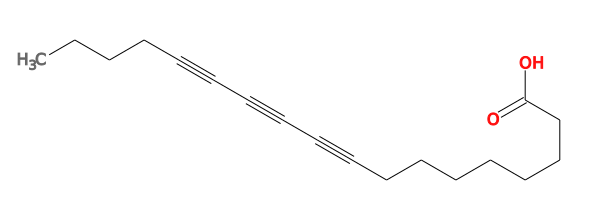 |
| Plant Source | Polyalthia cerasoides (Roxb.) Benth. ex Bedd Common Name: |
| Source Family | Annonaceae |
| Origin | Thailand |
| Plant Part Used | Root |
| Extract | |
| Target Bacteria | Mycobacterium tuberculosis H37Ra |
| Assay / Test Done | Microplate Alamar Blue assay (MABA) |
| Positive Control Used (conc.) | Isoniazid (0.05 µg/ml), Kanamycin (2.5 µg/ml) |
| Inhibition [%] | |
| Activity [MIC] µg/ml | 6.25 µg/ml |
| Activity (In terms of dilution) | |
| Activity (Zone of inhibition in mm) | |
| Active Compound Identified | Octadeca - 9, 11, 13 - Triynoic Acid |
| PubChem ID | 11778027 |
| Ethnomedicinal Information | Tuberculosis |
| PubMed ID [Source Literature] | 17845001 |
| Extract Preparation | N/A |
| Chemical Classification [Active Compound] | Aliphatic, Alkyne, Fatty acid |
| Media / Broth Used [Antimicrobial Assay/Test] | N/A |
| Cytotoxicity Assay [AID] | N/A |
| Molecular Weight | 272.178 |
| Molecular Formula | C18H24O2 |
| SMILES | OC(=O)CCCCCCCC#CC#CC#CCCCC |
| XLogP | 6.542 |
| PSA | 37.300 |
| H-bond Donor | 1 |
| H-bond Acceptor | 2 |
| No. of Rotatable Bond Count | 9 |
| No. of Rings | 0 |
| No. of N | 0 |
| No. of O | 2 |
| No. of S | 0 |
| Reference(s) | 1) Kanokmedhakul S, Kanokmedhakul K, Lekphrom R.Bioactive constituents of the roots of Polyalthia cerasoides.J Nat Prod. 2007 Sep;70(9):1536-8
|
| Curator | |
| Compound ID | 2416 |
| Compound Structure | 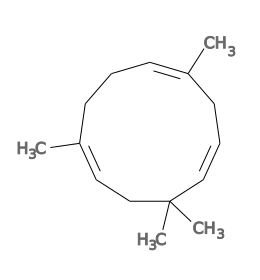 |
| Plant Source | Polyalthia cerasoides (Roxb.) Benth. ex Bedd Common Name: |
| Source Family | Annonaceae |
| Origin | Thailand |
| Plant Part Used | Root |
| Extract | |
| Target Bacteria | Mycobacterium tuberculosis H37Ra |
| Assay / Test Done | Microplate Alamar Blue assay (MABA) |
| Positive Control Used (conc.) | Isoniazid (0.05 µg/ml), Kanamycin (2.5 µg/ml) |
| Inhibition [%] | |
| Activity [MIC] µg/ml | 6.25 µg/ml |
| Activity (In terms of dilution) | |
| Activity (Zone of inhibition in mm) | |
| Active Compound Identified | α - Humulene |
| PubChem ID | 5281520 |
| Ethnomedicinal Information | Tuberculosis |
| PubMed ID [Source Literature] | 17845001 |
| Extract Preparation | N/A |
| Chemical Classification [Active Compound] | Alicyclic, Terpene, Sesquiterpene |
| Media / Broth Used [Antimicrobial Assay/Test] | N/A |
| Cytotoxicity Assay [AID] | N/A |
| Molecular Weight | 204.188 |
| Molecular Formula | C15H24
|
| SMILES | C1(C/C=C(/CC/C=C(/C/C=C/1)C)C)(C)C |
| XLogP | 5.940 |
| PSA | 0.000 |
| H-bond Donor | 0 |
| H-bond Acceptor | 0 |
| No. of Rotatable Bond Count | 0 |
| No. of Rings | 1 |
| No. of N | 0 |
| No. of O | 0 |
| No. of S | 0 |
| Reference(s) | 1) Kanokmedhakul S, Kanokmedhakul K, Lekphrom R.Bioactive constituents of the roots of Polyalthia cerasoides.J Nat Prod. 2007 Sep;70(9):1536-8
|
| Curator | |
| Compound ID | 2499 |
| Compound Structure | |
| Plant Source | Rollinia cuspidata C. Mart Common Name: |
| Source Family | Annonaceae |
| Origin | Peru |
| Plant Part Used | Bark |
| Extract | Dichloromethane |
| Target Bacteria | Mycobacterium tuberculosis (ATCC 27294) |
| Assay / Test Done | BACTEC 460 (Becton Dickinson Diagnostic Instrument Systems, Sparks MD) radiometric assay |
| Positive Control Used (conc.) | Rifampin (2 µg/ml), Ethambutol (7.5 µg/ml) |
| Inhibition [%] | < 50 % |
| Activity [MIC] µg/ml | 50 µg/ml |
| Activity (In terms of dilution) | |
| Activity (Zone of inhibition in mm) | |
| Active Compound Identified | |
| PubChem ID | NR |
| Ethnomedicinal Information | Tuberculosis |
| PubMed ID [Source Literature] | 13678239 |
| Extract Preparation | N/A |
| Chemical Classification [Active Compound] | N/A |
| Media / Broth Used [Antimicrobial Assay/Test] | N/A |
| Cytotoxicity Assay [AID] | N/A |
| Reference(s) | 1) Graham JG, Pendland SL, Prause JL, Danzinger LH, Schunke Vigo J, Cabieses F, Farnsworth NR.Antimycobacterial evaluation of Peruvian plants.Phytomedicine. 2003;10(6-7):528-35
|
| Curator | |
| Compound ID | 2852 |
| Compound Structure | N/A |
| Plant Source | Cananga odorata Common Name:Ylang - Ylang Cananga Tree, Macassar - Oil Plant, Perfume Tree |
| Source Family | Annonaceae |
| Origin | Colombia |
| Plant Part Used | Flower |
| Extract | Flower extract (1.2 %) |
| Target Bacteria | Mycobacterium tuberculosis H37Rv |
| Assay / Test Done | Colorimetric Macrodilution Method, following the protocol described by Abate et al. (1998) |
| Positive Control Used (conc.) | Isoniazid (0.19 ± 0.07 µg/ml), Rifampin (0.3 ± 0.21 µg/ml) |
| Inhibition [%] | NR |
| Activity [MIC] µg/ml | 300 ± 217 µg/ml |
| Activity (In terms of dilution) | NR |
| Activity (Zone of inhibition in mm) | NR |
| Active Compound Identified | Mixture of Essential oils (Mixture) |
| PubChem ID | NR |
| Ethnomedicinal Information | NR |
| PubMed ID [Source Literature] | 19753839 |
| Extract Preparation | Microwave - assisted hydrodistillation (30 min, 250 ml water), using a Clevenger - type distillation apparatus and a Dean - Stark distillation trap in a domestic microwave oven (Kendo, MO-124, 2.5 GHz, 800 W) (9). Sodium sulfate was added as a drying agent to the decanted essential oil |
| Chemical Classification [Active Compound] | Mixture |
| Media / Broth Used [Antimicrobial Assay/Test] | Lowenstein Jensen (L-J) medium and Middlebrook 7H9 broth |
| Cytotoxicity Assay [AID] | NR |
| Reference(s) | 1) Bueno-Sánchez JG, Martínez-Morales JR, Stashenko EE, Ribón W.Anti-tubercular activity of eleven aromatic and medicinal plants occurring in Colombia.Biomedica. 2009 Mar;29(1):51-60
|
| Curator | Reshmi |
| Compound ID | 3181 |
| Compound Structure | NR |
| Plant Source | Annona glabra L. syn. Annona palustris L. Common Name:Pond Apple |
| Source Family | Annonaceae |
| Origin | Puerto Rico, India |
| Plant Part Used | Stem |
| Extract | Ethanol (95 %) |
| Target Bacteria | Mycobacterium tuberculosis |
| Assay / Test Done | Radiorespirometric Bioassay |
| Positive Control Used (conc.) | Rifampin (1 µg/ml) |
| Inhibition [%] | 43 % |
| Activity [MIC] µg/ml | 100 µg/ml |
| Activity (In terms of dilution) | NR |
| Activity (Zone of inhibition in mm) | NR |
| Active Compound Identified | NR |
| PubChem ID | NR |
| Ethnomedicinal Information | In folklore medicine of Puerto Rico the allied species Annona squamosa L. for Expectorant, fever, vomiting, cathartic, cold, tonic, dysentery |
| PubMed ID [Source Literature] | 11746852 |
| Extract Preparation | The plants were dried, at a temperature not exceeding 30°C, in an air - circulating oven. The material was powdered and extracted with 95 % ethanol. The organic solvent was removed by distillation under reduced pressure |
| Chemical Classification [Active Compound] | NR |
| Media / Broth Used [Antimicrobial Assay/Test] | NR |
| Cytotoxicity Assay [AID] | NR |
| Reference(s) | 1) Antoun MD, Ramos Z, Vazques J, Oquendo I, Proctor GR, Gerena L, Franzblau SG.Evaluation of the flora of Puerto Rico for in vitro antiplasmodial and antimycobacterial activities.Phytother Res. 2001 Nov;15(7):638-42
2) http://plants.usda.gov/java/profile?symbol=ANGL4
|
| Curator | Reshmi, vikramjitmandal |
| Compound ID | 3182 |
| Compound Structure | NR |
| Plant Source | Annona muricata L. Common Name:Brazilian Pawpaw, Soursop, Prickly Custard Apple, Soursapi |
| Source Family | Annonaceae |
| Origin | Puerto Rico, India |
| Plant Part Used | Leaf |
| Extract | Ethanol (95 %) |
| Target Bacteria | Mycobacterium tuberculosis |
| Assay / Test Done | Middlebrook 7H9 Broth using BACTEC 460 System |
| Positive Control Used (conc.) | Rifampin (1 µg/ml) |
| Inhibition [%] | 75 % |
| Activity [MIC] µg/ml | 100 µg/ml |
| Activity (In terms of dilution) | NR |
| Activity (Zone of inhibition in mm) | NR |
| Active Compound Identified | NR |
| PubChem ID | NR |
| Ethnomedicinal Information | Cough, dysentery, emetic, astringent, antispasmodic, parasiticidal |
| PubMed ID [Source Literature] | 11746852 |
| Extract Preparation | The plants were dried, at a temperature not exceeding 30°C, in an air - circulating oven. The material was powdered and extracted with 95 % ethanol. The organic solvent was removed by distillation under reduced pressure |
| Chemical Classification [Active Compound] | NR |
| Media / Broth Used [Antimicrobial Assay/Test] | NR |
| Cytotoxicity Assay [AID] | NR |
| Reference(s) | 1) Folklore Medicine of Puerto Rico (Antoun et al.,2001),Ayurveda(Kirtikar and Basu,1935)
2) http://www.bitterrootrestoration.com/medicinal-plants/tribal-herbal-medicinal-uses-of-graviola.html
|
| Curator | Reshmi, vikramjitmandal |
| Compound ID | 3872 |
| Compound Structure | 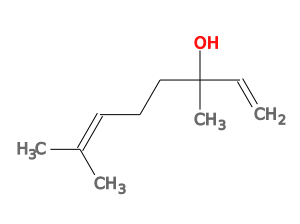 |
| Plant Source | Cananga odorata Common Name:Ylang - Ylang Tree |
| Source Family | Annonaceae |
| Origin | Colombia |
| Plant Part Used | Flower |
| Extract | Essential oil (1.2 %) |
| Target Bacteria | Mycobacterium tuberculosis H37Rv |
| Assay / Test Done | Macrodilution method in glass tubes |
| Positive Control Used (conc.) | Isoniazid (0.19 ± 0.07 µg/ml), Rifampin (0.3 ± 0.21 µg/ml) |
| Inhibition [%] | NR |
| Activity [MIC] µg/ml | 300 ± 217 µg/ml |
| Activity (In terms of dilution) | NR |
| Activity (Zone of inhibition in mm) | NR |
| Active Compound Identified | Linalool (20.7 %) |
| PubChem ID | 6549 |
| Ethnomedicinal Information | Stomach ailment, fever, inflammation, burning sensation, malarial fever, asthma with aromatherapy, hypertension, anxiety, depression and as a sexual stimulant |
| PubMed ID [Source Literature] | 19753839 |
| Extract Preparation | The essential oils were extracted from a 300 g sample of plant leaves and stems by microwave - assisted hydrodistillation (30 min, 250 ml water), using a Clevenger - type distillation apparatus and a Dean - Stark distillation trap in a domestic microwave oven. Sodium sulfate was added as a drying agent to the decanted essential oil |
| Chemical Classification [Active Compound] | Aliphatic, Alkene, Terpene, Monoterpene, Alcohol |
| Media / Broth Used [Antimicrobial Assay/Test] | Lowestein - Jensenn medium, Middlebrook 7H9 medium [The later was supplemented with 10 % OADC (Oleic Acid - Albumin - Dextrose - Catalase) and 0.001 % Tween 80] |
| Cytotoxicity Assay [AID] | NR |
| Molecular Weight | 154.136 |
| Molecular Formula | C10H18O |
| SMILES | OC(CCC=C(C)C)(C)C=C |
| XLogP | 2.468 |
| PSA | 20.230 |
| H-bond Donor | 1 |
| H-bond Acceptor | 1 |
| No. of Rotatable Bond Count | 4 |
| No. of Rings | 0 |
| No. of N | 0 |
| No. of O | 1 |
| No. of S | 0 |
| Reference(s) | 1) Bueno-Sánchez JG, Martínez-Morales JR, Stashenko EE, Ribón W.Anti-tubercular activity of eleven aromatic and medicinal plants occurring in Colombia.Biomedica. 2009 Mar;29(1):51-60
2) http://ayurvedicmedicinalplants.com/index.php?option=com_zoom&Itemid=26&page=view&catid=3&key=10&hit=1
|
| Curator | KeyaMukherjee, Farzana Shamsudeen |
| Compound ID | 3873 |
| Compound Structure |  |
| Plant Source | Cananga odorata Common Name:Ylang - Ylang Tree |
| Source Family | Annonaceae |
| Origin | Colombia |
| Plant Part Used | Flower |
| Extract | Essential oil (1.2 %) |
| Target Bacteria | Mycobacterium tuberculosis H37Rv |
| Assay / Test Done | Macrodilution method in glass tubes |
| Positive Control Used (conc.) | Isoniazid (0.19 ± 0.07 µg/ml), Rifampin (0.3 ± 0.21 µg/ml) |
| Inhibition [%] | NR |
| Activity [MIC] µg/ml | 300 ± 217 µg/ml |
| Activity (In terms of dilution) | NR |
| Activity (Zone of inhibition in mm) | NR |
| Active Compound Identified | Benzyl acetate (20.6%) |
| PubChem ID | 8785 |
| Ethnomedicinal Information | Stomach ailment, fever, inflammation, burning sensation, malarial fever, asthma with aromatherapy, hypertension, anxiety, depression and as a sexual stimulant |
| PubMed ID [Source Literature] | 19753839 |
| Extract Preparation | The essential oils were extracted from a 300 g sample of plant leaves and stems by microwave - assisted hydrodistillation (30 min, 250 ml water), using a Clevenger - type distillation apparatus and a Dean - Stark distillation trap in a domestic microwave oven. Sodium sulfate was added as a drying agent to the decanted essential oil |
| Chemical Classification [Active Compound] | Aromatic, Alkyl, O-Acetyl |
| Media / Broth Used [Antimicrobial Assay/Test] | Lowestein - Jensenn medium, Middlebrook 7H9 medium [The later was supplemented with 10 % OADC (Oleic Acid - Albumin - Dextrose - Catalase) and 0.001 % Tween 80] |
| Cytotoxicity Assay [AID] | NR |
| Molecular Weight | 150.068 |
| Molecular Formula | C9H10O2 |
| SMILES | O(Cc1ccccc1)C(=O)C |
| XLogP | 3.149 |
| PSA | 26.300 |
| H-bond Donor | 0 |
| H-bond Acceptor | 2 |
| No. of Rotatable Bond Count | 3 |
| No. of Rings | 1 |
| No. of N | 0 |
| No. of O | 2 |
| No. of S | 0 |
| Reference(s) | 1) Bueno-Sánchez JG, Martínez-Morales JR, Stashenko EE, Ribón W.Anti-tubercular activity of eleven aromatic and medicinal plants occurring in Colombia.Biomedica. 2009 Mar;29(1):51-60
2) http://ayurvedicmedicinalplants.com/index.php?option=com_zoom&Itemid=26&page=view&catid=3&key=10&hit=1
|
| Curator | KeyaMukherjee, Farzana Shamsudeen |
| Compound ID | 3874 |
| Compound Structure |  |
| Plant Source | Cananga odorata Common Name:Ylang - Ylang Tree |
| Source Family | Annonaceae |
| Origin | Colombia |
| Plant Part Used | Flower |
| Extract | Essential oil (1.2 %) |
| Target Bacteria | Mycobacterium tuberculosis H37Rv |
| Assay / Test Done | Macrodilution method in glass tubes |
| Positive Control Used (conc.) | Isoniazid (0.19 ± 0.07 µg/ml), Rifampin (0.3 ± 0.21 µg/ml) |
| Inhibition [%] | NR |
| Activity [MIC] µg/ml | 300 ± 217 µg/ml |
| Activity (In terms of dilution) | NR |
| Activity (Zone of inhibition in mm) | NR |
| Active Compound Identified | Benzyl benzoate (14.2 %) |
| PubChem ID | 2345 |
| Ethnomedicinal Information | Stomach ailment, fever, inflammation, burning sensation, malarial fever, asthma with aromatherapy, hypertension, anxiety, depression and as a sexual stimulant |
| PubMed ID [Source Literature] | 19753839 |
| Extract Preparation | The essential oils were extracted from a 300 g sample of plant leaves and stems by microwave - assisted hydrodistillation (30 min, 250 ml water), using a Clevenger - type distillation apparatus and a Dean - Stark distillation trap in a domestic microwave oven. Sodium sulfate was added as a drying agent to the decanted essential oil |
| Chemical Classification [Active Compound] | Aromatic, Ester
|
| Media / Broth Used [Antimicrobial Assay/Test] | Lowestein - Jensenn medium, Middlebrook 7H9 medium [The later was supplemented with 10 % OADC (Oleic Acid - Albumin - Dextrose - Catalase) and 0.001 % Tween 80] |
| Cytotoxicity Assay [AID] | NR |
| Molecular Weight | 212.084 |
| Molecular Formula | C14H12O2 |
| SMILES | O(Cc1ccccc1)C(=O)c1ccccc1 |
| XLogP | 5.895 |
| PSA | 26.300 |
| H-bond Donor | 0 |
| H-bond Acceptor | 2 |
| No. of Rotatable Bond Count | 4 |
| No. of Rings | 2 |
| No. of N | 0 |
| No. of O | 2 |
| No. of S | 0 |
| Reference(s) | 1) Bueno-Sánchez JG, Martínez-Morales JR, Stashenko EE, Ribón W.Anti-tubercular activity of eleven aromatic and medicinal plants occurring in Colombia.Biomedica. 2009 Mar;29(1):51-60
2) http://ayurvedicmedicinalplants.com/index.php?option=com_zoom&Itemid=26&page=view&catid=3&key=10&hit=1
|
| Curator | KeyaMukherjee, Farzana Shamsudeen |
| Compound ID | 3875 |
| Compound Structure | 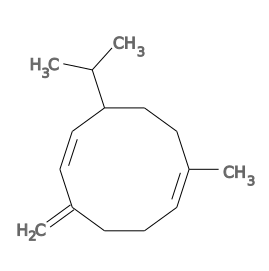 |
| Plant Source | Cananga odorata Common Name:Ylang - Ylang Tree |
| Source Family | Annonaceae |
| Origin | Colombia |
| Plant Part Used | Flower |
| Extract | Essential oil (1.2 %) |
| Target Bacteria | Mycobacterium tuberculosis H37Rv |
| Assay / Test Done | Macrodilution method in glass tubes |
| Positive Control Used (conc.) | Isoniazid (0.19 ± 0.07 µg/ml), Rifampin (0.3 ± 0.21 µg/ml) |
| Inhibition [%] | NR |
| Activity [MIC] µg/ml | 300 ± 217 µg/ml |
| Activity (In terms of dilution) | NR |
| Activity (Zone of inhibition in mm) | NR |
| Active Compound Identified | Germacrene D (10.2 %) |
| PubChem ID | 5373727 |
| Ethnomedicinal Information | Stomach ailment, fever, inflammation, burning sensation, malarial fever, asthma with aromatherapy, hypertension, anxiety, depression and as a sexual stimulant |
| PubMed ID [Source Literature] | 19753839 |
| Extract Preparation | The essential oils were extracted from a 300 g sample of plant leaves and stems by microwave - assisted hydrodistillation (30 min, 250 ml water), using a Clevenger - type distillation apparatus and a Dean - Stark distillation trap in a domestic microwave oven. Sodium sulfate was added as a drying agent to the decanted essential oil |
| Chemical Classification [Active Compound] | Alicyclic, Terpene, Sesquiterpene |
| Media / Broth Used [Antimicrobial Assay/Test] | Lowestein - Jensenn medium, Middlebrook 7H9 medium [The later was supplemented with 10 % OADC (Oleic Acid - Albumin - Dextrose - Catalase) and 0.001 % Tween 80] |
| Cytotoxicity Assay [AID] | NR |
| Molecular Weight | 204.188 |
| Molecular Formula | C15H24 |
| SMILES | C1(C(C)C)CC/C(=CCCC(=C)/C=C1)/C |
| XLogP | 6.294 |
| PSA | 0.000 |
| H-bond Donor | 0 |
| H-bond Acceptor | 0 |
| No. of Rotatable Bond Count | 1 |
| No. of Rings | 1 |
| No. of N | 0 |
| No. of O | 0 |
| No. of S | 0 |
| Reference(s) | 1) Bueno-Sánchez JG, Martínez-Morales JR, Stashenko EE, Ribón W.Anti-tubercular activity of eleven aromatic and medicinal plants occurring in Colombia.Biomedica. 2009 Mar;29(1):51-60
2) http://ayurvedicmedicinalplants.com/index.php?option=com_zoom&Itemid=26&page=view&catid=3&key=10&hit=1
|
| Curator | KeyaMukherjee, Farzana Shamsudeen |
| Compound ID | 3876 |
| Compound Structure |  |
| Plant Source | Cananga odorata Common Name:Ylang - Ylang Tree |
| Source Family | Annonaceae |
| Origin | Colombia |
| Plant Part Used | Flower |
| Extract | Essential oil (1.2 %) |
| Target Bacteria | Mycobacterium tuberculosis H37Rv |
| Assay / Test Done | Macrodilution method in glass tubes |
| Positive Control Used (conc.) | Isoniazid (0.19 ± 0.07 µg/ml), Rifampin (0.3 ± 0.21 µg/ml) |
| Inhibition [%] | NR |
| Activity [MIC] µg/ml | 300 ± 217 µg/ml |
| Activity (In terms of dilution) | NR |
| Activity (Zone of inhibition in mm) | NR |
| Active Compound Identified | P - Methyl anisole (6.8%) |
| PubChem ID | 7731 |
| Ethnomedicinal Information | Stomach ailment, fever, inflammation, burning sensation, malarial fever, asthma with aromatherapy, hypertension, anxiety, depression and as a sexual stimulant |
| PubMed ID [Source Literature] | 19753839 |
| Extract Preparation | The essential oils were extracted from a 300 g sample of plant leaves and stems by microwave - assisted hydrodistillation (30 min, 250 ml water), using a Clevenger - type distillation apparatus and a Dean - Stark distillation trap in a domestic microwave oven. Sodium sulfate was added as a drying agent to the decanted essential oil |
| Chemical Classification [Active Compound] | Aromatic, Ether |
| Media / Broth Used [Antimicrobial Assay/Test] | Lowestein - Jensenn medium, Middlebrook 7H9 medium [The later was supplemented with 10 % OADC (Oleic Acid - Albumin - Dextrose - Catalase) and 0.001 % Tween 80] |
| Cytotoxicity Assay [AID] | NR |
| Molecular Weight | 122.073 |
| Molecular Formula | C8H10O |
| SMILES | O(c1ccc(cc1)C)C |
| XLogP | 2.886 |
| PSA | 9.230 |
| H-bond Donor | 0 |
| H-bond Acceptor | 1 |
| No. of Rotatable Bond Count | 1 |
| No. of Rings | 1 |
| No. of N | 0 |
| No. of O | 1 |
| No. of S | 0 |
| Reference(s) | 1) Bueno-Sánchez JG, Martínez-Morales JR, Stashenko EE, Ribón W.Anti-tubercular activity of eleven aromatic and medicinal plants occurring in Colombia.Biomedica. 2009 Mar;29(1):51-60
2) http://ayurvedicmedicinalplants.com/index.php?option=com_zoom&Itemid=26&page=view&catid=3&key=10&hit=1
|
| Curator | KeyaMukherjee, Farzana Shamsudeen |
| Compound ID | 3877 |
| Compound Structure |  |
| Plant Source | Cananga odorata Common Name:Ylang - Ylang Tree |
| Source Family | Annonaceae |
| Origin | Colombia |
| Plant Part Used | Flower |
| Extract | Essential oil (1.2 %) |
| Target Bacteria | Mycobacterium tuberculosis H37Rv |
| Assay / Test Done | Macrodilution method in glass tubes |
| Positive Control Used (conc.) | Isoniazid (0.19 ± 0.07 µg/ml), Rifampin (0.3 ± 0.21 µg/ml) |
| Inhibition [%] | NR |
| Activity [MIC] µg/ml | 300 ± 217 µg/ml |
| Activity (In terms of dilution) | NR |
| Activity (Zone of inhibition in mm) | NR |
| Active Compound Identified | Cinnamyl acetate (5.1%) |
| PubChem ID | 5282110 |
| Ethnomedicinal Information | Stomach ailment, fever, inflammation, burning sensation, malarial fever, asthma with aromatherapy, hypertension, anxiety, depression and as a sexual stimulant |
| PubMed ID [Source Literature] | 19753839 |
| Extract Preparation | The essential oils were extracted from a 300 g sample of plant leaves and stems by microwave - assisted hydrodistillation (30 min, 250 ml water), using a Clevenger - type distillation apparatus and a Dean - Stark distillation trap in a domestic microwave oven. Sodium sulfate was added as a drying agent to the decanted essential oil |
| Chemical Classification [Active Compound] | Aromatic, Cinnamyl, O-Acetyl |
| Media / Broth Used [Antimicrobial Assay/Test] | Lowestein - Jensenn medium, Middlebrook 7H9 medium [The later was supplemented with 10 % OADC (Oleic Acid - Albumin - Dextrose - Catalase) and 0.001 % Tween 80] |
| Cytotoxicity Assay [AID] | NR |
| Molecular Weight | 176.084 |
| Molecular Formula | C11H12O2 |
| SMILES | O(C/C=C/c1ccccc1)C(=O)C |
| XLogP | 4.548 |
| PSA | 26.300 |
| H-bond Donor | 0 |
| H-bond Acceptor | 2 |
| No. of Rotatable Bond Count | 4 |
| No. of Rings | 1 |
| No. of N | 0 |
| No. of O | 2 |
| No. of S | 0 |
| Reference(s) | 1) Bueno-Sánchez JG, Martínez-Morales JR, Stashenko EE, Ribón W.Anti-tubercular activity of eleven aromatic and medicinal plants occurring in Colombia.Biomedica. 2009 Mar;29(1):51-60
2) http://ayurvedicmedicinalplants.com/index.php?option=com_zoom&Itemid=26&page=view&catid=3&key=10&hit=1
|
| Curator | KeyaMukherjee, Farzana Shamsudeen |
| Compound ID | 3878 |
| Compound Structure | 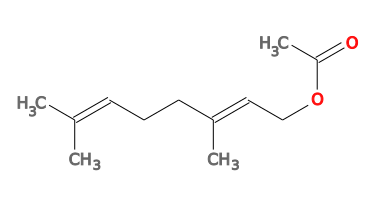 |
| Plant Source | Cananga odorata Common Name:Ylang - Ylang Tree |
| Source Family | Annonaceae |
| Origin | Colombia |
| Plant Part Used | Flower |
| Extract | Essential oil (1.2 %) |
| Target Bacteria | Mycobacterium tuberculosis H37Rv |
| Assay / Test Done | Macrodilution method in glass tubes |
| Positive Control Used (conc.) | Isoniazid (0.19 ± 0.07 µg/ml), Rifampin (0.3 ± 0.21 µg/ml) |
| Inhibition [%] | NR |
| Activity [MIC] µg/ml | 300 ± 217 µg/ml |
| Activity (In terms of dilution) | NR |
| Activity (Zone of inhibition in mm) | NR |
| Active Compound Identified | Geranyl acetate (2.9 %) |
| PubChem ID | 1549026 |
| Ethnomedicinal Information | Stomach ailment, fever, inflammation, burning sensation, malarial fever, asthma with aromatherapy, hypertension, anxiety, depression and as a sexual stimulant |
| PubMed ID [Source Literature] | 19753839 |
| Extract Preparation | The essential oils were extracted from a 300 g sample of plant leaves and stems by microwave - assisted hydrodistillation (30 min, 250 ml water), using a Clevenger - type distillation apparatus and a Dean - Stark distillation trap in a domestic microwave oven. Sodium sulfate was added as a drying agent to the decanted essential oil |
| Chemical Classification [Active Compound] | Aliphatic, Alkene, Ester |
| Media / Broth Used [Antimicrobial Assay/Test] | Lowestein - Jensenn medium, Middlebrook 7H9 medium [The later was supplemented with 10 % OADC (Oleic Acid - Albumin - Dextrose - Catalase) and 0.001 % Tween 80] |
| Cytotoxicity Assay [AID] | NR |
| Molecular Weight | 196.146 |
| Molecular Formula | C12H20O2 |
| SMILES | O(C/C=C(/CCC=C(C)C)C)C(=O)C |
| XLogP | 3.264 |
| PSA | 26.300 |
| H-bond Donor | 0 |
| H-bond Acceptor | 2 |
| No. of Rotatable Bond Count | 6 |
| No. of Rings | 0 |
| No. of N | 0 |
| No. of O | 2 |
| No. of S | 0 |
| Reference(s) | 1) Bueno-Sánchez JG, Martínez-Morales JR, Stashenko EE, Ribón W.Anti-tubercular activity of eleven aromatic and medicinal plants occurring in Colombia.Biomedica. 2009 Mar;29(1):51-60
2) http://ayurvedicmedicinalplants.com/index.php?option=com_zoom&Itemid=26&page=view&catid=3&key=10&hit=1
|
| Curator | KeyaMukherjee, Farzana Shamsudeen |
| Compound ID | 3879 |
| Compound Structure | |
| Plant Source | Cananga odorata Common Name:Ylang - Ylang Tree |
| Source Family | Annonaceae |
| Origin | Colombia |
| Plant Part Used | Flower |
| Extract | Essential oil (1.2 %) |
| Target Bacteria | Mycobacterium tuberculosis H37Rv |
| Assay / Test Done | Macrodilution method in glass tubes |
| Positive Control Used (conc.) | Isoniazid (0.19 ± 0.07 µg/ml), Rifampin (0.3 ± 0.21 µg/ml) |
| Inhibition [%] | NR |
| Activity [MIC] µg/ml | 300 ± 217 µg/ml |
| Activity (In terms of dilution) | NR |
| Activity (Zone of inhibition in mm) | NR |
| Active Compound Identified | α - Humulene (2.8 %) |
| PubChem ID | 5281520 |
| Ethnomedicinal Information | Stomach ailment, fever, inflammation, burning sensation, malarial fever, asthma with aromatherapy, hypertension, anxiety, depression and as a sexual stimulant |
| PubMed ID [Source Literature] | 19753839 |
| Extract Preparation | The essential oils were extracted from a 300 g sample of plant leaves and stems by microwave - assisted hydrodistillation (30 min, 250 ml water), using a Clevenger - type distillation apparatus and a Dean - Stark distillation trap in a domestic microwave oven. Sodium sulfate was added as a drying agent to the decanted essential oil |
| Chemical Classification [Active Compound] | Alicyclic, Terpene, Sesquiterpene |
| Media / Broth Used [Antimicrobial Assay/Test] | Lowestein - Jensenn medium, Middlebrook 7H9 medium [The later was supplemented with 10 % OADC (Oleic Acid - Albumin - Dextrose - Catalase) and 0.001 % Tween 80] |
| Cytotoxicity Assay [AID] | NR |
| Molecular Weight | 204.188 |
| Molecular Formula | C15H24 |
| SMILES | C1(C/C=C(/CC/C=C(/C/C=C/1)C)C)(C)C |
| XLogP | 5.940 |
| PSA | 0.000 |
| H-bond Donor | 0 |
| H-bond Acceptor | 0 |
| No. of Rotatable Bond Count | 0 |
| No. of Rings | 1 |
| No. of N | 0 |
| No. of O | 0 |
| No. of S | 0 |
| Reference(s) | 1) Bueno-Sánchez JG, Martínez-Morales JR, Stashenko EE, Ribón W.Anti-tubercular activity of eleven aromatic and medicinal plants occurring in Colombia.Biomedica. 2009 Mar;29(1):51-60
2) http://ayurvedicmedicinalplants.com/index.php?option=com_zoom&Itemid=26&page=view&catid=3&key=10&hit=1
|
| Curator | KeyaMukherjee, Farzana Shamsudeen |
| Compound ID | 3880 |
| Compound Structure | 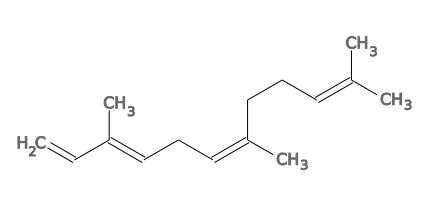 |
| Plant Source | Cananga odorata Common Name:Ylang - Ylang Tree |
| Source Family | Annonaceae |
| Origin | Colombia |
| Plant Part Used | Flower |
| Extract | Essential oil (1.2 %) |
| Target Bacteria | Mycobacterium tuberculosis H37Rv |
| Assay / Test Done | Macrodilution method in glass tubes |
| Positive Control Used (conc.) | Isoniazid (0.19 ± 0.07 µg/ml), Rifampin (0.3 ± 0.21 µg/ml) |
| Inhibition [%] | NR |
| Activity [MIC] µg/ml | 300 ± 217 µg/ml |
| Activity (In terms of dilution) | NR |
| Activity (Zone of inhibition in mm) | NR |
| Active Compound Identified | (E,E)-Franesene (2.4 %) |
| PubChem ID | 5281516 |
| Ethnomedicinal Information | Stomach ailment, fever, inflammation, burning sensation, malarial fever, asthma with aromatherapy, hypertension, anxiety, depression and as a sexual stimulant |
| PubMed ID [Source Literature] | 19753839 |
| Extract Preparation | The essential oils were extracted from a 300 g sample of plant leaves and stems by microwave - assisted hydrodistillation (30 min, 250 ml water), using a Clevenger - type distillation apparatus and a Dean - Stark distillation trap in a domestic microwave oven. Sodium sulfate was added as a drying agent to the decanted essential oil |
| Chemical Classification [Active Compound] | Aliphatic, Alkene, Terpene, Sesquiterpene |
| Media / Broth Used [Antimicrobial Assay/Test] | Lowestein - Jensenn medium, Middlebrook 7H9 medium [The later was supplemented with 10 % OADC (Oleic Acid - Albumin - Dextrose - Catalase) and 0.001 % Tween 80] |
| Cytotoxicity Assay [AID] | NR |
| Molecular Weight | 204.188 |
| Molecular Formula | C15H24 |
| SMILES | C(CC=C(C)C)/C(=C/C/C=C(C)/C=C)/C |
| XLogP | 6.136 |
| PSA | 0.000 |
| H-bond Donor | 0 |
| H-bond Acceptor | 0 |
| No. of Rotatable Bond Count | 6 |
| No. of Rings | 0 |
| No. of N | 0 |
| No. of O | 0 |
| No. of S | 0 |
| Reference(s) | 1) Bueno-Sánchez JG, Martínez-Morales JR, Stashenko EE, Ribón W.Anti-tubercular activity of eleven aromatic and medicinal plants occurring in Colombia.Biomedica. 2009 Mar;29(1):51-60
2) http://ayurvedicmedicinalplants.com/index.php?option=com_zoom&Itemid=26&page=view&catid=3&key=10&hit=1
|
| Curator | KeyaMukherjee, Farzana Shamsudeen |
| Compound ID | 3881 |
| Compound Structure | 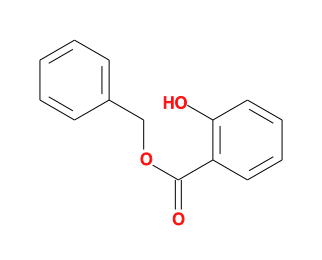 |
| Plant Source | Cananga odorata Common Name:Ylang - Ylang Tree |
| Source Family | Annonaceae |
| Origin | Colombia |
| Plant Part Used | Flower |
| Extract | Essential oil (1.2 %) |
| Target Bacteria | Mycobacterium tuberculosis H37Rv |
| Assay / Test Done | Macrodilution method in glass tubes |
| Positive Control Used (conc.) | Isoniazid (0.19 ± 0.07 µg/ml), Rifampin (0.3 ± 0.21 µg/ml) |
| Inhibition [%] | NR |
| Activity [MIC] µg/ml | 125 ± 0.01 µg/ml |
| Activity (In terms of dilution) | NR |
| Activity (Zone of inhibition in mm) | NR |
| Active Compound Identified | Benzyl salicylate (2.3 %) |
| PubChem ID | 8363 |
| Ethnomedicinal Information | Stomach ailment, fever, inflammation, burning sensation, malarial fever, asthma with aromatherapy, hypertension, anxiety, depression and as a sexual stimulant |
| PubMed ID [Source Literature] | 19753839 |
| Extract Preparation | The essential oils were extracted from a 300 g sample of plant leaves and stems by microwave - assisted hydrodistillation (30 min, 250 ml water), using a Clevenger - type distillation apparatus and a Dean - Stark distillation trap in a domestic microwave oven. Sodium sulfate was added as a drying agent to the decanted essential oil |
| Chemical Classification [Active Compound] | Aromatic, Ester, Phenol |
| Media / Broth Used [Antimicrobial Assay/Test] | Lowestein - Jensenn medium, Middlebrook 7H9 medium [The later was supplemented with 10 % OADC (Oleic Acid - Albumin - Dextrose - Catalase) and 0.001 % Tween 80] |
| Cytotoxicity Assay [AID] | NR |
| Molecular Weight | 228.079 |
| Molecular Formula | C14H12O3 |
| SMILES | O(Cc1ccccc1)C(=O)c1c(O)cccc1 |
| XLogP | 5.493 |
| PSA | 46.530 |
| H-bond Donor | 1 |
| H-bond Acceptor | 3 |
| No. of Rotatable Bond Count | 4 |
| No. of Rings | 2 |
| No. of N | 0 |
| No. of O | 3 |
| No. of S | 0 |
| Reference(s) | 1) Bueno-Sánchez JG, Martínez-Morales JR, Stashenko EE, Ribón W.Anti-tubercular activity of eleven aromatic and medicinal plants occurring in Colombia.Biomedica. 2009 Mar;29(1):51-60
2) http://ayurvedicmedicinalplants.com/index.php?option=com_zoom&Itemid=26&page=view&catid=3&key=10&hit=1
|
| Curator | KeyaMukherjee, Farzana Shamsudeen |
| Compound ID | 3988 |
| Compound Structure | 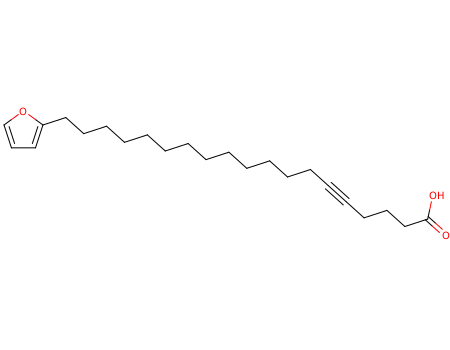 |
| Plant Source | Polyalthia evecta Common Name: |
| Source Family | Annonaceae |
| Origin | |
| Plant Part Used | |
| Extract | |
| Target Bacteria | Mycobacterium tuberculosis |
| Assay / Test Done | |
| Positive Control Used (conc.) | |
| Inhibition [%] | |
| Activity [MIC] µg/ml | 3.1 µg/ml |
| Activity (In terms of dilution) | |
| Activity (Zone of inhibition in mm) | |
| Active Compound Identified | NPMC7a |
| PubChem ID | NR |
| Ethnomedicinal Information | |
| PubMed ID [Source Literature] | |
| Extract Preparation | |
| Chemical Classification [Active Compound] | Aromatic, Alkyl, Alkyne, Fatty acid, Furanoid |
| Media / Broth Used [Antimicrobial Assay/Test] | |
| Cytotoxicity Assay [AID] | |
| Molecular Weight | 360.266 |
| Molecular Formula | C23H36O3 |
| SMILES | OC(=O)CCCC#CCCCCCCCCCCCCCc1ccco1 |
| XLogP | 8.462 |
| PSA | 50.440 |
| H-bond Donor | 1 |
| H-bond Acceptor | 3 |
| No. of Rotatable Bond Count | 16 |
| No. of Rings | 1 |
| No. of N | 0 |
| No. of O | 3 |
| No. of S | 0 |
| Reference(s) | 1) In silico Comparison of Antimycobacterial Natural Products with Known Antituberculosis Drugs. Marlene Espinoza-Moraga, Nicholas M. Njuguna, Grace Mugumbate, Julio Caballero, and Kelly Chibale. Journal of Chemical Information and Modeling 2013 53 (3), 649-660
2) Rogoza, L. N.; Salakhutdinov, N. F.; Tolstikov, G. A. Anti-tubercular Activity of Natural Products: Recent Developments. In Opportunity, Challenge and Scope of Natural Products in Medicinal Chemistry; Tiwari, V. K. Ed.; Research Signpost: India, 2011; pp 103-120
|
| Curator | |
| Compound ID | 3989 |
| Compound Structure |  |
| Plant Source | Polyalthia evecta Common Name: |
| Source Family | Annonaceae |
| Origin | |
| Plant Part Used | |
| Extract | |
| Target Bacteria | Mycobacterium tuberculosis |
| Assay / Test Done | |
| Positive Control Used (conc.) | |
| Inhibition [%] | |
| Activity [MIC] µg/ml | 6.25 µg/ml |
| Activity (In terms of dilution) | |
| Activity (Zone of inhibition in mm) | |
| Active Compound Identified | NPMC8a |
| PubChem ID | NR |
| Ethnomedicinal Information | |
| PubMed ID [Source Literature] | |
| Extract Preparation | |
| Chemical Classification [Active Compound] | Aromatic, Alkyne, Furanoid, Alkyne |
| Media / Broth Used [Antimicrobial Assay/Test] | |
| Cytotoxicity Assay [AID] | |
| Molecular Weight | 410.355 |
| Molecular Formula | C29H46O
|
| SMILES | CCCCCCCCCCCCCCCC#CC#CCCCCCCc1ccco1 |
| XLogP | 13.272 |
| PSA | 13.140 |
| H-bond Donor | 0 |
| H-bond Acceptor | 1 |
| No. of Rotatable Bond Count | 19 |
| No. of Rings | 1 |
| No. of N | 0 |
| No. of O | 1 |
| No. of S | 0 |
| Reference(s) | 1) In silico Comparison of Antimycobacterial Natural Products with Known Antituberculosis Drugs. Marlene Espinoza-Moraga, Nicholas M. Njuguna, Grace Mugumbate, Julio Caballero, and Kelly Chibale. Journal of Chemical Information and Modeling 2013 53 (3), 649-660
2) Rogoza, L. N.; Salakhutdinov, N. F.; Tolstikov, G. A. Anti-tubercular Activity of Natural Products: Recent Developments. In Opportunity, Challenge and Scope of Natural Products in Medicinal Chemistry; Tiwari, V. K. Ed.; Research Signpost: India, 2011; pp 103-120
|
| Curator | |
| Compound ID | 4044 |
| Compound Structure | 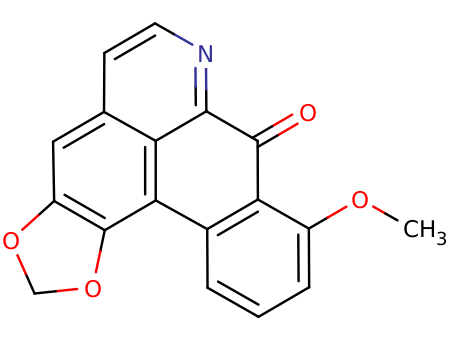 |
| Plant Source | Pseuduvaria setosa Common Name: |
| Source Family | Annonaceae |
| Origin | |
| Plant Part Used | |
| Extract | |
| Target Bacteria | Mycobacterium tuberculosis |
| Assay / Test Done | |
| Positive Control Used (conc.) | |
| Inhibition [%] | |
| Activity [MIC] µg/ml | 50 µg/ml |
| Activity (In terms of dilution) | |
| Activity (Zone of inhibition in mm) | |
| Active Compound Identified | Oxostephanine |
| PubChem ID | NR |
| Ethnomedicinal Information | |
| PubMed ID [Source Literature] | |
| Extract Preparation | |
| Chemical Classification [Active Compound] | Aromatic, Tetracyclic, Alkaloid, Quinoline, Ether |
| Media / Broth Used [Antimicrobial Assay/Test] | |
| Cytotoxicity Assay [AID] | |
| Molecular Weight | 305.069 |
| Molecular Formula | C18H11NO4
|
| SMILES | O=C1c2nccc3c2c(c2c1c(ccc2)OC)c1c(c3)OCO1 |
| XLogP | 2.409 |
| PSA | 57.650 |
| H-bond Donor | 0 |
| H-bond Acceptor | 4 |
| No. of Rotatable Bond Count | 1 |
| No. of Rings | 5 |
| No. of N | 1 |
| No. of O | 4 |
| No. of S | 0 |
| Reference(s) | 1) In silico Comparison of Antimycobacterial Natural Products with Known Antituberculosis Drugs. Marlene Espinoza-Moraga, Nicholas M. Njuguna, Grace Mugumbate, Julio Caballero, and Kelly Chibale. Journal of Chemical Information and Modeling 2013 53 (3), 649-660
2) García, A., Bocanegra-García, V., Palma-Nicolás, J. P., Rivera, G. Vennerstrom, J. L. Recent Advances in Antitubercular Natural Products. Eur. J. Med. Chem. 2012, 49, 1-23
|
| Curator | |