| Compound ID | 3563 |
| Compound Structure | 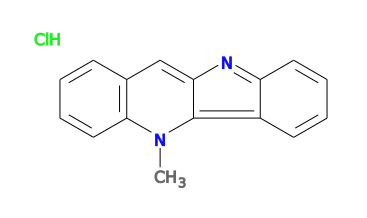 |
| Plant Source | Cryptolepis sanguinolenta Common Name:Nibima |
| Source Family | Apocynaceae |
| Origin | West Africa |
| Plant Part Used | Root |
| Extract | Ammonia moistened chloroform |
| Target Bacteria | Mycobacterium fortuitum |
| Assay / Test Done | MTT Assay |
| Positive Control Used (conc.) | Ethambutol (8 µg/ml), Isoniazid (0.5 µg/ml) |
| Inhibition [%] | NR |
| Activity [MIC] µg/ml | 16 µg/ml |
| Activity (In terms of dilution) | NR |
| Activity (Zone of inhibition in mm) | NR |
| Active Compound Identified | Cryptolepine hydrochloride |
| PubChem ID | 156093 |
| Ethnomedicinal Information | Antimycobacterial, antimalarial |
| PubMed ID [Source Literature] | 12722159 |
| Extract Preparation | Cryptolepine was isolated from Cryptolepis sanguinolenta roots and crystallized as the hydrochloride salt |
| Chemical Classification [Active Compound] | Aromatic, Quinoline, Alkaloid, Indole
|
| Media / Broth Used [Antimicrobial Assay/Test] | Mueller - Hinton broth, Colombia blood agar, 7H9 Middle Brook medium |
| Cytotoxicity Assay [AID] | NR |
| Molecular Weight | 232.100 |
| Molecular Formula | C16H13ClN2 |
| SMILES | Cl.n1(c2c(nc3c2cccc3)cc2c1cccc2)C |
| XLogP | 4.596 |
| PSA | 15.600 |
| H-bond Donor | 0 |
| H-bond Acceptor | 1 |
| No. of Rotatable Bond Count | 0 |
| No. of Rings | 4 |
| No. of N | 2 |
| No. of O | 0 |
| No. of S | 0 |
| Reference(s) | 1) Gibbons S, Fallah F, Wright CW.Cryptolepine hydrochloride: a potent antimycobacterial alkaloid derived from Cryptolepis sanguinolenta.Phytother Res. 2003 Apr;17(4):434-6
|
| Curator | Wvarsha, rachanake |
| Compound ID | 3564 |
| Compound Structure | |
| Plant Source | Cryptolepis sanguinolenta Common Name:Nibima |
| Source Family | Apocynaceae |
| Origin | West Africa |
| Plant Part Used | Root |
| Extract | Ammonia moistened chloroform |
| Target Bacteria | Mycobacterium smegmatis (ATCC 14468) |
| Assay / Test Done | MTT Assay |
| Positive Control Used (conc.) | Ethambutol (0.25 µg/ml), Isoniazid (2 µg/ml) |
| Inhibition [%] | NR |
| Activity [MIC] µg/ml | 8 µg/ml |
| Activity (In terms of dilution) | NR |
| Activity (Zone of inhibition in mm) | NR |
| Active Compound Identified | Cryptolepine hydrochloride |
| PubChem ID | 156093 |
| Ethnomedicinal Information | Antimycobacterial, antimalarial |
| PubMed ID [Source Literature] | 12722159 |
| Extract Preparation | Cryptolepine was isolated from Cryptolepis sanguinolenta roots and crystallized as the hydrochloride salt |
| Chemical Classification [Active Compound] | Aromatic, Quinoline, Alkaloid, Indole
|
| Media / Broth Used [Antimicrobial Assay/Test] | Mueller - Hinton broth, Colombia blood agar, 7H9 Middle Brook medium |
| Cytotoxicity Assay [AID] | NR |
| Molecular Weight | 232.100 |
| Molecular Formula | C16H13ClN2 |
| SMILES | Cl.n1(c2c(nc3c2cccc3)cc2c1cccc2)C |
| XLogP | 4.596 |
| PSA | 15.600 |
| H-bond Donor | 0 |
| H-bond Acceptor | 1 |
| No. of Rotatable Bond Count | 0 |
| No. of Rings | 4 |
| No. of N | 2 |
| No. of O | 0 |
| No. of S | 0 |
| Reference(s) | 1) Gibbons S, Fallah F, Wright CW.Cryptolepine hydrochloride: a potent antimycobacterial alkaloid derived from Cryptolepis sanguinolenta.Phytother Res. 2003 Apr;17(4):434-6
|
| Curator | Wvarsha, rachanake |
| Compound ID | 3565 |
| Compound Structure | |
| Plant Source | Cryptolepis sanguinolenta Common Name:Nibima |
| Source Family | Apocynaceae |
| Origin | West Africa |
| Plant Part Used | Root |
| Extract | Ammonia moistened chloroform |
| Target Bacteria | Mycobacterium phlei |
| Assay / Test Done | MTT Assay |
| Positive Control Used (conc.) | Ethambutol (1 µg/ml), Isoniazid (2 µg/ml) |
| Inhibition [%] | NR |
| Activity [MIC] µg/ml | 4 µg/ml |
| Activity (In terms of dilution) | NR |
| Activity (Zone of inhibition in mm) | NR |
| Active Compound Identified | Cryptolepine hydrochloride |
| PubChem ID | 156093 |
| Ethnomedicinal Information | Antimycobacterial, antimalarial |
| PubMed ID [Source Literature] | 12722159 |
| Extract Preparation | Cryptolepine was isolated from Cryptolepis sanguinolenta roots and crystallized as the hydrochloride salt |
| Chemical Classification [Active Compound] | Aromatic, Quinoline, Alkaloid, Indole
|
| Media / Broth Used [Antimicrobial Assay/Test] | Mueller - Hinton broth, Colombia blood agar, 7H9 Middle Brook medium |
| Cytotoxicity Assay [AID] | NR |
| Molecular Weight | 232.100 |
| Molecular Formula | C16H13ClN2 |
| SMILES | Cl.n1(c2c(nc3c2cccc3)cc2c1cccc2)C |
| XLogP | 4.596 |
| PSA | 15.600 |
| H-bond Donor | 0 |
| H-bond Acceptor | 1 |
| No. of Rotatable Bond Count | 0 |
| No. of Rings | 4 |
| No. of N | 2 |
| No. of O | 0 |
| No. of S | 0 |
| Reference(s) | 1) Gibbons S, Fallah F, Wright CW.Cryptolepine hydrochloride: a potent antimycobacterial alkaloid derived from Cryptolepis sanguinolenta.Phytother Res. 2003 Apr;17(4):434-6
|
| Curator | Wvarsha, rachanake |
| Compound ID | 3566 |
| Compound Structure | |
| Plant Source | Cryptolepis sanguinolenta Common Name:Nibima |
| Source Family | Apocynaceae |
| Origin | West Africa |
| Plant Part Used | Root |
| Extract | Ammonia moistened chloroform |
| Target Bacteria | Mycobacterium abscessus |
| Assay / Test Done | MTT Assay |
| Positive Control Used (conc.) | Ethambutol (128 µg/ml), Isoniazid (32 µg/ml) |
| Inhibition [%] | NR |
| Activity [MIC] µg/ml | 32 µg/ml |
| Activity (In terms of dilution) | NR |
| Activity (Zone of inhibition in mm) | NR |
| Active Compound Identified | Cryptolepine hydrochloride |
| PubChem ID | 156093 |
| Ethnomedicinal Information | Antimycobacterial, antimalarial |
| PubMed ID [Source Literature] | 12722159 |
| Extract Preparation | Cryptolepine was isolated from Cryptolepis sanguinolenta roots and crystallized as the hydrochloride salt |
| Chemical Classification [Active Compound] | Aromatic, Quinoline, Alkaloid, Indole
|
| Media / Broth Used [Antimicrobial Assay/Test] | Mueller - Hinton broth, Colombia blood agar, 7H9 Middle Brook medium |
| Cytotoxicity Assay [AID] | NR |
| Molecular Weight | 232.100 |
| Molecular Formula | C16H13ClN2 |
| SMILES | Cl.n1(c2c(nc3c2cccc3)cc2c1cccc2)C |
| XLogP | 4.596 |
| PSA | 15.600 |
| H-bond Donor | 0 |
| H-bond Acceptor | 1 |
| No. of Rotatable Bond Count | 0 |
| No. of Rings | 4 |
| No. of N | 2 |
| No. of O | 0 |
| No. of S | 0 |
| Reference(s) | 1) Gibbons S, Fallah F, Wright CW.Cryptolepine hydrochloride: a potent antimycobacterial alkaloid derived from Cryptolepis sanguinolenta.Phytother Res. 2003 Apr;17(4):434-6
|
| Curator | Wvarsha, rachanake |
| Compound ID | 3567 |
| Compound Structure | |
| Plant Source | Cryptolepis sanguinolenta Common Name:Nibima |
| Source Family | Apocynaceae |
| Origin | West Africa |
| Plant Part Used | Root |
| Extract | Ammonia moistened chloroform |
| Target Bacteria | Mycobacterium aurum |
| Assay / Test Done | MTT Assay |
| Positive Control Used (conc.) | Ethambutol (1 µg/ml), Isoniazid (2 µg/ml) |
| Inhibition [%] | NR |
| Activity [MIC] µg/ml | 2 µg/ml |
| Activity (In terms of dilution) | NR |
| Activity (Zone of inhibition in mm) | NR |
| Active Compound Identified | Cryptolepine hydrochloride |
| PubChem ID | 156093 |
| Ethnomedicinal Information | Antimycobacterial,AntimalAerial |
| PubMed ID [Source Literature] | 12722159 |
| Extract Preparation | Cryptolepine was isolated from Cryptolepis sanguinolenta roots and crystallized as the hydrochloride salt |
| Chemical Classification [Active Compound] | Aromatic, Quinoline, Alkaloid, Indole
|
| Media / Broth Used [Antimicrobial Assay/Test] | Mueller - Hinton broth, Colombia blood agar, 7H9 Middle Brook medium |
| Cytotoxicity Assay [AID] | NR |
| Molecular Weight | 232.100 |
| Molecular Formula | C16H13ClN2 |
| SMILES | Cl.n1(c2c(nc3c2cccc3)cc2c1cccc2)C |
| XLogP | 4.596 |
| PSA | 15.600 |
| H-bond Donor | 0 |
| H-bond Acceptor | 1 |
| No. of Rotatable Bond Count | 0 |
| No. of Rings | 4 |
| No. of N | 2 |
| No. of O | 0 |
| No. of S | 0 |
| Reference(s) | 1) Gibbons S, Fallah F, Wright CW.Cryptolepine hydrochloride: a potent antimycobacterial alkaloid derived from Cryptolepis sanguinolenta.Phytother Res. 2003 Apr;17(4):434-6
|
| Curator | Wvarsha, rachanake |
| Compound ID | 3568 |
| Compound Structure | |
| Plant Source | Cryptolepis sanguinolenta Common Name:Nibima |
| Source Family | Apocynaceae |
| Origin | West Africa |
| Plant Part Used | Root |
| Extract | Ammonia moistened chloroform |
| Target Bacteria | Mycobacterium bovis (BCG - Bacillus Calmette Guerin) |
| Assay / Test Done | MTT Assay |
| Positive Control Used (conc.) | Streptomycin sulphate (6.25 µg/ml) |
| Inhibition [%] | NR |
| Activity [MIC] µg/ml | 12.5 µg/ml |
| Activity (In terms of dilution) | NR |
| Activity (Zone of inhibition in mm) | NR |
| Active Compound Identified | Cryptolepine hydrochloride |
| PubChem ID | 156093 |
| Ethnomedicinal Information | Antimycobacterial,AntimalAerial |
| PubMed ID [Source Literature] | 12722159 |
| Extract Preparation | Cryptolepine was isolated from Cryptolepis sanguinolenta roots and crystallized as the hydrochloride salt |
| Chemical Classification [Active Compound] | Aromatic, Quinoline, Alkaloid, Indole
|
| Media / Broth Used [Antimicrobial Assay/Test] | Mueller - Hinton broth, Colombia blood agar, 7H9 Middle Brook medium |
| Cytotoxicity Assay [AID] | NR |
| Molecular Weight | 232.100 |
| Molecular Formula | C16H13ClN2 |
| SMILES | Cl.n1(c2c(nc3c2cccc3)cc2c1cccc2)C |
| XLogP | 4.596 |
| PSA | 15.600 |
| H-bond Donor | 0 |
| H-bond Acceptor | 1 |
| No. of Rotatable Bond Count | 0 |
| No. of Rings | 4 |
| No. of N | 2 |
| No. of O | 0 |
| No. of S | 0 |
| Reference(s) | 1) Gibbons S, Fallah F, Wright CW.Cryptolepine hydrochloride: a potent antimycobacterial alkaloid derived from Cryptolepis sanguinolenta.Phytother Res. 2003 Apr;17(4):434-6
|
| Curator | Wvarsha, rachanake |
| Compound ID | 4129 |
| Compound Structure | 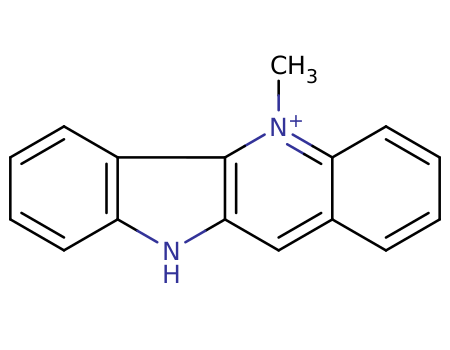 |
| Plant Source | Cryptolepis sanguinolenta Common Name: |
| Source Family | Apocynaceae |
| Origin | |
| Plant Part Used | |
| Extract | |
| Target Bacteria | Mycobacterium aurum |
| Assay / Test Done | |
| Positive Control Used (conc.) | |
| Inhibition [%] | |
| Activity [MIC] µg/ml | 2 µg/ml |
| Activity (In terms of dilution) | |
| Activity (Zone of inhibition in mm) | |
| Active Compound Identified | Cryptolepine |
| PubChem ID | NR |
| Ethnomedicinal Information | |
| PubMed ID [Source Literature] | |
| Extract Preparation | |
| Chemical Classification [Active Compound] | Aromatic, Tetracyclic, Alkaloid, Indole, Quinoline |
| Media / Broth Used [Antimicrobial Assay/Test] | |
| Cytotoxicity Assay [AID] | |
| Molecular Weight | 233.108 |
| Molecular Formula | C16H13N2
|
| SMILES | C[n+]1c2c(cccc2)cc2c1c1ccccc1[nH]2 |
| XLogP | 4.611 |
| PSA | 19.670 |
| H-bond Donor | 1 |
| H-bond Acceptor | 1 |
| No. of Rotatable Bond Count | 0 |
| No. of Rings | 4 |
| No. of N | 2 |
| No. of O | 0 |
| No. of S | 0 |
| Reference(s) | 1) In silico Comparison of Antimycobacterial Natural Products with Known Antituberculosis Drugs. Marlene Espinoza-Moraga, Nicholas M. Njuguna, Grace Mugumbate, Julio Caballero, and Kelly Chibale. Journal of Chemical Information and Modeling 2013 53 (3), 649-660
2) Rogoza, L. N.; Salakhutdinov, N. F.; Tolstikov, G. A. Anti-tubercular Activity of Natural Products: Recent Developments. In Opportunity, Challenge and Scope of Natural Products in Medicinal Chemistry; Tiwari, V. K. Ed.; Research Signpost: India, 2011; pp 103-120
|
| Curator | |
| Compound ID | 4130 |
| Compound Structure | |
| Plant Source | Cryptolepis sanguinolenta Common Name: |
| Source Family | Apocynaceae |
| Origin | |
| Plant Part Used | |
| Extract | |
| Target Bacteria | Mycobacterium phlei |
| Assay / Test Done | |
| Positive Control Used (conc.) | |
| Inhibition [%] | |
| Activity [MIC] µg/ml | 4 µg/ml |
| Activity (In terms of dilution) | |
| Activity (Zone of inhibition in mm) | |
| Active Compound Identified | Cryptolepine |
| PubChem ID | NR |
| Ethnomedicinal Information | |
| PubMed ID [Source Literature] | |
| Extract Preparation | |
| Chemical Classification [Active Compound] | Aromatic, Tetracyclic, Alkaloid, Indole, Quinoline |
| Media / Broth Used [Antimicrobial Assay/Test] | |
| Cytotoxicity Assay [AID] | |
| Molecular Weight | 233.108 |
| Molecular Formula | C16H13N2
|
| SMILES | C[n+]1c2c(cccc2)cc2c1c1ccccc1[nH]2 |
| XLogP | 4.611 |
| PSA | 19.670 |
| H-bond Donor | 1 |
| H-bond Acceptor | 1 |
| No. of Rotatable Bond Count | 0 |
| No. of Rings | 4 |
| No. of N | 2 |
| No. of O | 0 |
| No. of S | 0 |
| Reference(s) | 1) In silico Comparison of Antimycobacterial Natural Products with Known Antituberculosis Drugs. Marlene Espinoza-Moraga, Nicholas M. Njuguna, Grace Mugumbate, Julio Caballero, and Kelly Chibale. Journal of Chemical Information and Modeling 2013 53 (3), 649-660
2) Rogoza, L. N.; Salakhutdinov, N. F.; Tolstikov, G. A. Anti-tubercular Activity of Natural Products: Recent Developments. In Opportunity, Challenge and Scope of Natural Products in Medicinal Chemistry; Tiwari, V. K. Ed.; Research Signpost: India, 2011; pp 103-120
|
| Curator | |
| Compound ID | 4131 |
| Compound Structure | |
| Plant Source | Cryptolepis sanguinolenta Common Name: |
| Source Family | Apocynaceae |
| Origin | |
| Plant Part Used | |
| Extract | |
| Target Bacteria | Mycobacterium fortuitum |
| Assay / Test Done | |
| Positive Control Used (conc.) | |
| Inhibition [%] | |
| Activity [MIC] µg/ml | 16 µg/ml |
| Activity (In terms of dilution) | |
| Activity (Zone of inhibition in mm) | |
| Active Compound Identified | Cryptolepine |
| PubChem ID | NR |
| Ethnomedicinal Information | |
| PubMed ID [Source Literature] | |
| Extract Preparation | |
| Chemical Classification [Active Compound] | Aromatic, Tetracyclic, Alkaloid, Indole, Quinoline |
| Media / Broth Used [Antimicrobial Assay/Test] | |
| Cytotoxicity Assay [AID] | |
| Molecular Weight | 233.108 |
| Molecular Formula | C16H13N2
|
| SMILES | C[n+]1c2c(cccc2)cc2c1c1ccccc1[nH]2 |
| XLogP | 4.611 |
| PSA | 19.670 |
| H-bond Donor | 1 |
| H-bond Acceptor | 1 |
| No. of Rotatable Bond Count | 0 |
| No. of Rings | 4 |
| No. of N | 2 |
| No. of O | 0 |
| No. of S | 0 |
| Reference(s) | 1) In silico Comparison of Antimycobacterial Natural Products with Known Antituberculosis Drugs. Marlene Espinoza-Moraga, Nicholas M. Njuguna, Grace Mugumbate, Julio Caballero, and Kelly Chibale. Journal of Chemical Information and Modeling 2013 53 (3), 649-660
2) Rogoza, L. N.; Salakhutdinov, N. F.; Tolstikov, G. A. Anti-tubercular Activity of Natural Products: Recent Developments. In Opportunity, Challenge and Scope of Natural Products in Medicinal Chemistry; Tiwari, V. K. Ed.; Research Signpost: India, 2011; pp 103-120
|
| Curator | |
